
PTSD and Suicidal Thoughts
This morning, my wife asked me if during my darkest days of PTSD, I ever had thoughts of killing my entire family. No. Never. There's a terrible story in the news, one of those murder/suicide "family delete" type tragedies, where a woman had been suffering from PTSD and possibly other things, stemming from a health crisis in one of her young children.
This morning, my wife asked me if during my darkest days of PTSD, I ever had thoughts of killing my entire family. No. Never. There's a terrible story in the news, one of those murder/suicide "family delete" type tragedies, where a woman had been suffering from PTSD and possibly other things, stemming from a health crisis in one of her young children. I know that it was a little more complicated than that, but the woman was getting help, seeing a therapist, and was on a common type of anti-depressant drug, but still allegedly killed her husband, her three young children ages 2 to 8, and then herself.
At my absolute lowest point, I was so distressed and afraid that I had contemplated suicide, because I was hurting so badly inside, and didn't know how to stop hurting. A friend of mine had just died of cancer, and others were dying, or having recurrences. I had a terrible cancer recurrence scare myself, and just felt like I was next. I felt doomed and threatened constantly, and just wanted it to end. I knew that suicide wasn't the answer; I had too much to live for, but I was terrified of my cancer coming back, and couldn't bear the thought of having to break such news to my family, having them watch me go through this hell all over again, and possibly having to watch me die a very slow and painful death from it.
At my worst, I just wanted to be driven out to a field in the middle of nowhere, where no one would ever find me, because I was so spooked and convinced that my cancer was going to come back, and didn't want to hurt anybody else when that happened. I didn't want my children to see their daddy die. I felt so worthless and like a huge liability to my family, and just wanted to be abandoned. I was never a threat to anybody. That was the end of 2012 and the beginning of 2013, and it took me all of 2013 to recover from that and get myself on a more even keel again, and a full recovery from PTSD didn't actually come until late-2015. I don't miss those times, but I do remember them like they were yesterday. You can't ever forget it.
When I hear a story like this in the news, it's like driving a knife into my soul a bit, because I understand pain like this all too well, and I'm so sorry to see a tragedy like this take place. It's a bit haunting as well, because I had been down to my last frayed thread of sanity. I was a completely shattered and broken person inside. I didn't "snap," bit it wouldn't have taken too much to have done so, and to have been that close still hurts to think about, even many years later.
I'm not going to read about this story (I can't), and so I'm not going to assume anything or cast judgement on anyone. The only thing I'll say is that I'm sorry that the help this person found wasn't ultimately successful in helping them through such a distressful time in their life, and in averting a tragedy like this. It was a perfect storm of internal and external elements in my life, including my own inner demons, that formed to break me. Why am I still here today, and why am I so grateful to so many? Because it was also a perfect storm of love and support that helped to pull me out of such a terrible period in my life. I either already had everything that I needed, or very quickly found it. Love and support from my family, the right friends, the right mentors, the right outlets, and on and on. It's not cancer that truly changed me as a person, but rather the PTSD that I experienced after cancer that did. Key to my post-cancer and post-PTSD survival has been the fact that no stone was left unturned, and that I changed almost every aspect of my life. I adopted new attitudes, new beliefs, new routines, new friends and social circles, and new everything. Cancer and especially PTSD turned my life upside down, and so it makes perfect sense that I had to flip everything in my life over in order to get things oriented in the proper direction again..
Two things that were never involved in my PTSD recovery were therapists, nor any sort of drugs. A big problem that we have as cancer survivors is the lack of people out there who truly get what we've been through, and the terrible things that our minds are telling us, besides other cancer survivors. Even oncologists who treat cancer patients for decades, who are then diagnosed with cancer themselves later in life, have admitted they had no idea what their patients were going through until the tables were turned, and they became the patient. A therapist was certainly an option for me, and I'm not saying they're wrong or that it's the therapist that failed the patient in this case, but I simply didn't trust a therapist to be able to handle ME. It doesn't help that I'm a Scorpio, and that my mind is already a very complicated and turbulent place, and that it already takes quite a bit for us to trust anyone. A therapist just wasn't the right option for me. And every drug I had ever taken for managing various post-cancer issues always had far worst side-effects for me than whatever relief they were supposed to have provided. I'm not saying that they're wrong or to blame either, but when it came to an anti-depressant for me, which I arguably ought to have been on at various points, it was just another non-starter.
No therapists. No drugs. This definitely wasn't easy path to have taken through all of this, and it was arguably very risky as well. We all have to find an approach that will work for us and that we can place our full trust in, but you can overcome depression, PTSD, suicidal thoughts, and the existential crisis that life throws at us without such things. There are other ways to do this. I can check all of those boxes, but I've only grown through all of this, and am spiritually sound today. I want people to know that it's possible, and that I'm living proof of it.
National Suicide Prevention Lifeline - 1-800-273-TALK (8255)
StevePake.com
[Note: The facts of the mentioned case came out, and it turned out that the woman's husband apparently did it. This is still a relevant topic to discuss and figured I'd write about it, since it came up, but I'll rework this blog a bit later.]


Cancer Wasn't In My Life Plan
I was never going to get cancer. It just wasn't in my life plan. Young adults don't get cancer, only older people. Even when young adults do get cancer, it was only something that happened to other people, not me. A medical school friend of my wife's died of a young adult cancer while only in her early-20's, and just a year shy of graduating from medical school and becoming a doctor. It was so sad and tragic, especially after so much hard work, but it still never registered in my mind that this could happen to me, until I was diagnosed with testicular cancer at the age of 33. Cancer wasn't ever in my life plan, until suddenly, it was.
I was never going to get cancer. It just wasn't in my life plan. Young adults don't get cancer, only older people. Even when young adults do get cancer, it was only something that happened to other people, not me. A medical school friend of my wife's died of a young adult cancer while only in her early-20's, and just a year shy of graduating from medical school and becoming a doctor. It was so sad and tragic, especially after so much hard work, but it still never registered in my mind that this could happen to me, until I was diagnosed with testicular cancer at the age of 33. Cancer wasn't ever in my life plan, until suddenly, it was.
After my cancer fight, I was just going to bounce back to life like everybody said I was going to, and settle right into that "new normal." I wasn't going to suffer from chronic fatigue issues for years due to the after effects of chemotherapy and chemotherapy-induced peripheral neuropathy. I also wasn't going to have to walk around with an extremely uncomfortable stent for six months, trying to save a failing kidney. I also wasn't going to have terrible issues with anxiety, with depression, and with post-traumatic stress. I was just going to pop back to "normal" after cancer, as though I merely had a really nasty case of the flu. I couldn't keep up with my children, and my body felt like complete hell and as though it had aged 30 years. I was in tremendous amounts of pain on a daily basis, and my mind was a total wreck. None of this was in my life plan. This wasn't the life that I had expected, nor was it the life after cancer that I had expected, either.
Cancer threw so many unexpected challenges my way. I rose to all of them.
My chronic fatigue after cancer was so bad, that I barely had the energy to make it through the day most days. I couldn't run more than a few blocks at a time without my entire body shutting down on me, but I forced myself to keep going, kept pushing myself, and never gave up, until one day the chains came off. Suddenly, I could run a full 5K after years of trying, and then the unthinkable happened when I was actually able to run a 5K in under 30 minutes! This is a very basic starter running goal, but for me, dealing with so much chronic fatigue after cancer, it was the holy grail, and today I have all of the energy that I need.
My mind needed to heal as well. I was haunted by the past, and terrified of what might happen in the future. I slowly learned to let go, to stay engaged and focused in the present, and to enjoy each and every day that I had. Despite my best efforts, my post-cancer demons still managed to find ways back into my life, but I learned to evolve spiritually and to develop faith as the ultimate way of overcoming. I'm no longer afraid, I have no anxiety, and no longer any depression or posttraumatic stress that kept dragging me down. I'm not afraid of death and dying of cancer anymore, and that allows me to live my life fully. I've evolved in so many ways in just a few short years, and have finally healed both mind and body through so many struggles.
There are no limits to what we can achieve, so long as we believe in ourselves. We can accomplish anything that we set our minds to, we just have to believe. Attitude is everything, and is a self-fulfilling prophecy. No matter what it is that you’re facing, if you believe in yourself with all of your heart and soul and believe that you’ll find a way to cope, to heal, or to overcome, you’ll find that way no matter how difficult. If you don’t believe in yourself, not only will you not find what you need, but you’ll prolong your own suffering and pain.
Never give up, and never stop believing in yourself. Keep your hearts and your minds open, and surround yourself with positive and uplifting people that believe in you too, who can help to carry you during the times you might stumble.
Cancer wasn't in my life plan, but I've made a far better one now.
StevePake.com
Jordan Jones Legacy - A Survivor's Eulogy by Steve Pake
We're all beautiful beings inside that have something unique to offer the world. Evolve yourself beyond the stereotypes and societal expectations, and have the courage to express your individuality into the world and make a difference, because the world needs it. Jordan's nickname wasn't "Sunshine" for no reason. Despite what he had been through, even while fighting through his late recurrence, he always found a way to shine. We all need to follow Jordan's example, and do the same.
I started writing and blogging at the Testicular Cancer Awareness Foundation back in 2014. Kim Jones (bottom right) founded this non-profit out of her home in 2009 after her son, Jordan's, testicular cancer diagnosis in 2007, at the age of 13. Jordan had very advanced stage testicular cancer, and was very lucky to beat his cancer the first time, but miraculously recovered. Jordan lived an amazing life, but his cancer tragically returned in 2015, just short of seven years after he had beaten it the first time. He fought for a year, but there was nothing to stop it, and Jordan left our world on June 8th, 2016. He was just 22 years old. I traveled to Grand Junction, CO for Jordan's Celebration of Life, and delivered this 10 minute long eulogy on behalf of Jordan and the Jones family.
Cross-posted from the Testicular Cancer Awareness Foundation. To see more tributes and eulogies to Jordan Jones, please visit the Jordan Jones Legacy project page.
My name is Steve Pake, and I am from the Washington, D.C. area. I'm a five year survivor of testicular cancer, and since 2014 have also been the main blogger for Kim Jones at the Testicular Cancer Awareness Foundation. Whenever I've had very difficult feelings to process, I've always taken to my writing as a way to express those feelings, so I have, of course, written a blog about Jordan here, which I'll share with you now.
As a cancer survivor, I'll tell you that the story of Jordan Jones is the one that all of us, every single one of us cancer survivors fears. It's the fear that we'll be back to life and back to living, only for cancer to once again rear its ugly head many years later, that it won't be curable, and that all of a sudden we'll have just lived our last good and healthy day. Oncologists love to joke that testicular cancer is the most curable cancer, and that the second most curable cancer is a recurrence of testicular cancer. They say this to try to put us at ease, but I've yet to find any one that's been diagnosed with testicular cancer that's ever been truly comforted by these words. There is no easy cancer, and in the context of a late recurrence of testicular cancer, as Jordan experienced, this isn't even true.
Late recurrences of testicular cancer are exceedingly rare, but typically have a poor prognosis, and usually don't respond well to chemotherapy. Although Jordan did actually get a "very good" response from some of the therapies that he received, nothing less than a "compete response" will do, because testicular cancer is both aggressive and relentless. It's true that late recurrences of testicular cancer such as these do occur a bit more frequently to those who had very advanced stage cancers initially such as Jordan, but the fact is they can happen to anybody. This could happen to me too, and this is a risk that all of us face, but never in a million years did I ever dream or imagine that one day I would one day be standing right here, right now, to say a few words on behalf of our friend.
So how do you make sense of all of this, and how do you move forward in life? The answer is that you have to evolve.
EVOLVING INTO A NEW LIFE AFTER CANCER
My years after cancer didn't go exactly according to plan. I had issues with anxiety, my mind was constantly racing. I suffered from tremendous doubts about life, and periods of depression that could last months. I also suffered from posttraumatic stress, and not the kind that people joke about having either, if they maybe had a near-miss in traffic somewhere? I'm talking about real, full-blown, huddled up in a corner in tears PTSD, because you're so afraid and feel so threatened after cancer, and don't know how to stop feeling that way. This was more challenging to deal with and overcome than my cancer was.
I was terrified of what might happen in the future, and haunted by my past, and as a result I was unable to truly enjoy the present. I learned that I had no real control in life, and taught myself to let go, and to just enjoy the moment. As I wrote a few years ago, "The best way to survive cancer is to LIVE!" Live, love, and laugh everyday, the best you know how, and it was from that point forward that I finally began to heal. It was around this time in 2013, two years after my cancer fight, that I connected with Kim, and learned of Jordan's story. I was inspired not just by their incredible story, but by the lives that they were living in the aftermath.
Here was a family that was clearly engaged with each other, enjoying life, enjoying their love for each other, and their friends. They were making the most of life and not wasting a day, and I thought to myself, that's how you need to live, that's how you need to do it. This is how you need to live after cancer, and I immediately felt a kinship and a bond with the Jones family. It's not just Jordan who inspired me, but the entire Jones family that did.
You Have to Find a Purpose in Life
Especially as young adults, we go from thinking that we have our entire lives in front of us, to realizing just how fragile and mortal we all are, and that we might not be around in this world for as long as we thought we were going to be. So many of us want to make a difference, and suddenly we feel rushed to find a purpose in life in order to make that difference, when we feel that our time might be cut short, and that our lives might be on a short clock.
Jordan and the Jones family found that purpose when Kim gave up her real-estate career to start the Testicular Cancer Awareness Foundation, and through this organization they've helped to raise awareness about testicular cancer for millions across the world, and have helped to save thousands of lives simply by spreading knowledge and awareness about this disease. There are naysayers everywhere. Don't listen to them. One person, and one family can make a difference in the world, and Jordan and the Jones family are a prime example of that. So ask yourself, what can you do? Find your purpose. What difference can you make in the world for the better?
I'm actually an engineer. I have a Masters Degree in Electrical Engineering, and work to this day as an engineer, but I can write my heart out too. I'm not supposed to be able to do that, and I know this because people tell me that all the time. I've always known that I've had this ability, and years before cancer entered my life I decided that I really needed to put this talent to good use in the world, but didn't know what to even write about. Life provided me with the answer, and today my writing about life after cancer and all of the struggles that we face have been seen by hundreds of thousands of people across the globe. I'm the last person that anybody would suspect of being able to write about what I do, pouring my heart and soul out like this, but I am what I am, this is something that I can do, and it's an amazingly fulfilling feeling in life to be able to add this to the world.
When I put this inner talent to good use in the world, I feel like I'm not wasting any time, which is so important to me. I've been blessed with five amazing years since cancer, but that's still no guarantee of a sixth or seventh. There are other non-profit organizations focused on spreading knowledge and awareness about testicular cancer both in the United States and abroad, but I felt clearly like TCAF was my home and that I belonged here, and I've been very grateful and honored for Kim and the Jones family to have welcomed me in, to have found a fitting home for all of the writing that I do, and for allowing me to be a part of such a wonderful organization.
We're all beautiful beings inside that have something unique to offer the world. Evolve yourself beyond the stereotypes and societal expectations, and have the courage to express your individuality into the world and make a difference, because the world needs it. Jordan's nickname wasn't "Sunshine" for no reason. Despite what he had been through, even while fighting through his late recurrence, he always found a way to shine. We all need to follow Jordan's example, and do the same.
Making the Ultimate Step, Beyond Ourselves and our Bodies
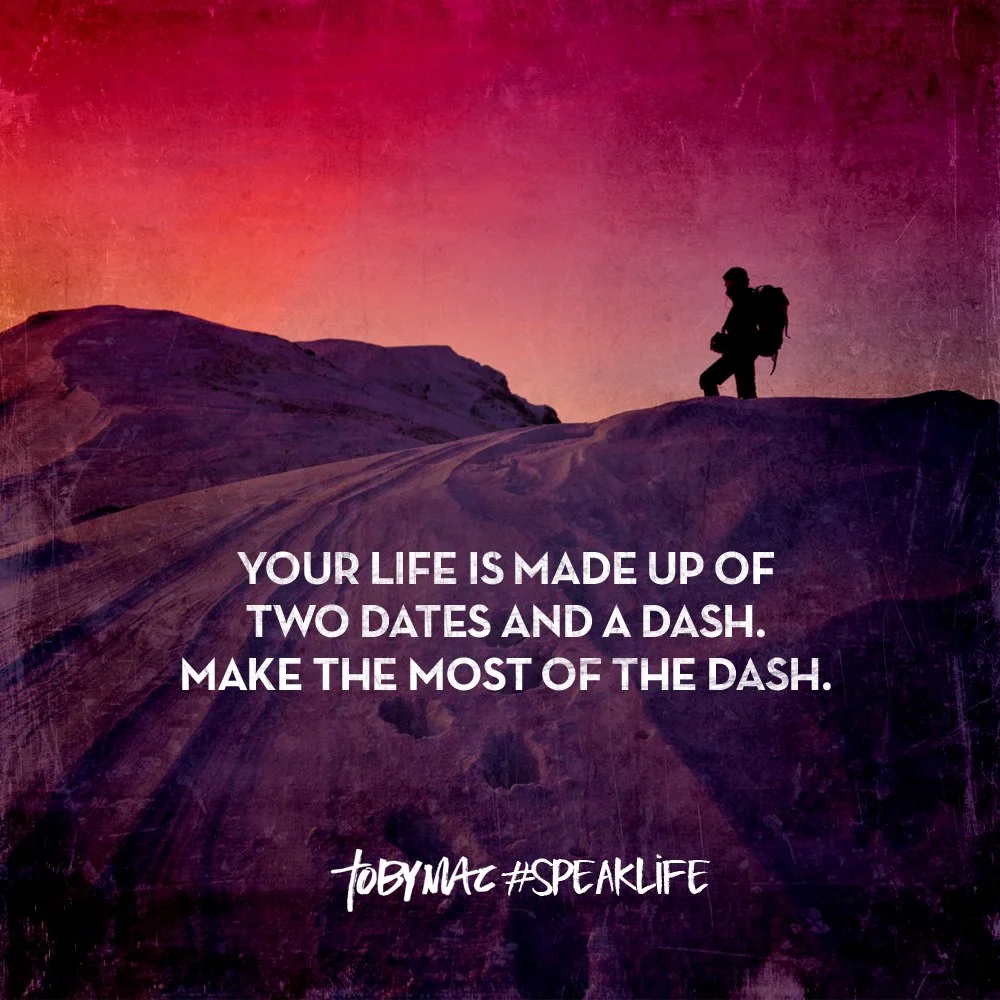
Our lives consist of two dates and a dash. There might not have been very much time between the two major dates in Jordan's physical life, but Jordan, more than anybody I know, made the most of that dash in between. The late Stuart Scott said it best.
"WHEN YOU DIE, IT DOES NOT MEAN THAT YOU LOSE TO CANCER.
YOU BEAT CANCER BY HOW YOU LIVE, WHY YOU LIVE,
AND THE MANNER IN WHICH YOU LIVE. SO LIVE!"
I don't ever want to hear anybody say that Jordan "lost" his cancer fight. Jordan beat his cancer, and he lived better than anybody else. He made the most of that dash!
In the end, Jordan made the ultimate evolution by not just inspiring me by how he lived, but by how he died as well. In his last days, Jordan made the final leap beyond his physical world when he realized the significance that his life, and his death, would have. He knew that he and his family, and the organization that they created, would continue to make a difference in the lives of millions, and continue to save thousands of lives long after he was gone. As evidence of this ultimate, and astonishing evolution, in his last days, it was actually Jordan that was at peace with all of this, and was the one comforting his mother as his time was running out, and not the other way around. Imagine that. A young man that found peace in his own death, and comforting his mother and trying to help her find that peace as well, and not the other way around. That was Jordan Jones.
When it's my time to go, if I can look back on my life and feel as though I've accomplished even a fraction of what Jordan and the Jones family have, I think I'll have that same feeling of peace and fulfillment in life. Jordan will forever be my hero for not just inspiring me by how he lived, but by showing us all how to die with grace and dignity, and with the confidence of a life purpose and mission fulfilled.
Jordan will continue to drive me and inspire me for the rest of my life. I'm a big dude, 6'3" tall and I wear size 15 shoes, but Jordan's footprint in this world is immeasurable. I have a lot of work to do. We all do.
To all of Jordan's Friends and the Lives he touched
I wanted to share with all of you what has been one of my biggest lessons learned learned thus far, not just in life, but as a cancer survivor as well, and that is the power of our beliefs. There's so much in this world that we have absolutely no control over, but we do have control over what we believe in. I truly do believe, with all of my heart and soul, and every fiber of my being, that merely Jordan's physical body has died, and that his spirit and his energy is living on today, and smiling down upon all of us right now.
I had struggled with my spiritual beliefs for my entire life. I always felt so torn and conflicted between various religions, but realized that it was the lack of a firm system of spiritual beliefs that was a big part of what was causing me so much recurring fear and pain, even last year, when I was four years out from cancer. Finally allowing myself a system of beliefs to grasp and hold onto tigthly, helped to take the wind right out of the sails of so much of that inner pain, and the demons that I had been struggling with for so long. My spiritual beliefs have helped me to be less afraid and more confident in life, to make peace with my own history of cancer, and help me to find peace in the passing of friends such as Jordan, as well.
If you're hurting inside, and really struggling to make any sense of this at all, never underestimate the power of belief. I know that so many of us will miss Jordan's physical presence in our lives every single day, but it brings me peace and comfort knowing that Jordan's spirit and his energy are alive and well. I feel it, I believe it, and I know it.
To the Jones Family
To Kim and Jeff, and Breanna, and to all of your family members, on behalf of so many in the testicular cancer community, I want you all to know that you are hardly alone in mourning the loss of Jordan. The entire cancer community mourns and feels this loss with you, but we will also continue to celebrate his life with you as well. You've given so much to so many, and Jordan could not have been blessed with a better and more loving family, nor a better mother. You are all truly beautiful souls. Whatever you need and whatever your wishes are in the future, I want you to know that the entire cancer community is behind you, and that together we will keep Jordan's spirit and memories alive. Jordan "Sunshine" Jones will never be forgotten, and his legacy will live on, for a thousand years.
Thanks and God Bless you all.
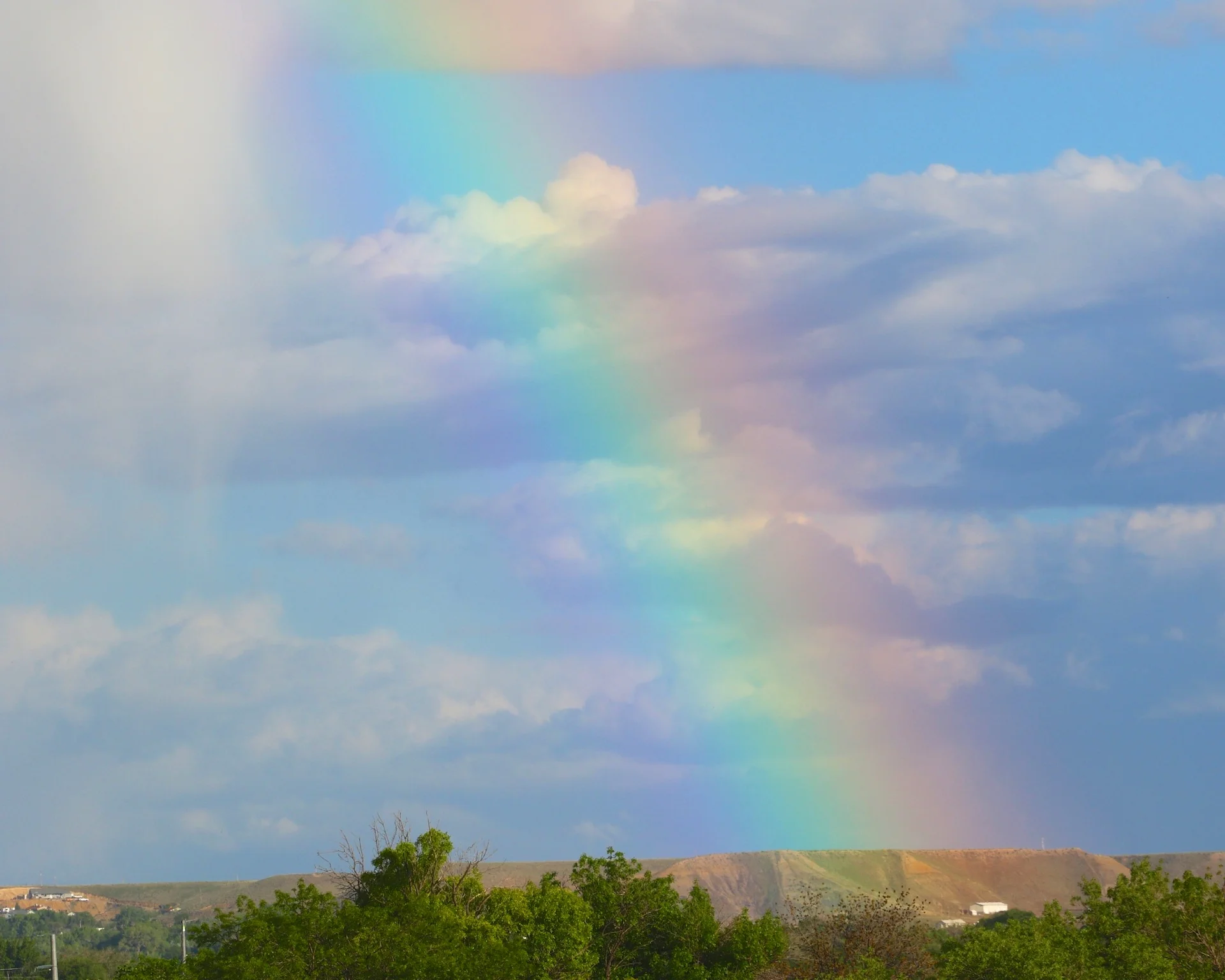
The only opportunity that I had to meet Jordan in person was on May 8th, 2016, as he returned home to Grand Junction after his brain surgery, one month to the day before he died. The minute he was home, this rainbow appeared over Grand Junction. I think angels were guiding Jordan on his way up.
Returning home from Jordan's Celebration of Life, yet another rainbow greeted me in DFW on July 9th, 2016. All it took was meeting Jordan once to know that everything that everyone had said about him was true. I wish I could have known him better, but I'll always cherish the one time that we were able to meet and connect. Fly high, Scorpio, and keep shining.

Testosterone Challenges after Testicular Cancer
Every single testicular cancer survivor and their caregivers should be aware of the possibility of low or irregular testosterone levels after cancer, and that no, the other testicle might not necessarily ‘pick up the slack,’ as is commonly believed. It isn’t that simple. Every medical professional should also be aware of this possibility with testicular cancer survivors, especially if they’re symptomatic of hypogonadism.
Before I was diagnosed with testicular cancer at the age of 33, I had always been a very regular person. I had regular amounts of energy and enthusiasm for life, regular amounts of optimism about most everything, and there had never been a single depressive “bone” in my body. I felt confident and secure, had very regular moods which were all good, and very regular amounts of libido, too! My cancer diagnosis blindsided me, and shook my foundations to their core. How could you not feel depressed and anxious while you’re afraid for your life, and fighting like hell just to live at all?
I wasn’t the same person after cancer
I wasn’t the same person after cancer. My confidence had been shattered, my optimism faded, and my moods were all over the place. I wasn’t the predictable “rock” that my wife had known, and suddenly I became a very irregular person, the exact opposite of what I had been before. I had “times of the month” where I just felt completely out of it. I struggled with mood swings that went from euphoric highs and feeling on top of the world, to incredibly depressive lows. Some of this comes with the territory of being a cancer survivor, but I knew there was more to it than that. Most of the depressive phases would last merely a few days to maybe a week at the most, but then there was the time that I just felt completely out of it for over a month! I had absolutely no energy at all, and was completely lethargic and depressed. I felt directionless mentally, my libido was non-existent, and I just felt like a lump of asexual nothingness.
I’m a very lucky man to be married to such an incredibly beautiful woman. My wife and I have always been a very physically affectionate couple, and that has never changed even twenty years and two kids later, but this did it. Suddenly, I felt absolutely nothing for her. I had no interest, felt no love or attraction, and didn’t even understand why we were together! I didn’t recognize myself anymore, and my wife didn’t recognize me either. She had been used to getting regular physical attention from me in the form of simple caressing and playful squeezes whenever we’d pass each other, and more, but became very self-conscious and wondered if I didn’t love her or find her attractive anymore when all of that attention dropped off of a cliff! Forget about ‘scanxiety’ and cancer recurrence scares, which make you fear for your life. Not feeling anything for the love of my life was even more terrifying, because it made life not worth living for me anymore. This was a completely foreign life experience to me, and the most terrifying thing I’d felt throughout my entire cancer journey. I felt like Superman when he lost his powers – helpless, directionless, powerless – unable to do anything, and not even love my wife!
It’s Hormones, Stupid! What’s Normal??
I had no idea what the hell was going on with me, but one morning while in the midst of this, I woke up realizing that I didn’t need to shave. Even some body hair had seemingly thinned a bit, and it became obvious that my body was gasping for testosterone! It was my hormones talking, or rather, not talking! I went to see an endocrinologist in short order and did some blood work, which confirmed my self-diagnosed hypogonadism, aka “low-testosterone”. Normal free testosterone levels in men range from about 270 to 1070 ng/dl, and I tested out at 178. My testosterone levels had fallen through the floor, so the obvious question was, do I go on testosterone replacement therapy (TRT) or not?
The million dollar question that every testicular cancer survivor experiencing low testosterone-related issues is, of course, what were our normal levels to begin with? Unfortunately, almost nothing is known about the true nature of testosterone levels in men, which includes testicular cancer survivors. Even at the time of a testicular cancer diagnosis, the opportunity to get a clear snapshot of an individual’s natural testosterone levels are already lost, as the testosterone production of the cancer-stricken testicle could already have been compromised. Furthermore, testosterone levels in men can vary by month, by day, by time of day, mood, stress levels, and many other factors. Thus, getting a good idea of what “normal” testosterone levels are in even healthy men is by no means a trivial task. Was my normal testosterone level in the 200’s, and thus my recorded level of 178 ng/dl just a minor slump, or was my normal more like 1000, and my body was in a low-testosterone death spiral? There’s simply no way to know. After a testicular cancer diagnosis, most medical professionals will tell testicular cancer survivors that the other testicle will “pick up the slack”, but we’re not exactly like twin-engined aircraft that can keep flying almost as normal if a single engine fails. There might be a lot of peaks and valleys, but for how long? Will our natural testosterone levels recover to the point that we can maintain the same altitude as before, or will we be stuck near the ground? Nobody really knows, and there are long-term risks either way as far as whether to go on some form of TRT or not.
Key Things to Know About TRT
The major risk bullet points for hypogonadism and not going on TRT are decreased bone strength and osteoporosis, along with a potential increased risk of developing Alzheimer’s disease.
On the other hand, going on TRT ends up actually doing harm to our body’s natural ability to produce testosterone on its own, and can also decrease fertility. Once one is on TRT, you’ll likely be on it for life!
TRT can also promote cancerous and non-cancerous growth in the prostate gland, and testicular cancer survivors already have an increased risk of developing prostate cancer as compared to the general population.
Some Advice From Guys That Have Been There And Done That
So, what guidance do testicular cancer survivors have in navigating these hormonal pitfalls? Right now, none. A big part of the problem is that testicular cancer is so curable, that very little research is done to look into the challenges that survivors face in the aftermath. Perhaps this is a good problem to have with such a highly curable cancer, but problems are problems, and ignoring them never makes them go away.

Meeting Scott Petinga at the Minnesota State Fair, 2016
Minnesota businessman and testicular cancer survivor, Scott Petinga, is trying to change that. Petinga has suffered terribly from post-cancer hormonal challenges for over a decade now, but has never been able to find the answers he’s needed. Petinga took matters into his own hands, and founded not one but two non-profit organizations, The Center for Advocacy for Cancer of the Testes International (CACTI), and the TH!NK DIFFERENT Foundation, which he’s bankrolled with his own money, to finally support formal research into the very questions and dilemmas that testicular cancer survivors face. In the meantime, all we can do is make the best educated guesses for ourselves that we can, and hope for the best.
Every single testicular cancer survivor and their caregivers should be aware of the possibility of low or irregular testosterone levels after cancer, and that no, the other testicle might not necessarily ‘pick up the slack,’ as is commonly believed. It isn’t that simple. Every medical professional should also be aware of this possibility with testicular cancer survivors, especially if they’re symptomatic of hypogonadism.
Scott’s advice is to “most importantly, prior to your orchiectomy request that the Urologist perform a full hormone panel as a baseline. Once fully recovered a second panel will be used to conduct a variance analysis and based on the results you’ll be able to supplement effectively.”
Image via Ron’s Facebook
Ron Bye, a testicular cancer survivor of over 40 years, additionally suggests that “it is very important, when considering TRT, to truly understand the full complement of hormones and their relationships between them. High E2 (estrogen) can have the same symptoms as low T and often have that inverse relationship. If the issue is high E2, simply adding testosterone will often only increase E2 by converting the excess T to E2 with aromatase enzymes. Before starting TRT always get a full hormone panel!”
It’s A Personal Choice
As for myself, despite my miserable predicament at the time, I simply had no desire to go on potentially lifelong and expensive testosterone replacement therapy while only in my mid-30’s. My wife agreed, and with her support and understanding, I decided to forego TRT in the hopes that my body would right itself on its own. Around this same time, I just happened to start a daily program of vigorous exercise. Regular exercise is well known to keep people’s hormonal levels up, and this just happened to do the trick for me. Whenever I felt one of these hormonal slumps coming on, I made sure to get out for a run as soon as possible, and go as hard as I could. Without fail, I’d always feel much better the next day. Regular exercise has become a way of life for me after cancer; it has helped me to once again be that “regular” guy that I used to be, and so much more, going on 4 years now.
There might very well come a time when I’ll need TRT in some form, but I’m hoping to make it at least a decade or two out from my diagnosis before I get there. It’s hoped by myself and many other testicular cancer survivors, that the research being funded by Petinga’s non-profits will eventually bear fruit, and that we’ll have better information from which to make decisions regarding our hormones in the future.
Additional Perspective Via Nick O’Hara Smith
Image via Nick’s Facebook
This is a copy and paste of Nick O’Hara Smith’s very insightful and helpful comment below, but I wanted to make sure to incorporate it into the body of the blog itself so that it wouldn’t be missed. Nick broke so much new ground in this area over all of his years for all of us to benefit from today. Nick very sadly passed away from other causes in late-2018.
“I'm really glad exercise has been able to help you stay off Testosterone therapy. Nobody I know other than body builders wants to be on it.
I've been on "no choice" Testosterone therapy for close to 29 years because I lost both testicles. In truth, relying on a lifelong medication to enable mental, physical and irregular sexual stability sucks. It is not a given that ED and sexual stamina are cured by Testosterone therapy.
However, it is such an important hormone for us men, because it is fundamental to our overall health. Prolonged low levels affects practically every system in the body, from cerebral to heart, skin, blood, vessels and bone.
However, just because a testicle is lost and your Testosterone is low, it doesn't necessarily mean you have to take Testosterone for the rest of your life as you've found. Sometimes though exercise doesn't do it.
The need to take Testosterone or not really depends on the origin of the problem, whether it is testicular failure, or a failure of the system that demands testosterone from the testicles.
That system is controlled by the Pituitary gland which sends signaling hormones LH and FSH high, thereby requesting the testicles produce Testosterone. Sometimes the system is muted by confounding sources which, when corrected can allow normal production to resume.
In such cases where a testicle is lost, it is possible to induce signaling requesting the remaining testicle to make up for the loss of the other one using Clomiphene Citrate.
Sometimes that is all it takes. In some cases however, I have seen a combination of Testosterone therapy and Clomiphene Citrate together prescribed to ensure fertility is preserved. That particular treatment is exclusive to the USA experts in such matters so far as I can tell. The drug Androxal (Enclomiphene Citrate) is currently under trial and going through the FDA mill in the hopes of getting it to market to help those with Pituitary originating Testosterone problems.
Elsewhere in the world, Testosterone therapy is the only medication approved for treatment with the consequential loss of fertility when the remaining testicle shuts down its production. An unedifying prospect to say the least for any man.
The dangers of ignoring this problem are many, but it is largely ignored in the male population worldwide.
Doctors generally tend to be as ill-informed and dismissive as the average person in the street. However there are broadly similar guidelines covering most countries now, which I constantly advise patients to print, read and give to their doctor.
I find it ironic that something so fundamental to male health and fertility remains in the hinterland while male fertility world wide drops like a stone. One day man will wake up!”
Thanks so much Nick and God bless!
One final word
If you’re struggling with both testosterone levels AND you also want to maintain your fertility or explore fertility options, please do take a trip out to see Dr Ajay K Nangia at the University of Kansas. He truly gets the testicular cancer patient population and their challenges, and there’s no finer expert in fertility for testicular cancer survivors than Dr. Nangia. Many of us had the pleasure of meeting and interacting with Dr Nangia at the Testicular Cancer Summit in 2017, and he’s also appeared at a few of the follow-on events as well.
I hope that within my lifetime the testicular cancer patient population will have far more definitive guidance and options for the management of our hormones after cancer!
StevePake.com
5 Years Cancer Free
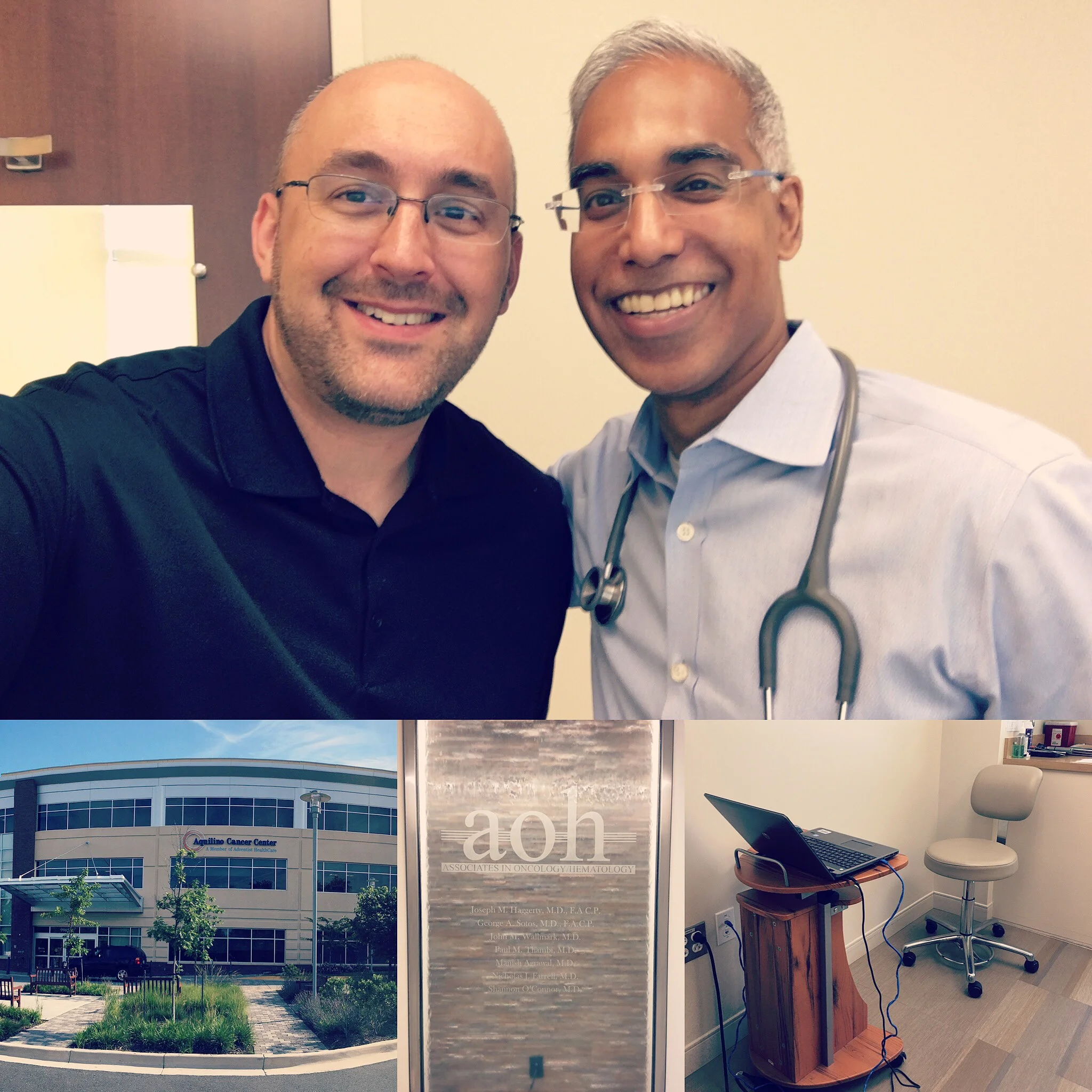
5 YEARS CANCER FREE, and formally discharged from oncology care today. Big day. It felt surreal walking out of my oncologist's office today, knowing that I don't need to go back anymore for this, and hopefully never again in my life. I'm a free man at long last.
5 YEARS CANCER FREE, and formally discharged from oncology care today. Big day.
To be completely honest, I've been far too stressed, busy, and distracted with other things in life to really process this huge moment, but I know what I'm feeling deep inside. When I do finally have some time to myself, I think I'm going to grab a really nice bottle of wine, and then go curl up in a corner and cry for awhile. It felt surreal walking out of my oncologist's office today, knowing that I don't need to go back anymore for this, and hopefully never again in my life. I'm a free man at long last.
These past five years have simultaneously been the most challenging, stressful, and terrifying years of my life, but thanks to the love, support, and camaraderie from so many of you, along with some truly wonderful friendships that have developed in the aftermath, they've also been the very best years of my life as well. When you feel threatened and like your days are numbered, you really learn how to LIVE your life fully, and you appreciate things that so many take for granted. I've lived more each year since cancer than I had in all of my life prior to cancer combined, and I've had five amazing and full years like that now. That's a whole lot of LIVING in a few short years. Cancer really does open your eyes and give you a whole new perspective on life, and I wouldn't give that back for the world. Life is beautiful.
I may have finally managed to get fired by my oncologist, but I'm not entirely free from follow-ups. I'm still going to have annual blood tumor markers checked, along with an annual scrotal ultrasound, as part of my yearly physicals with my primary care. My oncologist will also have them do some additional lymph node checks as part of the annual physical exam, with referral to my oncologist if anything doesn't look right. Biggest news is NO MORE DAMNED SCANS!!!! I'm done with the frequent flyer chest x-rays. The risk of a false positive at this point far exceeds the likelihood of there actually being cancer, and that would lead to unnecessary radiation exposure from a CT scan, so they're not really recommended. I'm certainly not going to miss going in for scans, I'll tell you that.
The real "end" of cancer in our lives, if we're ever able to get there, is if and when you can finally be discharged from oncology care. "We really don't need to see you any more, ever." That's the real ending, and that's when life really does move on. I've felt this evolution coming for the past year, and today the day is mine. Finally crossed that finish line, and I'm a free man.
Praise God.
StevePake.com

Godspeed Jordan "Sunshine" Jones
When I started volunteering as a blogger for Kim Jone and the Testicular Cancer Awareness Foundatio back in 2014, I did so because I was inspired by the story of Jordan Jone, loved the energy of the Jones family, and their dedication to their mission of spreading awareness about testicular cancer. It just felt like the right place for me to be, and putting my energy into. Never in a million years did I dream or imagine that just a few short years later, we'd all be saying goodbye to Jordan like this.

When I started volunteering as a blogger for Kim Jones and the Testicular Cancer Awareness Foundation back in 2014, I did so because I was inspired by the story of Jordan Jones, loved the energy of the Jones family, and their dedication to their mission of spreading awareness about testicular cancer. It just felt like the right place for me to be, and putting my energy into. Never in a million years did I dream or imagine that just a few short years later, we'd all be saying goodbye to Jordan like this.
The story of Jordan Jones is the one that all of us, every single one of us cancer survivors and co-survivors, fears inside. It's the fear that we'll "beat cancer" and be back to our lives and living, and make it through all of our big two and five year milestones and be declared "cured", only for cancer to still rear its ugly head again many years later. Oncologists like to joke that the two most curable cancers are testicular cancer, and then recurrences of testicular cancer. It's of little comfort to any of us, and not even true in the case of late recurrences like these, which have a poor prognosis. Although late recurrences are rare, and tend to occur more often in those who had very advanced stage cancer initially such as Jordan's, the fact is, late recurrences can happen to anyone, regardless of the initial stage of our cancers. Jordan fought like hell, and some important discoveries were made along the way that will surely help the next guys down the road. All of Jordan's fighting and suffering over the past year wasn't for naught (Jordan's own words), but it still hurts beyond belief to be saying goodbye like this.
We don't have any control over the two big dates in our lives, just the dash in between. That second date may have now been etched in stone for Jordan, but Jordan didn't "lose" to cancer. "You beat cancer by how you live, why you live, and the manner in which you live. So LIVE!" says Stuart Scott. Jordan LIVED and "dashed" well. Merely Jordan's diseased body has died. His spirit and his energy lives on, is free of all of the tremendous suffering he experienced, and he will remain a hero for helping to bring awareness of testicular cancer to millions across the world, for inspiring so many of us, and for all of the lives he touched with his amazing energy.
The inspiration I gained from Jordan and the Jones family, and making the most of the time you have, is a significant part of my own story now in learning how to overcome all of my post-cancer fears. We all would have liked to see Jordan's dash last so much longer, but my God did he dash. That brings me comfort personally, knowing that he lived so well. Thanks for all of the love and energy that you brought into the world, and for having inspired so many of us. We will all miss you dearly, but your memories and energy will be kept alive for ages to come.
You've done well, Sunshine.☀️♏️
Please keep Jordan's mother, Kim Jones, his father, Jeff, and his loving sister, Breanna Jones, in your prayers as they face the loss of such an incredible soul in their lives.
RIP Jordan "Sunshine" Jones, June 8th, 2016, 4:33pm.
StevePake.com

National Cancer Survivors Day 2016 - The Rush to Evolve After Cancer
As I look back on 5 years of cancer survivorship, I've started to see from a higher level just how much I've evolved every year since cancer. We evolve constantly throughout our lives, perhaps too slowly to notice on a year-to-year basis, but we're always evolving. Having cancer as a young adult is a massive accelerator for that evolution.
5 Amazing Years since Cancer :)
National Cancer Survivors Day is a pretty big time for me, as this is the period of time each year where I can hopefully declare myself to be another year free from cancer. Back in 2011, I had just finished my 4 rounds of EP protocol chemotherapy at the end of May, and was getting post-chemotherapy CT scans right around this date. That scan didn't come back clear. I had a residual mass leftover, and chose to go through the RPLND surgery up at Memorial Sloan-Kettering Cancer Center in New York. I finally got my first official all clear on July 1, 2011, after all pathological findings from the lymph-node dissection surgery came back negative.
As I look back on 5 years of cancer survivorship, I've started to see from a higher level just how much I've evolved every year since cancer. We evolve constantly throughout our lives, perhaps too slowly to notice on a year-to-year basis, but we're always evolving. Having cancer as a young adult is a massive accelerator for that evolution. Not only are we challenged to evolve past the significant physical and mental challenges that cancer leaves in its wake, but I know so many of us feel this accelerated need and rush to evolve into the people we were meant to become, and to finally do the things that we were meant to do, when we realize that our lives might be on a short clock. There's a rush to find purpose and meaning in our lives, and a rush to experience life and the world around us. People tend to take notice of the drive and determination that we have, and this is where it comes from.
We're creatures of habit, though. We hold onto what we know, even when it hurts us. Not every element of our lives before cancer are going to fit in our post-cancer lives, so don't be afraid to take that first step in a new direction. Comfort zones are nice, but nothing ever grows there. The first step in evolving yourself after cancer, is to decide that you're going to evolve. You don't even have to know how, you just have to decide that you're going to. Jumping off of a cliff is about what that first step can feel like. I've made figurative leaps like these more than a few times now, and afterwards, every single time, I've always asked myself why I hadn't jumped sooner? Continually evolving myself after cancer has been my path towards a better and more fulfilling life.
The first step in evolving yourself after cancer, is to decide that you're going to evolve. You don't even have to know how, you just have to decide that you are. That's the first step.
I've made figurative leaps like these more than a few times now. Afterwards, and every single time, I've always asked myself why I hadn't jumped sooner?
"Some days, the best we can do is to simply survive,
and nothing else. Celebrate Life!"
How many days were there when the best I could do was sit in a corner in tears, because I was so afraid and hurting so badly inside? That's still called surviving, and is still worthy of celebration. It can be a long and difficult road from survival to thriving, but it was because of my strong desire to evolve, move past what life had thrown at me, and not being afraid to take that what became many "first steps," that I've gotten to where I am today. I'm not afraid of cancer anymore, I no longer live my life in fear while watching over my shoulder, and no longer suffer from posttraumatic stress, either! I've come a long ways since the days of sitting in that corner a lot.
"There is life after cancer – it is beautiful, it is meaningful, and it is something to celebrate." - National Cancer Survivors Day
I have a lot of bad memories through this time of year, so we've always tried to do something fun and memorable to help overwrite those dark times. This year, my rain-delayed annual summer kickoff color party that I normally hold on the weekend before Memorial Day, just happened to fall on the same weekend as NCSD. My wife and I have both been under a tremendous amount of stress lately due to an external situation in our lives, so it was a nice way to just forget everything else that's been going on for awhile, and have a great time. Don't be afraid of what happened yesterday, and try not to worry about what could happen tomorrow. Be present in life, and enjoy each day. The next day? Repeat. :-)
My annual summer kickoff color party, with some dear and beloved friends. Always such a great time, and so much fun! This party had nothing to do with cancer or NCSD, and everything to do with simply enjoying life. The best way to survive cancer, is to LIVE!
There is life after cancer, it is beautiful, it is meaningful, and it is something to celebrate. Simply celebrate that you're here if that's the best you can do, but don't be afraid to take those first steps towards evolving yourself after cancer, so that you can find your way out of that corner, and experience the joy and the beauty that life has to offer you.
Happy NCSD to all!
StevePake.com

Surviving Survivor's Guilt - Remembering Michael Atkins
Life goes on, and the sun will rise and set again for many of us after cancer, but not for all. Survivor's guilt is a very normal part of the cancer survivorship experience. It can be tremendously painful, but is also a huge opportunity for growth in our lives.
Life goes on, and the sun will rise and set again for many of us after cancer, but not for all. Survivor's guilt is a very normal part of the cancer survivorship experience. It can be tremendously painful, but is also a huge opportunity for growth in our lives.
I'll never forget the story of one of my cancer warrior brothers, Michael Atkins, whom I had met on a support group along with many others back in early 2011, when we were diagnosed with testicular cancer. Of all the people I had met during this time, I really identified with Michael, because he was a family man like me. I had two young children at home, but Michael and his wife, Kirsten, had four. I wanted to believe that all of us would survive and get through our cancer fights together, but I really needed Michael to survive, because Michael was me, and I was Michael.
There is no easy cancer, but my Stage 2 testicular cancer was relatively easy pickings. My fight was done and over with in five months, but Michael was diagnosed with Stage 3 pure choriocarcinoma, and had a long and tough fight in front of him. It's true that testicular cancer is considered to be the most curable cancer, but not the pure choriocarcinoma form of it, which is so aggressive that only about 1 in 10 survive this form of the disease.
Michael's fight was brutal. He went through primary and high-dose chemotherapies, the two very best chances for a cure, both of which failed to cure him. Then, there were numerous clinical trials that he went through over the next year and a half, while criss-crossing the country, and seeing the very best doctors possible. Many of these treatments gave a response, but only bought him time, and not a cure. Michael put on a strong front throughout, and there was always another plan or another option on the horizon, until he just couldn’t go on anymore.
After nearly two years of fighting, the news came in January of 2013 that their fight was winding down, and two months later on February 28th, 2013, the white flag was officially raised. Michael’s body had been battered by so much continuous chemotherapy and radiation over the past two years, that he no longer had the strength to make it to appointments; his body gave out before their options did. In-home hospice had to be started, at which point I fell to absolute pieces, because I could no longer hide from the fact that my friend was going to die.
From the time Michael entered hospice care on the 28th and through his passing on March 7th, 2013, I was overcome with grief and sadness unlike anything I’d ever experienced before. I cried everyday for hours, numerous times per day, and was simply inconsolable during this time. I couldn't sleep, I couldn't think, and I couldn't do anything besides mourn for my friend and his family. I prayed constantly for Michael to have a peaceful passing, for him to be free of pain, for his wife to find the strength that she needed, and for his four children to find peace and comfort through all of this.
It wasn't just the loss of a cancer warrior brother that had me huddled in a corner in tears - I also had terrible and gut-wrenching feelings of guilt, as though a knife were tearing through my soul. I mourned Michael's passing as though he really were a brother, but also felt terrible about the fact that I was getting to live and enjoy life with my family and my two children, but here was a guy with four children that wasn't going to make it. It didn't seem right. It didn't seem fair. I was Michael, and Michael was me. Why was I getting to live with my two children, yet he was being taken from his four?
Experiencing survivor's guilt is a very normal part of life as a cancer survivor. This wasn’t the first time that I had experienced it, but Michael’s passing was, by far, the most powerful case of it I’d experience in my years after cancer. Watching people that I had cared so much about die while their families watched helplessly, is what finally made this whole cancer thing real to me. It's okay to mourn, but don't forget to remind yourself that it's okay to live, as well. Your families and your friends all need you to. Live the best possible lives that you can, on behalf of those that couldn't. Honor them and keep their memories alive by doing things that you think would make them proud, and put smiles on their faces.
As it turns out, experiencing survivor's guilt is also a huge opportunity for growth. I definitely gained some new appreciation for my life immediately after my cancer fight, but that was merely a warm-up. Not being able to make any sense of the death of friends in the years after, is how I really came to appreciate my opportunity for life so much more. The beautiful woman by my side, the laughter of my children, the joy that friends had brought into my life, and all that the world had to offer all became so much more real and vivid to me, knowing that friends were no longer here to experience any of these joys of our physical world. Terrible survivor's guilt helped me to evolve as a person, and truly take nothing for granted anymore. It's out of the ashes of the deaths of friends like Michael, that I became so much more aware, and gained the full appreciation for life that I have today.
Special thanks to Michael's widow, Kirsten Ingebretsen, for allowing me to share a part of their story with the world.
StevePake.com

Post-Cancer Fatigue and the Importance of Exercise
By far, the biggest physical challenge I've faced after cancer, is that of chronic fatigue. After months of being poisoned almost to death by harsh chemotherapy drugs, irradiated trying to nuke cancer cells out of existence, or having our bodies ripped apart and then sewn back together, our bodies are just plain tired.
By far, the biggest physical challenge I've faced after cancer, is that of chronic fatigue. After months of being poisoned almost to death by harsh chemotherapy drugs, irradiated trying to nuke cancer cells out of existence, or having our bodies ripped apart and then sewn back together, our bodies are just plain tired. They take a beating fighting cancer, there’s tremendous amounts of healing and rebuilding that needs to be done, and all of that requires a lot more rest. I went from being just fine on 6-7 hours of sleep per night before cancer, to needing at least 9-10 hours after. Anything less, and I would struggle badly throughout the day. My stamina also plummeted, and I had to very carefully balance the amount of physical activity in a given day, or else I'd simply run out of gas. This wasn’t an easy thing to manage while trying to live the best life that I could after cancer, while keeping up with my busy family of four!
A year or two after my cancer fight, and long after the pain from surgeries and various complications had finally subsided, I took notice of another type of fatigue. I realized that I had continuous low-grade aching and burning throughout my body that I never felt before cancer, and that it never really went away. Everybody thought I looked great, my hair and color had returned, and I had managed to lose a bit of the weight that I had picked up, but only I could feel this low-grade aching and burning in every single muscle in my body, and my continual struggle for energy despite the years that had passed. I never felt like I had anything more than a half tank of gas for the whole day, no matter how well rested I was. My body felt like it had aged at least 30 years, and I was formally diagnosed with chemotherapy-induced peripheral neuropathy by my GP. My oncologists told me that my neuropathy symptoms had improved to as good as they would get by this time, and that there was little hope for further improvement. I refused to accept that, and went to see my "other doctor."
My wife just happens to be a neurologist. She commonly sees older patients who might have had cancer a few times, some of whom have neuropathy problems so bad that they can't even stand or walk anymore. I was horrified. My wife encourages her patients to exercise, as that encourages nervous system regrowth and repair, but it’s a slow process that can take a long time. Few of her patients comply. I did.
For the next few years, I dedicated myself to a near daily program of exercise. I walked, or ran, or did whatever I could do on a given day. I gave up going out to lunch with my co-workers, as lunch was the only time I could truly exercise and push myself. It took everything that I had to get going in the mornings, and I was too exhausted from my day to exercise during the evenings. Progress, if you could call it that, was slow. It seemed like I was going nowhere, but I was happy for whatever incremental gains in strength and stamina that I could pickup. I'd wanted to give up so many times, but exercise always made me feel better, and there was no way in hell that I was going to spend the rest of my life feeling like an old man. I was a determined Scorpio on a mission.
Some tips. Our bodies have been through complete hell fighting cancer. Listen to what they’re telling you, and give them the rest that they need. Respect their limits, but keep pushing for more. Be patient, but persistent. Never give up, never lose hope, and find the support that you need, especially from other cancer survivors who know exactly what you're facing. Never underestimate the resiliency of our bodies to heal and recover. Our bodies are amazing, but need prodding and encouragement! Give that to them. Most of all, never stop believing in yourself.
I could never run more than a few blocks without having to go down to a walk, until one day I could. Then I could never run a full 5K in better than 30 minutes, until one day I was able to do it! Then, I couldn't do that consistently, until I could. I never could have imagined a time when I'd be able to exercise hard 5 days per week and feel fully charged each day, until today that I do! This progression has taken years, and not months as it might have for normal people, and might not have ever happened had I stopped believing in myself and quit!
April 1st, 2015 was the first time I was finally able to run a 5K in under 30 minutes, after over two years of pounding the pavement. I was so happy that I cried, as it represented the heavy chains of post-cancer fatigue coming undone, and physical freedom and energy that I hadn't had in years.
Five years after my cancer diagnosis and after so much hard work pounding the pavement and hitting the gym, I finally feel 30 years younger, and have all of the energy that I need again. I've been so happy at some of these milestones that I've cried, just being able to do something simple like jog behind my kids learning to ride their bikes, after a busy full day. I can see clearly now how my body has slowly but surely been coming back to me after all of these years. I couldn't be happier, finally having my rightful youthful energy back again, and having my confidence back knowing that I can do whatever I set my mind to. Never give up, and never stop believing in yourself. Cancer knocks all of us down, but keep getting back up.
All charged up from a workout at our local gym on a beautiful Sunday morning in the Spring of 2016, and ready for the day!
StevePake.com

What I Learned from Ron Bye, a 40 Year Testicular Cancer Survivor
That time I just happened to bump into 40-year testicular cancer survivor, Ron Bye, in Singapore. :)
There's a concept called synchronicity that describes "meaningful coincidences", or things that happen by pure chance that are so amazing that they can just leave you stunned, as though there were a higher purpose intended. I've been in tune with this idea for awhile now, and have felt more than a few synchronicities throughout my life, and especially since I was diagnosed with cancer five years ago. Some of the things that have happened while struggling to find my way through all of this has been amazing, as a number of things just fell into place when I really needed them to, with no ability to control things on my own. There are no coincidences.
In December of last year, I happened to win a Kindle Fire HD tablet in a local photography contest. I had wanted to read a number of cancer related books and memoirs for awhile, but hadn't felt like I was ready to prior. My life has been a cancer memoir in the making and an emotional roller coaster for the past few years, so I hadn't felt ready to start reading the memoirs of others. I'd tried on a few occasions, but it was just too much, too personal, and way too emotional for me. I took note, however, that I didn't win the fancy headphones, nor did I win the Bluetooth speaker that I actually wanted, but instead won the Kindle tablet. There are no coincidences. I took this as a sign that I was ready, and purchased a bunch of cancer-related books that had been on my reading list for awhile.
Life and work had been busy, so there they sat on my new Kindle for awhile, but I finally started knocking them out on our family Spring Break trip to Singapore and Taiwan, to visit family, which of course involves some incredibly long flights across the Pacific from the east coast of the United States. I read the late Paul Kalanithi's book "When Breathe Becomes Air" which was a beautifully written book about the intersection of life and death, of medicine and science, and of philosophy and religion. I was a teary mess throughout the book, but it was simply beautiful, and definitely something that I'll need to re-read to fully appreciate. Next up on the reading list was the late Wayne Dyer's "I Can See Clearly Now", much of which was about many of the synchronicities in Dr. Dyer's own life. Although not about cancer, Dyer's book helped me to understand how the simplest of things beyond our control, and even the more rotten things that might happen to you in life, can be the means and catalyst for change through which we're able to evolve or reach a higher calling in life. I've felt sychronicities like these in my own life, and especially through my cancer journey, and Dr. Dyer's perspective on the topic helped to bring an even greater sense of inner peace within me as I start to head for the door of my 30's, and leave a very long emotional struggle in the aftermath of cancer behind. I get it now. I see what he's seen, and know that I don't need to stress or worry. Little did I know, a new synchronicity was about to unfold.
Next up on my reading list was "Memoirs of a 30-Year Cancer Survivor" by Ronald Bye. Ron wrote his book in 2005, so Ron is actually a 40+ year survivor of Testicular Cancer now, and a living legend. I don't connect personally with every single cancer survivor that I run across on social media, but just felt like Ron was someone that I should know, and connected. What an inspirational man for so many of us to know, someone who had survived this disease for longer than many of us have been alive. I had previously thought about how great it would be to finally start connecting with some of these inspirational people within the cancer community in person rather than mostly just across social media, and had been thinking of ways to make that happen for 2016. As it turned out, and thanks to our new social media connection, I learned that Ron Bye just happened to be in Singapore on business at the same exact time that I was there with my family on holiday! I live in Maryland, and Ron lives in Tennessee, but we were able to meet up for drinks all the way around the world in this tiny island nation that most people couldn't even find on a map, on March 25th, 2016, our last full day in the country!!! What an astounding coincidence and example of synchronicity!
Singapore is here. Be honest, could you have found this on a map? :)
The main land area of Singapore is not even the size of the Washington, D.C. area I-495 beltway, near where I reside!
Meeting Ron Bye in Singapore, March 25th, 2016. Singapore has always been near and dear to my heart ever since I first set foot there in 2005, while also on business travel. A chance encounter with this living legend here has now endeared the country to my heart! What an amazing place, in so many ways!
Ron Bye's Story of 40 Years of Testicular Cancer Survivorship
Ron Bye's testicular cancer story is an incredible tale of survival despite the odds, and it was a great honor and privilege to get Ron's perspective in person. When Ron was diagnosed with Stage II pure embryonal carcinoma testicular cancer in 1975, he was not expected to survive, was given only a 50% chance of still being alive after 2 years, and only a 10% chance of survival after 5 years. This was still the era when testicular cancer was considered to be a death sentence for anything but Stage I cancers, as the Cisplatin drug was still a miracle in the making, and not available yet. Ron's best and only chance of beating his cancer was with the RPLND surgery, which was called a retroperitoneal lymphadenectomy back then. As is pretty well understood today, this surgery is rarely if ever used as a primary treatment for Stage II testicular cancers that have metastasized to the retroperitoneal lymph nodes, and especially not for mostly embryonal carcinoma, as this is one of the more aggressive types of testicular cancer which can more easily jump past the lymph nodes, and which greatly lowers the chances of such an invasive (and costly) surgery actually being curative. The modern era highly effective Cisplatin-based chemotherapy protocols are used for these cancers first in most cases, but back in 1975, the RPLND surgery was the only chance. Sperm banking was never discussed at the time, and fertility preserving nerve-sparing techniques had not even been developed yet, as people like Ron simply weren't expected to survive. Ron underwent the surgery, and one lymph node was found that was positive for cancer.
Because of the cancer positive node, chemotherapy was required after this, as would be in most cases today. Ron went through a full year of chemotherapy using cyclophosphamide, vincristine, and actinomycin D combination, also known as dactinomycin. Although this early protocol offered some response, complete remissions were rare, and cure rates were typically in single digit percentages. The initial Cisplatin treatment protocol of PVB (Cisplatin, Vinblastine, Bleomycin), was still a few years away, although had started clinical trials at the time. Despite how badly the deck was stacked against him, Ron beat all of the odds, is still here today, and literally became the benchmark for other doctors to learn from.
I was born in 1977, two years after Ron's cancer diagnosis (a fact that Ron wasn't all that enthusiastic about!), during which time the Cisplatin drug and PVB protocol had reached Phase III clinical trials, all of which were wildly successful. When I was diagnosed with Stage II testicular cancer in 2011, with a case presentation practically identical to Ron's, I had the benefit of all of these decades of advancement in the field of oncology and the treatment of testicular cancers. My treatment with four rounds of Cisplatin and Etoposide (the EPx4 protocol) was considered to be a sure thing with a 90-95% cure rate, and the RPLND surgery that I underwent was more of a "just to be on the safe side" type of surgery. You'd think that all of these advancements might have made my journey in dealing with cancer so much easier, but in reality I still struggled in many of the same exact ways that Ron did in the aftermath of cancer.
There Is No Easy Cancer
The fact is, there is no easy cancer. Whether your prognosis is poor or excellent, cancer still turns your life upside down, and the whole experience is terrifying even with an excellent prognosis. If you're given 10% survival odds, you're afraid for your life as Ron was. But even 90% survival odds can be no less frightening, because you're worried about being one of the 10% that will slip through the cracks, who will have an unexpected hiccup during treatments, or one who will have that unexpectedly aggressive cancer that just doesn't respond to treatments the way that most other cancers do. I've seen it happen.
Scott and Judy Joy, photo used with permission. Judy Joy passed away in late-2013, just three months after being diagnosed with multiple myeloma.
My friend, Scott Joy, is now a 13-year survivor of testicular cancer, and has been a hugely inspirational figure to many cancer fighters out there, and who has also helped to raise hundreds of thousands of dollars for LIVESTRONG over the years. Scott's wife, Judy, was diagnosed with multiple myeloma in the summer of 2013, and his family was once again facing cancer. Multiple myeloma isn't a curable cancer, but it is considered manageable for many years, or even a decade or longer. Judy's cancer was one that was unexpectedly aggressive, and unexpectedly non-responsive to treatments, and the disease quickly claimed her life just three months from her diagnosis. The Joy family was devastated, as were thousands of cancer fighters and survivors out there that Scott had inspired and encouraged over the years. Scott and Judy were high school sweethearts, and had four beautiful children together. They thought they still had many years together, but instead she was tragically taken from them in the blink of an eye.
This is the fear that every single person that has faced cancer has to live with, and has to find ways to cope with and overcome. There are no certainties with cancer, all bets are off, and there's no such thing as a guarantee. It's what makes cancer so terrifying, regardless of the prognosis. It's a silent killer that we can't see or hear, and while we have mountains of study modeling them that tries to predict how a certain cancer is likely to behave, cancer doesn't play by any rules, and we're left in a perpetual defensive state never knowing if or when we can ever relax. We want predictability and sure things. We want things to be 100%, and not 90 or even 99%, but cancer is anything but a sure thing - it's literally nature gone awry, and that's a tough thing to live with inside of you.
I found it striking just how much I related to Ron Bye's story and his struggles in the aftermath of cancer as we talked and I read through his book, despite the polar opposite prognosis we were given through different eras. Both Ron and I had moderate to extreme anxiety in the years that followed, and we both nearly had heart attacks from recurrence scares. I've written extensively about posttraumatic stress after cancer, and Ron had signs of that as well. Both of us were terrified of our bodies, and also worried for our minds, and not being strong enough to make it if our cancers were to return, which is a fear that I lived with inside for years. The oncologist's joke about testicular cancer, trying to ease the minds of patients, is that testicular cancer is the most curable cancer there is, and that a relapse of testicular cancer is the second most curable cancer, referring to the highly effective second and even third-line treatments that have been developed over the decades. Insert nervous laugh. Even Dan Duffy wrote of this in his memoir, "The Half Fund", about how excited and even giddy his doctor was when they realized he had Stage III testicular cancer. I understand the oncology perspective, and how ecstatic they are about cancers they can actually cure as there are still many that cannot be, such as multiple myeloma, which claimed the wife of my dear friend. I deeply respect and admire the oncologists that developed these life-saving drugs and treatments, but when it's your ass and life on the line, it's no less terrifying for the patient.
Similar Approaches to Life After Cancer despite Opposite Prognosis
Ron and I both found a way to focus after our cancer fights. Ron described himself in his memoir as lacking direction in his early-20's when he was diagnosed, but fully immersed himself in work afterwards, and never really let up until he wrote his memoir 30 years later! When I was diagnosed with cancer at 33, my wife and I had just started a family. I felt so cheated, because we had been working our tails off through three solid decades to get to where we were in life, only to fear that cancer was going to rob us of any enjoyment of that. I focused heavily on work as well, and had just started a new job not even a month after my RPLND surgery, but dual-focused on truly enjoying life for the first time rather than working so damned hard. After I had gotten my new job lined up while going through my second round of chemotherapy, my wife and I immediately splashed out on the brand new BMW convertible that we had always wanted, and that really set the tone for the next few years. It was time to start living our lives! If not now, when? Tomorrow can be taken from you in an instant. Enjoy life today!
I had been a petrol head my entire life, but never really had a "real" car. We love this thing, and take it just about everywhere! There's room for four! As of 2016, I'm still driving this car, and loving every minute of it. :)
Ron and I both came to accept certain things about our lives philosophically, and its nature. Ron accepted in his mind that he would once again hear the words "you have cancer" at some point in his life in the future, which provided him with the drive to focus relentlessly on work and other things in life. I developed a similar post-cancer mentality not in that I believed that I would have to face cancer again (although this was most certainly a fear), but just came to the realization of how fragile and precious life truly is, that in a moment everything can change, and how powerless we are to stop life's tragedies or misfortunes from happening to us or those we love. Whether it's a terrible accident, or a health crisis facing cancer or a disease, there are no shortages of ways in which our lives or those we love can suddenly change forever. My cancer experience burned this uncertainty about life into my mind, and taught me to enjoy what you have and those in your life each and every day. There are no guarantees for anybody, and any perceptions of that have merely been illusions. What's here today can be gone tomorrow.
Show your love to your spouse or partner in life everyday, hug your kids everyday and tell them all how much you love them. Do something fun with your family everyday. Find an external focus and things that you enjoy doing, and do them. Enjoy your friends and those that have been meaningful to you in your life often, and let them know how much you love and appreciate their presence in your life. I thought I had forever before and was in no real rush to do anything, but now I never let a day go to waste, and those that have truly meant something to me know just how much they're loved and appreciated.
One of the biggest takeaways and most inspirational lessons to be learned from Ron's story of cancer survivorship, is to never lose hope, and especially to never place too much stock in those five year survival rates! New therapies and methods of treatment are always being developed, and this means that the five year survival rates are always at least five years out of date! It was during the time that Ron was diagnosed with cancer, and fearing for his life in the years after with such a poor prognosis, that the miracle Cisplatin drug was in its wildly successful clinical trials. Cisplatin was approved by the FDA in 1978, turning the poor survival rate on its head, and testicular cancer into a modern success story. To date, this drug has saved the lives of millions of cancer fighters out there, including my own. Advancements as seen with Cisplatin are rare, and described as once per generation, but the point is that medical knowledge is continually advancing, not standing still. As Ron states in his book, ignore the statistics and just live your life!
I don't think it was merely coincidence that I just happened to meet Ron Bye by pure chance all the way around the world in Singapore. What are the odds? Knowing what I know and have come to believe in, I believe that I was meant to meet Ron for a reason. There are no coincidences. Ron has traveled extensively, but this was his first trip to Asia. Obviously, something was in play in the universe to allow this to happen, and I'm greatly appreciative for this opportunity. What a great honor it was to sit down with this living legend and chat about life and cancer over a few drinks, in such an incredible place. I'm still taking the magic of our encounter and Ron's perspective in. There's so much that I've learned here, I'm in the midst of a number of revelations, and look forward to sharing more in the future.
Thanks again Ron!
StevePake.com

You can pickup Ron's memoir on Amazon by clicking on the link.

PTSD After Cancer Part III - Managing Life After
In Part 1 of these essays, I described what posttraumatic stress felt like to experience, and in Part II, I described the various things that I did to cope with and recover from it. In this final essay, I'm sharing the things that I've done to manage my life after suffering from posttrauamtic stress after cancer.
PTSD will hollow you out inside. After these fires had raged inside of me for six solid weeks, there was nothing left of me but smoldering piles of rubble. My mind was scattered into a million pieces on the ground, and I hadn't a clue on what was supposed to go where, nor what the final picture was even supposed to look like. I was just gutted. As much as my life changed after being diagnosed with cancer, it changed just as much if not more after I started suffering from posttraumatic stress in the years after cancer.
PTSD After Cancer Part I - What It Feels Like
PTSD After Cancer Part II - Coping and Overcoming
PTSD After Cancer Part III - Managing Life After
In Part 1 of these essays, I described what posttraumatic stress felt like to experience, and in Part II, I described the various things that I did to cope with and recover from it. In this final essay, I'm sharing the things that I've done to manage my life after suffering from posttraumatic stress after cancer.
1. POSTTRAUMATIC STRESS IS NOT WHAT'S WRONG WITH YOU, IT'S WHAT'S RIGHT
If your home burned to the ground and you lost everything, and only narrowly escaped with your life, you can't tell me that the smell of smoke or the sound of a fire engine coming down the road wouldn't make you cringe, and possibly want to run out the door. This is a normal, healthy reaction to traumatic events in our lives. Human beings haven't evolved over billions of yeas to our position of dominance on our planet because we have poor instincts. We actually have extremely powerful instincts, and posttraumatic stress represents our protective instincts kicking in, trying to remove us from harm and situations that are perceived as threatening. You should never feel ashamed if something or someone that reminds you of a traumatic event, makes you feel afraid months or even years after the traumatic experience. It matters not weather it was a house fire, a plane crash, a war, or fighting cancer; when we experience things that remind us of our past traumatic experiences, it's the same protective instincts that kick in, trying to remove us from perceived harm.

PTS is not what's wrong with you, it's what's right. Act like it.
If something or someone reminds you of a traumatic experience, you're supposed to be afraid, you're supposed to want to run away, or hide, or fight back. Posttraumatic stress isn't what's wrong with you, it's what's right! It's a sign that all is well, and that your mind is working exactly as it should be!
2. POSTTRAUMATIC STRESS IS NOT "PTSD"
There's a huge problem with perception out in the world with how posttraumatic stress is perceived. Posttraumatic stress after a traumatic event, such as fighting cancer, is very normal. Such episodes might last anywhere from an hour to a few days, or maybe a week. Full blown posttraumatic stress disorder is when you have all of the symptoms of posttraumatic stress for extended periods of time, several weeks or more, and that never seem to let up even after being removed from the stimulus that had triggered the posttraumatic stress episode. This is a very serious situation that requires professional help or treatment, but because any sort of posttraumatic stress is generically only referred to at "PTSD", too many people feel like there's something wrong with them when there isn't, and might be more reluctant to seek the help and support that they need. Rest assured that feelings of posttraumatic stress after cancer are very normal to experience, and that there’s absolutely nothing wrong with you. These are our self-protective instincts coming to the surface, trying to remove ourselves from situations that have been perceived as being threatening.
3. ACCEPT WHAT YOU'RE FEELING
The extreme feelings of fear and anxiety that posttraumatic stress can cause us to experience come from our sub-conscious, and thus we have no conscious control over such feelings. We can't just tell ourselves to not be afraid. All we can control is how we consciously react to these sub-conscious feelings and instincts that come to the surface. We can beat ourselves up, and berate ourselves for being afraid when we feel like we shouldn't be, but this is denying ourselves. We're hurting inside, and beating ourselves up just makes things even worse. A far better approach is to simply accept what we're feeling, without criticism or judgment. Instead of criticizing yourself for being afraid, simply accept that you're afraid, and try to find healthy and productive outlets to channel those feelings into. Write about how you feel, or dump this energy into an exercise routine, for example.
4. STAY CLOSE TO YOUR COPING ROUTINES
As suddenly as the posttraumatic stress mechanism in our minds can be switched off, it can also switch back on again. Thus, it’s very important to stay close to whatever routines you’ve developed to help manage your posttraumatic stress. I took to running as a form of therapy to help manage mine, and I always made sure that my running shoes and clothes were prepped and ready to go so that there wouldn’t be any delays, should I suddenly need to go for a run. If I’d come home from lunch dealing with PTS issues in my mind and didn’t have my running gear ready to go, that’s 30 minutes wasted trying to track everything down with that terrible, panicking, freewheeling energy burning me up inside. It’s best to have ready-to-go “turn key” coping methods at your disposal that you don’t even have to think about, whenever the need arises. Stay close to your coping routines.
5. STAY CLOSE TO PEOPLE THAT BRING YOU COMFORT
As important as it is to stay close to whatever routines you’ve developed to help you cope with your posttraumatic stress, it’s important to stay close to the friends and people that help you to cope as well. Most people in my life genuinely cared about me, but just didn’t know quite what to do for me, or how to support me. Posttraumatic stress was just as foreign for them as it was for me, and some tended to shy away simply because they didn't want to cause any harm. There was a highly select group of people that just “got me” in some way, as though there were a very deep soulful connection in play that just engaged naturally when I needed it to. With or without having ever experienced anything that I had or not, these friends of mine have always known what to say and do, and not once have they ever run afoul of me or done anything that’s come even close to upsetting me in the years that I've now known them. These are the people that I needed to spend my time with, because they helped me feel normal and at ease, and gave me a break from this terrible hurricane in my mind. To have friends and people in my life that could help me forget all that I was in the midst of during such a terrible storm, was an unbelievably great gift and blessing to have. These select friends of mine know who they are today, and it’s a very deep and soulful love that I have for them.
6. NEVER STOP LIVING AND ENJOYING LIFE
Don’t ever let posttraumatic stress keep you down, and stop you from enjoying life. As I wrote in PTSD Part II, I pushed hard against the boundaries that posttraumatic stress was trying to keep me within, and made sure to get out with friends that I felt fully comfortable around. This is why it’s so important to have or find friends that really get you, even if you don’t understand how or why. Go with what feels right, even if you don't understand. These friends of mine helped to rescue me from the inner turmoil in my mind, and allowed me to keep busy, keep active, and keep enjoying life even during these times of great distress. The best way to survive cancer, is to LIVE!
A photo collage of our adventures in 2015, while I was still struggling to sort out inner post-cancer demons, and sources of posttraumatic stress. It didn't stop us from having the time of our lives. Get out and LIVE!!!!
7. Find little things to enjoy everyday.
When I was suffering from posttraumatic stress, I felt like an endangered species and like my life was being threatened everyday. As those of us that have experienced this have felt, posttraumatic stress can feel like you're walking around with a loaded gun pointed at your head constantly. You feel like a marked man, and the level of stress I felt from this were unlike anything I had ever experienced in life, even while fighting cancer! Weekend activities with family and friends, and vacation planning wasn't enough. I needed to find little things that I could enjoy everyday, and that gave me some sense of comfort and happiness. You have to eat everyday, so why not eat well? Treat yourself daily. I’ve become a well-known foodie to friends, and post all sorts of food pictures over social media and especially Instagram, when I had almost never done so before. I tried to pinpoint the time that I really got into food and became a foodie, only to realize that this was borne out of my posttraumaitc stress, and my desire to find things that I could enjoy in life everyday, no matter how small. A nice "last meal" everyday, because at the time, I felt like it could be.
"It's amazing how healing the power of good food and company is", says my friend Alexia Karanikas (lower right), co-survivor to her husband Nate, who also had testicular cancer. I couldn't agree more!
8. THE IMPORTANCE OF SELF-LOVE
For years, I lectured myself and beat myself up for being afraid, when logically I knew that there was no reason to be. I had a highly curable Stage II cancer. I went through a chemotherapy protocol that was a virtual guarantee of being cured, and then did the retroperitoneal lymph node dissection surgery on top of that for good measure. If there was even one stupid little sub-detectable cancer cell floating around my body after four rounds of chemotherapy, I just wanted it gone. I know what the stats are; I’ve read the medical literature. Almost no one whose had a Stage II testicular cancer that does both primary chemotherapy and the RPLND surgery ever experiences a recurrence, yet I was still so afraid and terrified. Allow yourself to be. Don't fight yourself! Love yourself by accepting what you feel, without judgement or criticism. Beating yourself up for what you feel just compounds the pain and makes things worse, and your sub-conscious will never let go of what it feels. Stop denying it. Love yourself, forgive yourself, accept your feelings, and work with them rather than against them. Be your own best friend.

No one expresses the need for self-love better than cancer survivor and author Anita Moorjani, who wrote about her incredible experience in her book, "Dying To Be Me".
9. FIND SOMETHING TO BELIEVE IN
My lack of firm spiritual beliefs ended up being another source of pain and difficulty for me in the aftermath of my cancer, and especially while dealing with posttraumatic stress. What makes the aftermath of cancer so terrifying? It’s because we fear our cancers will return, and that we’ll die. Firming up my spiritual beliefs helped to take the wind out of the sails of my fears of death, which in turn helped me to stop being afraid. We live in a society today that seemingly shuns religion and spiritual beliefs, and looks upon them with contempt. Yet, it’s my own independent spiritual beliefs that I fully developed and embraced that helped me to overcome my posttraumatic stress issues, and fears of dying of cancer. In the crazy world we live in today where mental health is at the forefront, why are we shunning and vilifying things such as religions and spiritual beliefs that can help us feel more at peace, and understanding of our place in the world? I feel that this is a huge mistake. If you’re suffering from anxiety, depression, or posttraumatic stress, but don’t have firm spiritual beliefs, reconsider why you don't, and that the lack of such beliefs might actually be contributing to the very anxiety that you're suffering from. This was the case with me.
10. TIME DOES HEAL
I've been asked, and I don’t think you can ever completely heal or cure yourself from posttraumatic stress, but it does get easier with time. Once you’ve been through a traumatic event or two in your life, and associations are made that trigger these fiercely protective self-preserving instincts, it can be difficult if not impossible to break them. That said, I have broken some associations, with extreme difficulty, but to this day I don’t think I could casually walk back to the infusion lab of my oncologist’s office to say hi to some of the wonderful nurses that I know back there, without breaking out into a nervous sweat, or my heart rate jumping through the roof. The mere thought of it sends shivers down my body, and that’s still posttraumatic stress in the background. I'd have to do something to break that association, but I can’t un-experience all of the hell that I’ve been through fighting cancer, such that the associations were never made in the first place.
As time has gone on, the posttraumatic stress reactions have become much less intense, my sub-conscious has seemingly become a bit more trusting of my conscious ability to keep myself out of danger, and plenty of positive memories made in the passing years has helped to write over the painful memories of the past. Another thing I had feared? Never really getting to live and enjoy my life. I've done that and then some in the past few years, and this has brought me a great sense of peace and comfort as well.
The best you can do is love yourself, care for yourself, forgive yourself, be your own best friend, and cope as best you possibly can. Finding the help that you need, the friends that know how to support you and make you feel right, hobbies and activities that serve as effective outlets, and that keep you present and engaged as much as possible, are all a part of the "cure" for posttraumatic stress. There's a reason why the center photo below appears on my homepage, as it represents all of the above in one photo. An enjoyable activity with my family, and with friends that just get me and that have always made me feel right.
The annual Blackberry Festival at Shenandoah National Park in 2014, with some very near and dear friends.
Final Thoughts
When I first started suffering from posttraumatic stress in my years after cancer, I scoured the Internet, but couldn’t find even a single real-life accounting and example of an actual cancer survivor experiencing posttraumatic stress. I had no idea if this was something that others had experienced or not, what it even felt like, nor how anyone might have managed to find their way through it. All I ever found were dry, clinical sounding pages that merely listed the symptoms. I never felt more alone in my life, not knowing what to do, nor if there were even anyone else out there who had experienced what I had. I think after experiencing posttrauamtic stress, that most people just don’t want to think about it again after they get through it in whatever way they manage, or don’t even know how to begin describing what they had felt inside. This leaves a great knowledge gap and void, and it's one that I wanted to fill with this writing. The world now has a first-hand accounting of a cancer survivor that suffered from post-traumatic stress, what it felt like, what it took to pull themselves through, and all that's been done to manage life in the aftermath.
Many tears and bottles of wine went into the making of these essays. It took me two years after I had started experiencing posttraumatic stress to even begin writing them at all, and over a year of writing in bits and pieces to get these series of essays together, because small bits at a time was the most I could handle. I’m currently five years out from cancer as I write this, and three years out from the point that I started suffering from posttrauamtic stress, and I finally feel completely at peace and at ease with everything. It’s my hope that these essays find their way to those that are suffering and in need of perspective, and that the sharing of my experiences helps others to find their way through this and heal, as I have.
God bless.
StevePake.com

How to Cope with the Fears of Cancer Recurrence
The passage of time without any new evidence of disease is the only way that we ever get to "cured", and that makes for a very challenging waiting game in our years after cancer. Nothing has been more terrifying to me during these years than the fears of recurrence, and every strange pain or irregularity in our bodies brings these fears to life.
The thorn in the side of every single cancer survivor out there, is that we never really know if our cancers have truly been cured or not. The best status we ever get from our doctors is "NED", no evidence of disease, but this doesn't mean that no disease is present, it simply means that none can be detected. The passage of time without any new evidence of disease is the only way that we ever get to "cured", and that makes for a very challenging waiting game in our years after cancer. Nothing has been more terrifying to me during these years than the fears of recurrence, and every strange pain or irregularity in our bodies brings these fears to life.
Cancer casts a permanent dark cloud over our heads in that because we've had cancer once, we're statistically far more likely to have it again. And because we've been through toxic chemotherapy or radiation treatments in order to cure our cancers, we're at additional risk for secondary cancers just due to that alone. Even after we're deemed "cured", it's tough to avoid worrying about our cancers coming back, or even developing a second one. These worries so overwhelmed me in my initial years after cancer that they broke me as a person, and I had to come up with a new philosophical approach to living my life.
1. Realize that You are More Than Your Body
We're all so much more than our bodies. Does it make you any less of a person because you had cancer and that it scarred you inside and out, disfigured you, caused you to gain weight, lose your hair, or have so many other body image issues? Certainly not! I learned to stop identifying with my body. Why wouldn't I when it failed me in such a terrible way, and scared the hell out of me so many times afterwards? Our bodies are merely the vehicle through which we can live and travel in this lifetime. We're so much more than what we see in the mirror.
2. Accept that You Have No Control
Especially while in the midst of recurrence scares, my mind had been grappling for control of things. It just needed to know that my cancer was gone forever, and that I was going to be okay, but we can never really know such things. We have no real control, and I had to learn to let go and free my mind from the burden of trying to "know" that I was going to be okay now, next month, next year, and forever after that. The reality is that there have never been any guarantees for good health for anyone. It was a difficult pill to swallow, accepting that I could never really know what I wanted to know, but it was one that I had to swallow.
3. Never Stop Living and Enjoying Life
What more reason or motivation does one need in our uncertainty filled years after cancer, especially while dealing with fears of recurrences, than to get out and truly live your lives? What are you waiting for? Make plans, go somewhere that you've always wanted to go, or do something that you've always wanted to do. Live and enjoy life the very best you know how, and spend time with people that bring you joy and happiness, and can add to your life experience. Never let a weekend go to waste, and always have plans for something in the works. Staying engaged with life and living today, will help to keep your mind off of this darkness in the background. The best way to survive cancer is to LIVE!
4. Have Faith
What makes the worries of cancer recurrence so frightening, is because we fear that we're going to die. It's death and dying that we're really afraid of. I'd struggled with my spiritual beliefs for years, which only made things harder. I didn't know exactly what I believed in, nor who or what we really are, and organized religions had only made things more complicated and conflicting for me. Finally firming up and going all in on an independent set of spiritual beliefs as far as who and what we really are, and where we go afterwards, helped to take the wind out of the sails of my fears of dying due to cancer. I live my life with purpose and confidence today, even with my history of cancer in the background, and take great comfort in having full faith in my spiritual beliefs.
StevePake.com

Five Years and a Day Since Cancer
I wrote my reflections on reaching 5 years since my cancer diagnosis in advance on my personal blog, "Five Years Ago Today...", so that I'd have something to share on that day, but until that day came, there was no way to know exactly how I'd feel about it. I was shocked at how I felt when I woke up that morning as a newly minted 5 year survivor of cancer, because honestly, it felt like I had just woken up from a terrible dream, and it was wonderful.
I wrote my reflections on reaching 5 years since my cancer diagnosis in advance on my personal blog, "Five Years Ago Today...", so that I'd have something to share on that day, but until that day came, there was no way to know exactly how I'd feel about it. I was shocked at how I felt when I woke up that morning as a newly minted 5 year survivor of cancer, because honestly, it felt like I had just woken up from a terrible dream, and it was wonderful.
Because Mediports are so damned sexy! I got my Mediport placed just days before starting chemotherapy on March 14th, 2011.
We all seem to have these crazy dreams once in awhile where we feel threatened in some way, we're running for our lives, or we're in the midst of some terrible alternate reality of tremendous hardship that we're struggling through. They can be so vividly detailed that we can't help but think they're really happening, and when we wake up, perhaps with a scream or in a cold sweat, we quickly check ourselves and our surroundings. As we come to our senses and the haze of sleep wears off, we realize that all is well, and that it really was just a dream. Not for me. Cancer was no dream, because everywhere I look, there are signs that this crazy cancer adventure of mine was real, and no dream at all.
I wake up in the morning and I can't feel my left foot, because of extensive permanent nerve damage that my body suffered while being ravaged by chemotherapy. I can never really feel my left foot much at all. There are times I almost could have forgotten that I ever had cancer, but this persistent numbness serves as the constant reminder. I've gotten used to it, but I can't ever forget because of this. I check myself in the mirror, and there are impressive looking scars all over my body from numerous surgeries. If I really need to know, I can check for my right testicle, the one that's no longer there because of testicular cancer. It doesn't get much more real than missing body parts. Despite the overwhelming physical evidence, my mind still wanted to believe that this was all a crazy dream that I had just woken up from. And you know what? I let it.
As a cancer survivor, it's tough not just to find happiness and any peace of mind at all, but being able to hold onto it. My family and I have had the most amazing times and adventures together over the past few years, and I’ve gained some truly wonderful friends along the way. Life itself has been amazing, but in the background, there’s always been this darkness, quietly lurking, and threatening to take everything away again. It’s tough to avoid being dragged down. How could you not be, when every other month your entire life is put on the line, pending a clean set of scans? It's been tough to remain happy. Who would ever want to have to deal with this? And then there’s been the post-traumatic stress, which has been another world of misery all by itself. I've had to learn how my mind works both consciously and sub-consciously, in order to be able to effectively care for myself. There are so many inner mechanisms, and tools of the trade that I've learned in order to keep my mind in a good place. It's required constant attention, struggle, and evolution, which has been far from a painless process.
As I wrote on my personal blog...
"I'm not the same person that I was five years ago. I’ve crashed and burned to the ground hard three times in these past five years, not just from the shock of a cancer diagnosis as a young adult, but from all of the struggles to evolve and grow into life after cancer. That’s three times since being diagnosed with cancer, that I've felt completely shattered and broken inside, and have had to give up so much of what I'd believed about life, and start over. One doesn't simply do an about face on decades of programming and expectations about life in an instant. It takes time measured in years to heal and evolve, to slowly let go of the old, and to finally grow into our post-cancer realities."
Suddenly, I woke up the morning that I became a five year survivor of cancer, and something just clicked in my mind sub-consciously. Cancer wasn't real anymore. It was just a bad dream that was over now, and no longer registered in my mind as a threat. I no longer felt any need to worry or keep watching over my shoulder. I didn't get sick to my stomach, have an anxiety or post-traumatic stress attack meltdown, nor did I need to go on an emergency 5K run just to bleed any nasty feelings off. It just felt like another day. And today, as I'm finishing this blog, it's March 14th, which was my five year anniversary since starting chemotherapy. Days like these had really given me a run for my money in the past, and forced me to be on my game as far as self-care goes. But today, now, at five years out, it's become just another day.
I'm going to take all of the positive things that I've gained from this experience, the new perspective and appreciation that I have for life and so many things, all of the wonderful memories made and friendships gained, and take them along with me through life. Everything else, all of the rotten parts, the constant fear, the worry and anxiety, the recurrence scares, the physical struggles, the periods of depression and post-traumatic stress, and a few toxic people who just made things worse, are going to be left in my mind as nothing but distant and fading memories of this bizarre nightmare that's all in the past now.
It's taken me five years, but I've finally woken up from my cancer survivorship nightmare. It's tough to put into words just how good this feels. It's bittersweet to finally be saying goodbye, and leaving all of this in the past, just as you would a bad dream. That's how my sub-conscious mind sees it now, and God bless it, I'm perfectly willing to go along.
StevePake.com
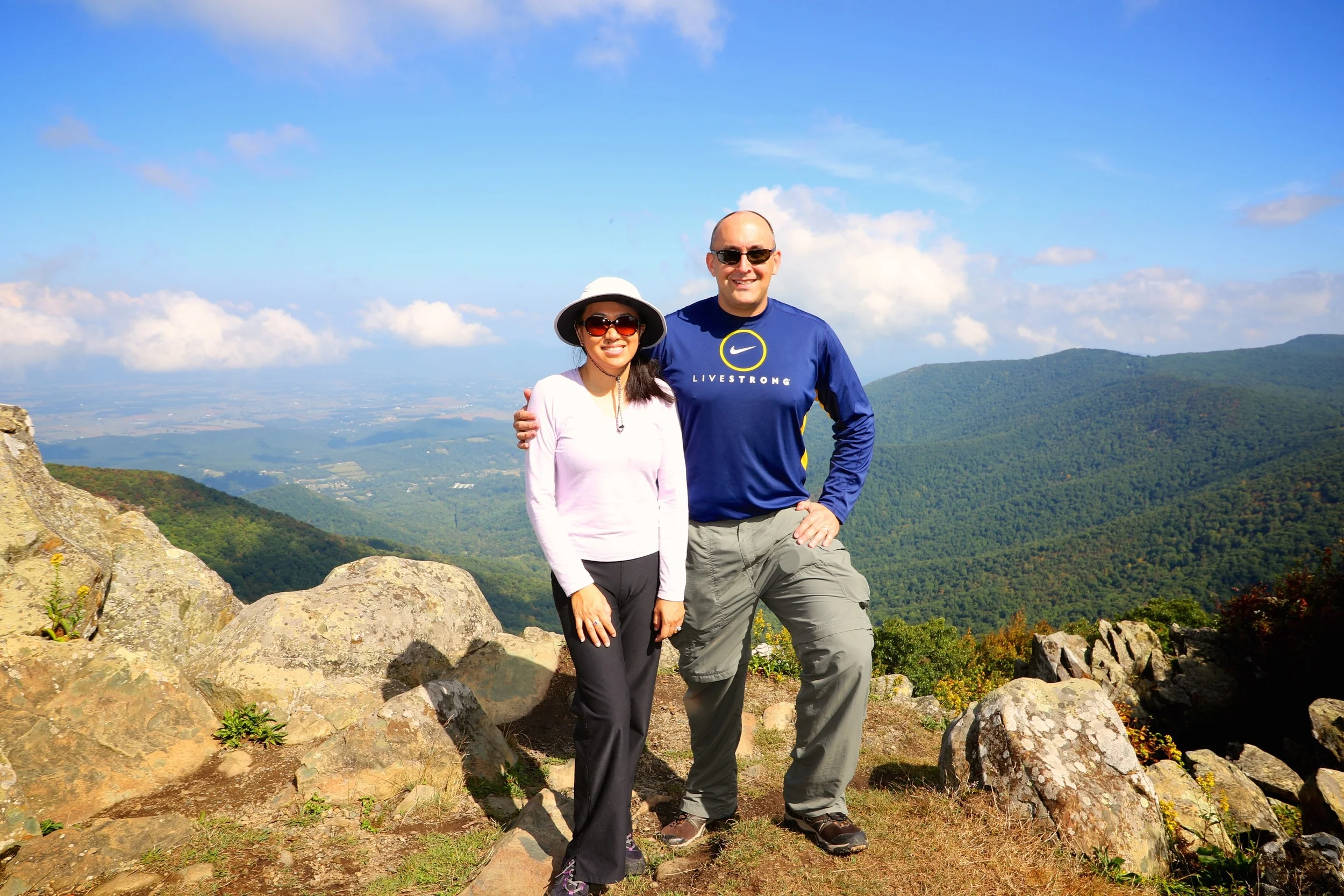
Five Years Ago Today...
It was five years ago today that I was diagnosed with cancer, and on this day, February 14th, 2016, I’m officially a five year survivor of cancer.
It was five years ago today that I was diagnosed with cancer, and on this day, February 14th, 2016, I’m officially a five year survivor of cancer.
I know that most people will think that something that happened five years ago was an eternity ago, but when you’ve been living with the aftermath of cancer every single day, it was only just yesterday that this happened, the blink of an eye ago. Five years after cancer is a huge milestone to have reached not just from a clinical perspective, but from a personal one as well, as these have been the most challenging years of my life. Just getting through the rigorous twenty-six follow-up appointments that have been required to get to this point has been a story by itself, when your whole life and future is on the line with every scan.
These years after cancer have been a truly humbling experience. Not a single aspect has been easy, and I've struggled in every possible way that one can struggle. My own body had terrified me and frustrated me in so many ways. It took me years just to feel safe in my own skin again, and I had to put everything I had into getting my body back physically. I struggled with my mind, trying to cope with periods of depression from having seen so many changes in my life so suddenly, and with post-traumatic stress from painful memories that had haunted me. I struggled spiritually, trying to find ways to overcome my fears, to release the pain that I had felt inside, and to make peace with the past so that I could keep moving forward in life.
I'm not the same person that I was five years ago. I’ve crashed and burned to the ground hard three times in these past five years, not just from the shock of a cancer diagnosis as a young adult, but from all of the struggles to evolve and grow into life after cancer. That’s three times since being diagnosed with cancer, that I've felt completely shattered and broken inside, and have had to give up so much of what I'd believed about life, and start over. One doesn't simply do an about face on decades of programming and expectations about life in an instant. It takes time measured in years to heal and evolve, to slowly let go of the old, and to finally grow into our post-cancer realities.
There have been some very dark times and some dark moments through these past few years. There was an entire year where I couldn't be around anybody at all, except those that I had the utmost faith and trust in, because I constantly felt so vulnerable and threatened from always being under the gun of relentless scans and follow-up appointments. There were certainly some things that I wished I could have handled better than I did, and not everything worked out quite as I'd hoped, but I know in my heart that I was always doing the very best that I could, even when it wasn't enough. I was very lost for a time, but never lost myself. Instead I found myself, with the help of the right friends, the right people, and the right souls in my life to help guide me, and I've learned and evolved so much. If you haven't known me in the past few years, you're going to have to get to know me all over again.
Being diagnosed with a rare and aggressive cancer at age 33 was a wake-up call that nothing is forever, and that there are no guarantees in life for anybody. Life after cancer is the time to get busy living, and I've enjoyed life more each year since cancer than I had in all of my previous years combined. That's a whole lot of living and enjoyment of life in a few short years. I love so much more deeply than I ever have, and have learned to never stop believing in yourself. I've come to appreciate the true power of friendships, and the importance of self-love and forgiveness. You can't give to others what you don't have for yourself, and life and our time here is far too precious to waste it holding onto grudges, resentment, and disappointments from the past. I've come to love and appreciate even those that had hurt me in the past. We all have a purpose, and roles to play in each others lives. Every single last person in my life over these past few years has made a difference in mine in ways both large and small that's helped to get me where I am today, even if we were only a part of each other's lives for a short time, and even if we had caused each other pain. We cancer survivors take nothing for granted. Love is good for the soul, and I will forever love and be grateful to those that helped to get me through such a distressing period of my life.
As I reach five years of cancer survivorship, I'm very proud of all that I've achieved, the manner in which I've been able to heal, and the ways in which I've been able to give back. I continue to be active in numerous support groups and non-profit organizations for those fighting cancer today, and the writing that I do has been shared and spread by the most prominent cancer advocacy organizations in the world, helping it to reach hundreds of thousands of people. It's been no small feat to bare my soul to the world in such a way, but doing so has helped me to heal, and has uplifted countless others as well. It's something to be very proud of.
The burden of cancer has been a terrible thing to have to learn to carry as a young adult. My life today is very different than it was before, and so much evolution in a few short years has been beyond painful, but I wouldn't trade all of this personal growth and the new perspective on life that I've gained for anything. This new life that I've built for myself after cancer, complete with all of its unique challenges, has become far more than a consolation prize or silver lining. It's a truly beautiful golden lining that I've finally learned to fully accept and embrace, and I wouldn't have things any other way.
God bless,
Steve Pake
Special thanks to my wife, Debbie. From Day 1 of this journey 5 years ago, you've always been there, have never left my side, have never stopped loving me, and never gave up on me, even when I know there's times you wanted to. You kept going, for me, for us, for our love, and for our family, despite all of the pain and frustration that this has caused both of us. Thanks for having brought so much love and joy into my life, and for never giving up on me. I'm eternally grateful, and forever yours.
Your song to me...

World Cancer Day 2016
#WorldCancerDay 2016. I found my post from last year where I was finally ready to start opening up about my challenges with post-traumatic stress after cancer. I thought it would take a few months to write up, but it ended up taking all year, and I'm still not done.
I found my social media post about World Cancer Day from last year (before this website existed), where I was finally ready to start opening up about my challenges with post-traumatic stress after cancer. I thought it would take a few months to write up, but it ended up taking all year, and I'm still not done. Writing about PTS after cancer is probably one of the hardest, but most worthwhile things I've ever done. Writing is very cathartic for me, and just being able to express all that I've been through helps me to heal from it all. I ended up having so much to say on PTS after cancer, that I had to split it up into three parts. I got through the first two parts last year, and am finally gearing up to start writing the final part in the coming weeks. The moral of the story is that the challenges we face as cancer fighters and survivors don't end after our treatments do, but can continue on for years.
A teaser from something I'm working on, coming out in a week or two:
"Not a single aspect of life after cancer has been easy. I've struggled in every possible way that one can struggle, physically, mentally, and spiritually. My own body has terrified me and frustrated me in so many ways. It took me years just to feel safe in my own skin again, and I've had to put everything I've had into getting my body back physically. It didn’t just “bounce back” as doctors tend to suggest. I've struggled with my mind, trying to cope with periods of depression from having seen so many changes in my life so suddenly, and with post-traumatic stress from painful memories that have haunted me at times. I’ve struggled spiritually, trying to find ways to overcome my fears, to release the pain that I've felt inside, and to make peace with the past so that I could keep moving forward in life. I'm not the same person that I was before."
The changes that I've had to make in my life from fighting mental health issues after cancer such as depression and post-traumatic stress, has shaped my life after cancer just as much if not more than the experience of the physical fight against cancer itself did. I'm happy to say that this is all behind me now. I've mastered my mind, conquered my demons, and have found ways to heal spiritually from all of this. My mind still doesn't always cooperate with me fully, but there's no longer any question about who's in charge.
"PTSD After Cancer Part I - What It Feels Like"
"PTSD After Cancer Part II - Coping and Overcoming"
These essays are not light reading, but if you really want to know the hell that cancer can put you through, give it a read, and please ask anything. This is why I write. The experience of post-traumatic stress after cancer hurt me and haunted me so badly for years, that I couldn't even talk about it. I just couldn't go there, but I needed to release this pain, and am happy that I've finally started getting it out.
When I started experiencing post-traumatic stress after cancer, I scoured the web trying to find information and perspectives, but couldn't find one single solid account of someone like me experiencing post-traumatic stress after cancer, and what it felt like, and what I could even do about it. In fact, back in 2013 when this happened, cancer survivors weren't even really "allowed" to have PTS yet on the clinical side of things, which was complete rubbish.
So now through my writing on my website, the world has a real first-hand account of what PTS/PTSD can be like for cancer survivors, and thousands of people out there feel just a little less alone. US News & World Report Health even interviewed me about my story, which I was very proud to be able to contribute to at the national level.
It's so important that we all share our stories, from awareness of the diseases we've faced and early detection, to how we've coped with all that cancer has thrown our way in the aftermath. It helps knowledge about the cancer experience spread to the medical community, and it can make the experience for others out there fighting, or just trying to survive in the aftermath, feel a whole lot less alone. There's nothing worse than feeling alone.
Massive group social media hug today to all of my cancer community friends, and to everyone that's been there for me personally through this personal hell of mine. You know who you are, and how much I love you. You are my family, and I thank you.
God Bless,
StevePake.com
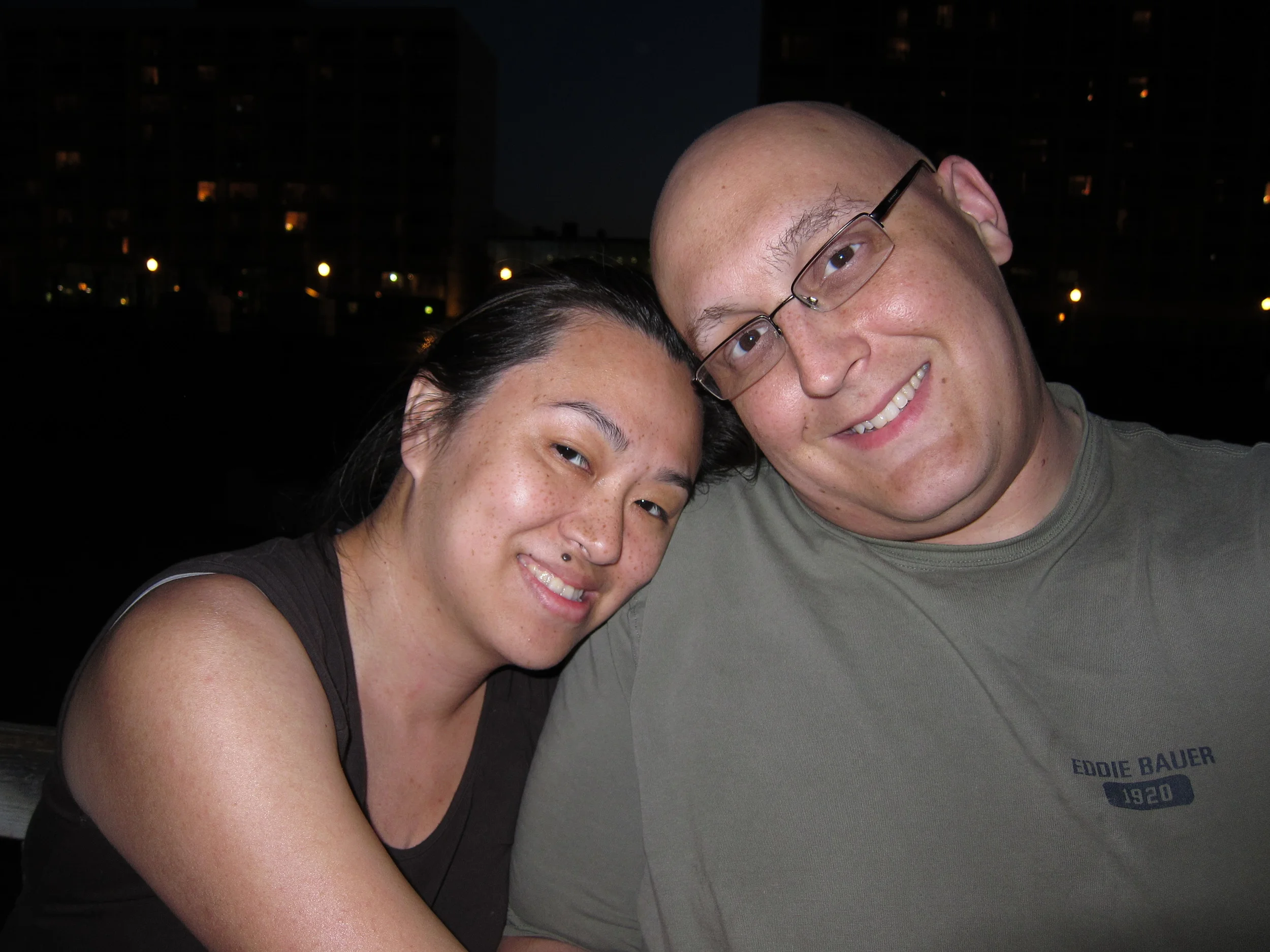
When You Gain Weight During Cancer Treatments
Chemotherapy affects everybody differently. You could very well lose weight if you end up having zero appetite from feeling sick constantly, and this is true for many. For me? Pardon the pun, but fat chance!
I've struggled with my weight for my entire life. I'm a 6'3" large-framed guy that most people think surely must have played football, so 300 pounds might not have looked like a whole lot on me, but it was still way too much. Through a lot of discipline and hard work many years ago, long before cancer, I finally managed to trim myself down to a far more healthy 240-250 pounds, and felt and looked good. I gained a bit of weight over the holidays one year, and saw 260 on the scale. I shook my head, and knew it was time to hunker down once again to keep my weight from spiraling out of control. And then I was diagnosed with cancer.
I was in a state of shock. The last thing on my mind was managing my weight at that point, but as the reality of my cancer diagnosis sunk in and I was about to start chemotherapy in March of 2011, I thought to myself, well at least I might lose that bit of excess during chemo! Chemotherapy affects everybody differently. You could very well lose weight if you end up having zero appetite from feeling sick constantly, and this is true for many. For me? Pardon the pun, but fat chance!
A confluence of factors conspired against me, from extreme fatigue, steroids causing me to balloon up, and out of control stomach acid production for which the only relief was to keep on eating, to give it something to absorb. Otherwise, I felt like I was constantly on the verge of gagging, and so I had to keep eating and the pounds piled on. It was so demoralizing to watch years of discipline and hard work going to waste, but it's just how things worked out, and I finished my five month fight against cancer back at nearly 300 pounds again! I had never felt more miserable and disgusting in my life, but I was still here and had my first all clear, and that's what counted.
As far as weight gain during treatment, body image issues, and tips on losing weight after cancer, here are some hopefully helpful tips.
1. CUT YOURSELF SOME SLACK
Don't be critical of yourself if you gain weight while fighting cancer, and nobody else worth your while should either. Your body is going through hell, and you're just along for the ride. What's most important is to make it through your treatments, and to survive. There's no bonus points for having lost weight, nor are there any penalties if you gained some! If it happens, it happens.
Date night in March 2011, a few days before I was going to start chemotherapy.
June 2011 after being pumped full of poisons, steroids, and being laid up for three months. Then I gained more weight after the RPLND surgery!
2. TRY TO STAY ACTIVE IF YOU CAN
Whatever you can do to stay active during treatments will help to minimize the impact to your body, maintain your strength, and help make your recovery easier later. If you're able to keep going to the gym or stay in any sort of exercise routine, God bless you, keep doing it. I couldn't, and paid dearly for it later.
3. CLEAN UP YOUR DIET
For most people, we just have to eat whatever we can keep down during our treatments, but try to maintain a healthy diet after cancer. Chemotherapy and the bizarre after-effects of a lymph node dissection surgery left me with a far more sensitive stomach and G/I system in general. If you need help setting up an appropriate diet, talk to your oncologist or primary care for a referral to a nutritionist which is familiar with the dietary needs of cancer survivors.
4. START EXERCISING AFTER TREATMENTS
Starting to exercise regularly two years after my cancer diagnosis changed my life. I had to go all-in on exercise not just for weight loss, but to help control pain and hormonal issues so that my body would even function correctly at all. Exercise wasn't just good for my body, it was great for my mental well-being also. Exercise gave me time to process all that I had been through, an outlet for post-cancer stress and anxiety, and gave me a feeling of accomplishment whenever I completed a workout, no matter how fast or slow. Join a gym, and get a personal trainer if you need to. Invest in yourself.
5. BE PATIENT AND NEVER STOP BELIEVING IN YOURSELF
Because of chronic post-chemo muscle fatigue issues, I couldn't exercise very hard or for very long in my initial few years after cancer. I learned to be patient and accepting, but never stopped believing in myself. My body sputtered constantly, but I kept pushing, and finally managed to get myself off the ground after two years of trying. It was only then that I could finally exercise hard enough and for long enough to start burning some serious calories, and for the pounds to start coming off. True healing can take many years. Be patient with yourself and your body.
6. FIND THE SUPPORT THAT YOU NEED
Losing weight is hard even for normal people, but even more so for cancer survivors with all of the challenges that we face in our lives. Peer or group level support is essential, especially from other cancer survivors. They just got me and knew exactly what I was facing, understanding the challenges of peripheral neuropathy and muscle fatigue that many of us face after being exposed to the toxic chemotherapy drugs. Not once did I feel even the slightest bit discouraged by my cancer survivor friends. It helped to keep me motivated even when I’d wanted to quit, and I couldn’t have been without that support.
What a difference a few years make in 2015! Looking good, feeling good, climbing mountains, and down 40 friggin pounds from the end of cancer treatments! Waahoo!!!
It was a huge turnaround in 2015 and very proud moment when I finally saw 259 on the scale, marking having lost all 40 pounds that I had gained since my cancer diagnosis. I passed my annual physical with flying colors, and all of my numbers looked great. Next up for 2016? Back to 240 pounds, let’s do it!
StevePake.com
Cold Weather Cancer Survivorship Tips
Cold weather never bothered me before cancer. My body would just naturally adjust on its own, and all was well. After cancer has been an entirely different story, and as the temperatures drop below 40F, my body just wants to grind to a halt on me. My quality of life was miserable, and I just couldn't bear it anymore. I started to make some changes, and have the following cold weather survival tips.
Cold weather never bothered me before cancer. My body would just naturally adjust on its own, and all was well. After cancer has been an entirely different story, and as the temperatures drop below 40F, my body just wants to grind to a halt on me. Most of this has been due to chemotherapy induced peripheral neuropathy, as almost all of the symptoms that I have from this such as nerve pain, numbness, and muscle fatigue and weakness issues, all get worse in cold weather. As a testicular cancer survivor, even my testosterone levels would tend to swing around on me as energy levels dropped, and in the cold winter months I'd feel like a lethargic, depressive, and asexual lump. My quality of life was miserable, and I just couldn't bear it anymore. I started to make some changes, and have the following cold weather survival tips.
Keep Your Body Moving
I've found over the years that regular vigorous exercise is one of the best possible things you can do for yourself as a cancer survivor, especially during cold weather. No matter how awful I'd been feeling, getting out for a walk or run or whatever I could manage that day would make a world of difference, and I'd always feel so much better after. Regular exercise not only helped to reduce the pain I felt all over my body, but kept my energy levels up, my hormones where they ought to be, and my body humming. Keep your body moving.- Try to Maintain a Healthy Diet
From Thanksgiving through the New Year, we're inundated with all sorts of sweet temptations. When our bodies are already struggling, dealing with the ups and downs of too much sugary foods in our diets will make things even worse. Feel free to indulge a little, because otherwise you'll feel like you're missing out, but try not to go too overboard. All things in moderation. Perhaps just one or two of those holiday cookies, rather than a plate full.
- Get Some Sun and Fresh Air at Lunch
Break the cabin fever cycle, and get outside at lunch for some sun and fresh air. Even before cancer, I was one to suffer from mild seasonal depressions. There's nothing I've hated more than heading to work in the dark, and heading for home in the evening with the sun already down. It makes me feel trapped when I've already felt trapped by the history of cancer in my life. That hour of sun in the middle of the day when it's warmer wasn't just a burst of solar power and some fresh air, it was a taste of freedom that I needed, and helped to make a difference. Dress appropriately, and you won't feel the cold, either!
- Stay In Your Coping Routines
We all need to develop coping routines to get through our cancer fights and the survivorship years after. Just because it's the holiday season and we're all extra busy and stressed doesn't mean that you should cut these routines short, or drop out of them entirely. If anything, times of stress are when you need these coping routines the most! Some of my worst post-cancer meltdowns have all occurred in the winter months on the run up to the holidays, not just because of my own stress, but because of the stress of everyone else that's surrounded me. Refuse to budge, and stay in these routines. This is when they could be the most important!
- Plan a Trip Somewhere after the Holidays
We can all get a case of the post-holiday blues. Why not plan a trip to somewhere either warm, fun, or both, to break up the cold misery of winter? Especially after the peak of the holidays are over, there's always deals to be found somewhere. The planning and anticipation will keep you engaged, and you'll have a great time while on your getaway. Before you know it it will be March, the days will be getting noticeably longer again, and warmer weather and spring will be right around the corner.
Congrats! You've made it!
StevePake.com

Top 5 Lessons Learned in 5 Years of Cancer Survivorship
In November of 2015, I was invited by the Cancer Knowledge Network to write a guest post. CKN is part of Current Oncology, Canada's leading oncology journal, which is read by thousands of oncology professionals and patients.
In November of 2015, I was invited by the Cancer Knowledge Network to write a guest post. CKN is part of Current Oncology, Canada's leading oncology journal, which is read by thousands of oncology professionals and patients. It was a great honor to be invited to write for such a publication and to reach a new audience. This was also a huge opportunity to help spread the knowledge of my experiences, especially to oncology professionals, responsible for the care of many thousands of patients. What better thing could I share with such an audience than an updated list of my list of top lessons learned in five years of cancer survivorship?
Top 5 Lessons Learned in 5 Years of Cancer Survivorship

After treatments for our cancers conclude, every single one of us wants so desperately to believe that our bodies have been rid of our cancers forever, and that our fights are over. We want to believe that we'll be able to put what we've been through behind us, and that our lives will return to normal, if not a new normal. That's exactly what I believed in July of 2011 after a five-month long fight against testicular cancer, but I was in for a rude awakening. My body was free from cancer, but my life wasn't. There was so much I'd yet to experience, and so many important lessons that I'd learn along the way.
1. THE END OF YOUR FIGHT IS ONLY THE BEGINNING OF YOUR JOURNEY
The biggest and most shocking realization I’ve had is that the majority of my struggles all came after my cancer fight had ended, and that fighting cancer was the easy part! After my cancer fight, I had yet to experience excruciating nerve pain and muscle weakness issues that developed, all due to chemotherapy-induced peripheral neuropathy. I'd yet to experience anxiety about every little ache and pain, worrying that my cancer had returned, nor hormonal ups and downs that caused huge swings in my mood and energy levels. I'd yet to experience recurrence scares where I feared that I had just lived my last good day. I had no idea how to handle the depression and post-traumatic stress that followed all of this. I had beaten cancer, but became so overwhelmed with all of the unforeseen and seemingly endless challenges in the aftermath, that I contemplated suicide as a means to an end. The trials of life after cancer had pushed me that far.
2. NEVER STOP BELIEVING IN YOURSELF
Your attitude is everything, and is a self-fulfilling prophecy. No matter what it is that you're facing, if you believe in yourself with all of your heart and soul that you'll find a way to cope, to heal, or to overcome, you'll find that way no matter how extraordinary. If you don't believe in yourself, not only will you not find what you need, but you'll prolong your own suffering and pain. Never give up, never stop believing in yourself, and keep your heart and your mind open. Surround yourself with positive and uplifting people that believe in you too, who can help to carry you during the times you might stumble.
3. THE POWER OF THE RIGHT PEOPLE AND FRIENDSHIPS
Time and time again, it's not been pills, but the power of the right people, the right friendships, and the right souls in my life that had made critical differences for me through periods of distress. Through the power of the right people in my life, I've found the encouragement that I’ve needed, spiritual guidance, and those that could help me laugh, forget, and have a great time. Never be afraid to keep opening new doors, and bringing new people into your life. You never know when the next person you meet could change your life for the better. Some amazing souls out there have been all the medication I've ever needed, and I'm so blessed that they've become a part of my life.
4. NEVER STOP LIVING AND ENJOYING LIFE
I've been that person, huddled up in a corner in tears, and suffering from post-traumatic stress after cancer. I was afraid of everything and everybody, and just wanted to hide from life and the world, but I refused to give in. Don't let cancer keep you down. Your survivorship years are the time to get out there and truly enjoy life. Everything is sequential. Never stop believing in yourself, and never stop opening new doors. Find things that you enjoy doing, people that you enjoy doing them with, and have the time of your life. Make plans both big and small, and do the things that you've always wanted to do. I've learned that each day is a gift and never let one go to waste, and have never enjoyed life more than I have after cancer. The best way to survive cancer is to LIVE!
5. LOVE YOURSELF UNCONDITIONALLY
Above all, love yourself unconditionally. But what does that mean? Loving yourself unconditionally means accepting all that you feel. It means allowing yourself to sit in that secluded corner to cry, without feeling ashamed. Loving yourself means pushing hurtful people and things out of your life, without feeling guilty about doing so. Most of all, loving yourself means simply being yourself, without feeling the need to apologize to anyone for being who and what you are. Ridding myself of this internal mechanism for self-loathing, and learning the importance of self-love and acceptance, has been my gateway drug towards healing from within, reducing stress, reducing anxiety and depression, and finding what was truly meant for me in my life. Our perceived faults are not flaws. We're all perfect just the way we are, and were made the way we are for a reason. Embrace yourself, and love yourself unconditionally.
These past five years of life after cancer have put me through more than I could have possibly imagined. Both cancer survivors and care providers should never underestimate the potential challenges of life after cancer. Even reading about such possibilities while going through treatments never registered, because it simply wasn't believable to me at the time. What could possibly be worse than what I was already going through? Believe it. Cancer survivors everywhere should be encouraged to find and stay closely connected to sources of support throughout these years. It is my hope that through the sharing of my story, care providers will have greater recognition of these patient challenges after cancer, that survivors will become more attuned to the very real challenges that we can face, and not be afraid to seek the support that they need.
StevePake.com
"Hello From The Other Side of Cancer"
I’ve been hooked on the new Adele song, “Hello,” for the past few days now and finally figured out why.
I’ve been hooked on the new Adele song, “Hello,” for the past few days now and finally figured out why.
I don’t have any long lost loves that I haven’t gotten over or that I’ve felt guilty about hurting. My wife is my soulmate, my first and only love, and we were very blessed to have found each other at such a young age. I relate to the song very strongly instead as a cancer survivor that’s struggled to heal, struggled to move on, and is still in mourning for those younger and more carefree days that Adele sings about.
“There’s such a difference between us, [my pre-cancer and post-cancer selfs],
and a million miles.”
I wrote a blog about this feeling or state earlier this year, “On Life and Its Huge Contrasts”, just mourning the loss of so much innocence after having faced cancer as a young adult. It’s been such a rude awakening. I wouldn’t have things any other way and accept life for what it truly is today, but it doesn’t mean that I don’t still long for those younger and more carefree days.
“I’ve forgotten how it felt before [cancer] fell at our feet.”
In “Hello”, it’s like I want to call the pre-cancer version of myself to just see how things are going, wondering how life might have been different. I always feel this way whenever I’m hurting inside, like I am right now. Another round of scans today, and another round of waiting. This is checkup #26, and I’m so damned tired of this. I’m tired of feeling threatened, tired of having to make yet another “emergency landing” because my body, my one vehicle to carry me through this life, tried to kill itself when I was only 33. I just feel trapped and afraid in my own body once again, and how can you ever get used to that? Can you? Is there a such thing as a “routine” emergency landing? Not really, yet that’s what this is, and I resent having to keep going through this over and over again. It’s traumatizing to one extent or another every single time, and I struggle to cope each time.
“They say that time’s supposed to heal ya, but I ain’t done much healing.”
I’ve come a long ways, and have actually done a tremendous amount of healing even this year. Yet here I sit late at night after everybody else in the house is asleep, crying my eyes out as I listen to this song on repeat play, really just the first verse. I don’t even know exactly what I’m feeling, but obviously I’m still feeling, and hurting, from all that I’ve been through. A painful past, some nasty scars, the loss of one too many friends, recurrence scares, and so many hard times. I accept it, and embrace it, and no longer try to deny anything that I feel. That just makes things even more difficult. “I’m sorry for all the pain that I’ve caused myself, for having denied my own feelings for so long.” These powerful Scorpio emotions are mine. I own them. It’s a gift to be able to love people as I deeply as I do, but it’s a double-edged sword because of how much I can hurt as well.
“I must have called a thousand times, But when I call you never seem to be home.”
There’s never gonna be an answer, because there’s no going back with this. This is my life now. Once you’re in this club, you’re in for life. I’ll never not be a cancer survivor in this lifetime. My pre-cancer self is out there in a parallel universe somewhere, still living carefree and oblivious to reality, and I’m seething with jealousy of that during these hurtful times. The comfort I take is that I guarantee you, I’ve lived and enjoyed life more each year since cancer more than my pre-cancer self has in all five, still taking everything in life for granted. That’s what it takes to get through this. Live your life. Enjoy it like crazy. Never let a day go to waste.
We’re two weeks from Christmas, and I’m a wreck. I’m scared as hell for no reason and I know it, but that’s what cancer and post-traumatic stress can do to you. I’m far from my best right now, but I’m doing my best, coping in the best ways I know how, and that’s all one can do. This time will pass quickly, and I’ll be back to enjoying life like crazy again. But right now, with the tears falling, it hurts to the core.
“Hello from the other side of cancer.”
StevePake.com
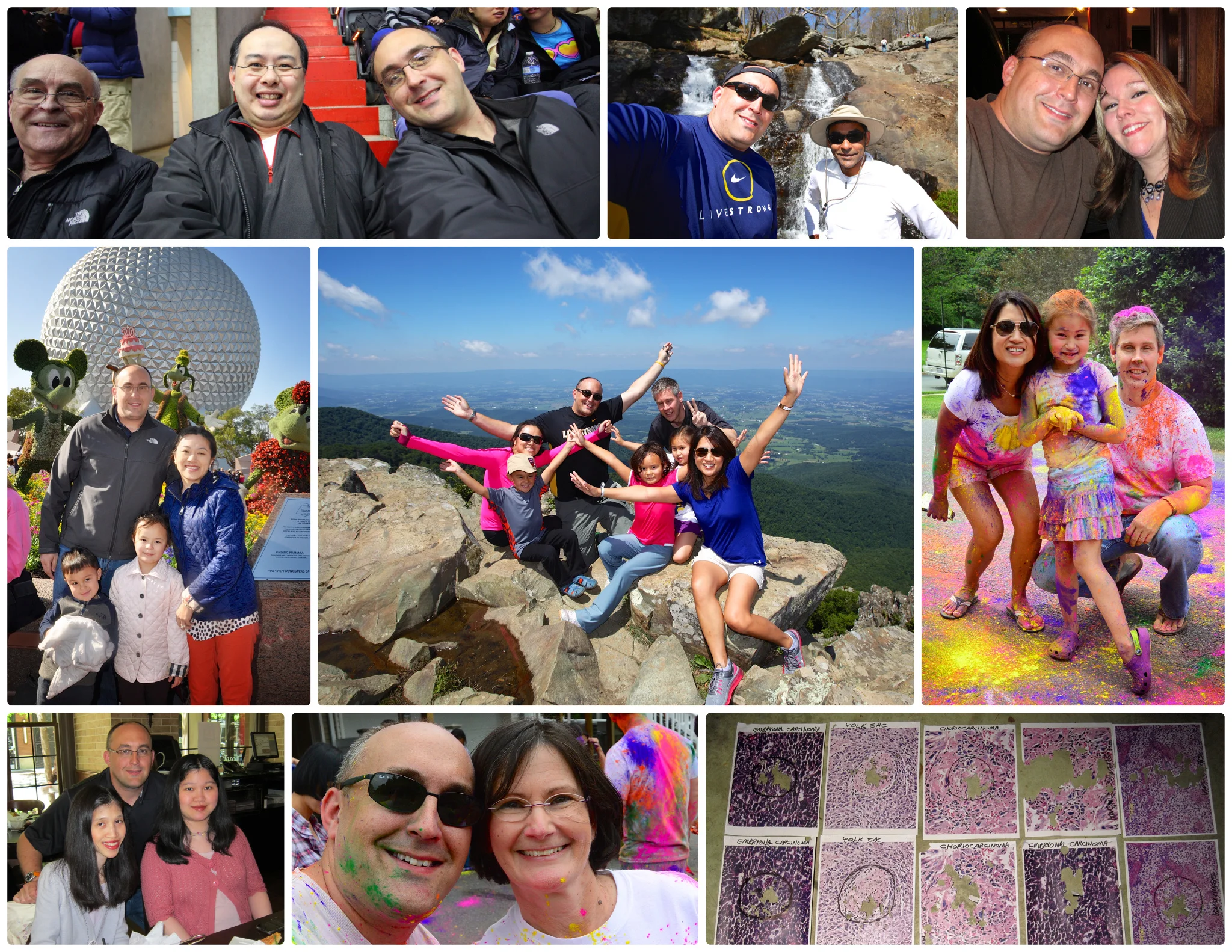
PTSD After Cancer Part II - Coping and Overcoming
This is Part II of my three part series of essays on my struggles with post-traumatic stress after cancer. In Part I described what the whole experience felt like, and in this part I'm sharing the story of all that I did to cope with and overcome it, and all of the wonderful people that helped me get there. Fighting cancer was the easy part. Recovering from PTS after cancer is so much harder, because at first you have no idea who or what you're fighting against, only to realize it's you.
This is Part II of my three part series of essays on my struggles with post-traumatic stress after cancer. In Part I, I described what the whole experience felt like, and in this part I'm sharing the story of all that I did to cope with and overcome it, and all of the wonderful people that helped me get there. Fighting cancer was the easy part. Recovering from PTS after cancer is many orders of magnitude harder, because you have no idea who or what you're fighting against, only to realize it's you.
Post-traumatic stress gives you the feeling of internal panic as though your house were on fire, with you in it, but there's no window or doors in which to escape, and you can't simply run outside. It's your mind that's on fire, where you live, and it's all going up in flames. You’re panicked because you feel trapped and don’t know exactly what you’re supposed to do, or if you can even escape. When I first started suffering from post-traumatic stress after cancer, this is exactly what it felt like to me. I didn't understand what had started the fire, nor what was feeding it. I just knew that my mind was on fire, and had to do whatever it took to save myself.
PULLING THE PLUGS
As I look back on my journey through post-traumatic stress after cancer with the wisdom that a few years have brought, it's very clear to me now what had been going on, what my sub-conscious mind was seeing and feeling, and what my triggers had been. At the time, however, I hadn't a clue. I was blindsided and dumbstruck. There had been some signs earlier in 2012 of the trouble that was brewing within me, but I thought I had been doing perfectly fine. It wasn't any one thing that set me off, but rather a seemingly perfect storm of bad external stimuli that had hit me from all sides at once that did it.
With my mind ablaze, I did the only thing I knew I could do at the time, and just started pulling the plugs, on everything. Anything and anybody that didn't need to be in my mind or in my head space, just needed to get the hell out. The news and its daily death count and all of the terrible goings on in the world is enough to get even normal people on edge, and that was the first to go. I've not been a consumer of what they call "the news" for three years now, and haven't missed it for a day. Television and the Internet were all shut off, and I simply ran "cold" for awhile.
I had to do a bit of house-cleaning in my personal life as well. A person's eyes are the windows into their soul. I needed to be able to look someone in the eyes, and just know that they were good for me, right for me, would never bring any harm to me, and that I could trust them with my life. I needed to feel this level of trust towards anyone who was going to be in my life going forward because PTS made me feel like my life was endangered constantly, even if it was all in my head. Most fell into a large middle group of people who I knew cared and were concerned, but just didn't know quite what to do with me or how to support me. I tried my best to distance myself from such people. These were all good people, but good wasn't enough. I needed nothing less than the very best for me, someone that could stand by my side with confidence, and who just knew exactly how to support me.
There were, unfortunately, a person or two in my life who when I peered into their souls, I saw ulterior motives and hidden agendas. These people were gone from my life in an instant, without so much as a second thought, and were made very aware that they were no longer a welcomed presence in my life. I had sensed trouble within these people, and bridges were burned to prevent any more of this trouble from finding its way into my life. These were survival mode instincts. Get out, and stay the hell out. Right or wrong, fair or not, simply having caused me to doubt their intentions towards me was enough to fail me as a friend. These were not the types of people that I could have anywhere near me during this time. I was terribly hurt and wanted nothing more to do with these people, and banished them from my life.
Cancer changed so much about me as a person, but PTS and having "demons inside" changed me even more. It raised my bar for friendships through the roof, and a lot of people simply didn't make the cut, through no faults of their own in the majority of cases. The only people I could have anywhere close to me needed to be rock solid, dependable, trustworthy, and positive people. I could count on one hand the number of people that I felt this way towards. Cancer is already such a lonely experience, but experiencing PTS is even moreso. I withdrew from people I had loved and considered friends, I withdrew from interests and hobbies, and I withdrew from everything and anybody in my life because at the time, I didn't know exactly what was hurting me and why. I pulled the plug on everything.
I know there are some people that I've pushed away that have been very hurt, and I'm sorry for this. How the hell do you explain to someone that your house is on fire in your mind, and that whatever their deal or issue was, they just needed to get the hell away? This is how survival mode instincts work. You're fighting to survive, and nothing else matters. My conscious mind was no longer working, and all I was operating on were survival mode gut instincts. If I didn't feel at that instinctual level that someone was good and right for me, you were potentially registering as a threat, and simply couldn't be anywhere near me. And sometimes, this meant being alone.
YOU DON'T FIGHT A FIRE BY YOURSELF
As many people as I had suddenly pushed away, I knew full well that I needed help, but from whom? You don't fight a fire by yourself! You need the help of as many people as possible, from people that you know without a doubt are on your side. A critical mistake I had made during my first few years after cancer was actually trying to take the advice of many well-meaning people, including some of my doctors, to just try and "forget" all that I had been through and move on with my life. Maybe this works for some, but for me it was terrible advice. Scorpios never forgive or forget anything, and especially not something that had hurt us.
Cancer Community Support is Essential Long After Cancer: I had become disconnected from the support I had enjoyed from fellow testicular cancer fighters and caregivers at the TC-Cancer.com forum, which was one of the first places I found on the Internet back in 2011 when I was at the start of my cancer fight. Many of these people had drifted away from the forum, but I quickly tracked them down and connected with as many as I could find on social media. We were scattered all about, but just having them psychologically closer like this helped me to feel better, and safer. I logged back into the forum for the first time in awhile and made a post about the terrible anxiety I was struggling with. I had thought I was all alone, but one by one the responses popped up from others who had been on my same timeline, and who had been facing similar challenges in their own lives. Just knowing that I wasn't alone and wasn't nearly as isolated as I thought I had been made an immediate and huge difference. There's nothing worse for any cancer fighter or survivor than to feel alone!
One of the very best things about the cancer community is that we're always there for each other. When other friends fail you or just don't know how to support you, the cancer community just knows, and always has your back. Cancer community support can be a bit of a double-edged sword. There are plenty of sad stories, and not everyone you know is going to make it, but the support gained from this community of incredible people is simply invaluable and irreplaceable.
Support from the Medical Community: I called my oncologist's office in January 2013 to get a fresh prescription for some Ativan, because my anxiety was out of control. I was immediately relieved when I heard the voice of Trish Traylor on the phone, the best and most incredible oncology nurse ever. What kind of oncology nurse can you chat with about cancer, life, fast cars, and guns? I hadn't talked to Trish in quite some time at this point, but just hearing her voice on the other end of the line helped to put me at ease and bring some calm back into my life. Trish and I talked on the phone for a bit, and when I told her what was going on she dropped me the numbers to some therapists. I gave them a call later, only to find out that the first available appointments weren't for another 6-8 weeks for one, and 2-3 months for the other. I couldn't believe it and knew it wasn't going to do. I'm sure there were other resources in the area that could have helped on a more timely basis, but my house was on fire now, and I needed help now.
If I waited 6 to 8 weeks to get into a therapists office while experiencing PTS, there wasn't going to be anything left of me for therapy.
My local medical system had failed me here, and I knew I was on my own. I was very grateful that Trish was willing to exchange personal contact information with me, because I knew she didn't have to. Trish was a "safe" person, and I needed more people like this in my life. I would have many pep talks with Trish over the coming months, on her own personal time. Trish became a huge source of encouragement and guidance for me, and I was so grateful for her presence in my life. If you ever want to know a real-life angel, get to know an oncology nurse!
Trish Traylor and I at our annual summer kickoff color party. Oncology nurses are the most amazing human beings ever!
My friend from work, Claudia Ritchey, another angel in my life and an absolutely amazing human being.
Finding Your Innermost Circle: I also sat down for pep talks with my friend from work, Claudia Ritchey, quite often during this time. Claudia and I had bonded over the years and she just got me, and knew what I was going through not because she had been there herself, but simply because she was that brilliant and amazing of a woman. Claudia was a very spiritually connected person, and all it took was 5 minutes of talking to her and I would calm right down, and I just felt like everything was going to be okay. Claudia knew. I didn't know how she knew things, but she did, and I believed her. Claudia and I connected on a very deep and spiritual level, and she had always been a complete angel to me, except that she was leaving! Her last day at my office was the last Friday in that January of 2013, and I was going to have to find a way forward without nearly as much of her physical presence in her life.
Claudia had become like a big sister or sister-mom to me, with all of her southern gal warmth and charm to go with it. God bless her for being on-call for me throughout most of 2013. I knew she was far too talented and gifted to be sitting around as our office manager. She had sacrificed a very high profile legal career at the Supreme Court of the United States for her family, and clearly had callings elsewhere in life. God had other plans for her, and needed her to bless other people with her presence in their lives, and I tried my best to accept that she would be gone.
My cancer mentor Kim (right) and her twin sister Kelly on a visit to the DC area in early 2013.
I leaned heavily on my cancer mentor, Kim. Kim is a friend that my wife and I had known for over 15 years by this time, who had been diagnosed with thyroid cancer the year before I was diagnosed with testicular cancer. I didn't know what a cancer mentor was or why one might be needed, but without even asking I already had one. Kim volunteered herself for this role when she learned of my diagnosis, and it never mattered one bit that we had different types of cancers, nor that she was a she. We're all the same inside, and feel the same things, and so much of the young adult cancer experience transcends cancer type and gender. Kim got me. Kim knew exactly what I was feeling, and just knowing that I wasn't alone made things better, but Kim was in Pittsburgh. I quickly saw the pattern.
People that were wrong for me had been too close, and those that were right were too far away.
I found some important support that I needed and which helped to shore me up, yet still felt alone and abandoned at the same time. I didn't know what the answers were, and still had terrible amounts of anxious energy inside of me. All I knew was that I needed to find outlets for this, something, anything, or else it would eat me alive. What was done with some others in my life was done, and what needed to be done. No regrets. If something or someone was wrong for me, they just needed to go. I had closed various doors and slammed shut a few others, and there was no going back. As frightened as I was, it was much better to be alone for awhile than to allow hurtful people to continue to be a presence in my life. I simply prayed that the right doors would open in time, and tried to find the outlets that I needed to manage on my own.
FIND HEALTHY AND PRODUCTIVE OUTLETS
When I was diagnosed with cancer, there was little time to be stressed, or sit around and worry. I had chemotherapy sessions, surgeries to prep for, consultations, and tons of other appointments with this doctor or that doctor while struggling to keep my body afloat through treatments. Now, I was just waiting around and going crazy. I needed outlets, and I needed them now, or else I was just going to burn up inside. I couldn't even sit still long enough to go out to lunch, it was that bad! I felt threatened constantly, and like a sitting duck if I was waiting around in some restaurant. I had to keep busy, and I had to keep moving.
RUNNING. I had just started running at the tail end of 2012, which as it turned out, happened to be the origin of all of the strange pains I had been having when I was suddenly exercising muscles that hadn’t gotten much if any use in quite some time. Running would prove to have many benefits for me, such as helping control terrible nerve pain issues I was having, and keeping my hormonal levels cranked up. Most importantly, there was something very primal about running, specifically outside with the wind on my face, and trees and scenery passing me by. It gave all this energy inside of me a place to go, and fulfilled a sub-conscious desire to literally just run away from everything that I had been experiencing. No matter how anxious I had been that day, running would always help to bring back some calm without fail, and I needed that.
While dedicating an hour of time to go running or walking, it was also an hour of OFF time just for me where I could shut out the rest of the world and focus within. Running over lunch became my private "FU Cancer" time. I never listened to music when I went running, but rather got myself into semi-meditative states where I could playback a particular moment, or re-experience something awful that I had felt in a more controlled and safe environment. I could either process it, or just allow myself to feel something for the first time while in my "safe zone." I told myself that as long as I kept running, that cancer couldn't catch me. I knew this wasn't how things worked, but cancer plays the most terrible head games with you, and you have to play head games back! I knew it wasn't true, but it felt good to say it!
Taking up running is one of the best things I ever did for myself after cancer. It’s an entire chapter of my life, going from hardly being able to get up a single flight of stairs without wheezing after cancer, to being able to run 5K's in well under 30 minutes.
Becoming a running addict, and my first sub 30-minute 5K in April of 2015 after two years of trying fighting terrible peripheral neuropathy and muscle fatigue issues from chemo!
Not my bumper sticker, but so true!
RANGE THERAPY. A little shooting range therapy went a long ways too. I just couldn’t get this terrible flashback sequence of all of the worst moments of my 5 month cancer fight out of my head. It replayed itself over and over and over again, traumatizing me every time. It was so bad one day that I just had to leave work. I went to the NRA Headquarters shooting range in Fairfax, VA and put up a bunch of paper testicular carcinoma targets that a friend from NIH had hooked me up with. With the terrible imagery of these cancer fight flashbacks playing through my head and tears streaming down my face, I rapidly unloaded magazine after magazine into these cancer targets. I fucking hated cancer with all that I had at this point, and with every fiber of my being. I took great pleasure in ripping these stupid cancer cell prints to shreds. Cancer had caused my body to betray me, had taken my life hostage, and now even after cancer it was still finding ways to fuck with my mind. From then on, whenever this terrible cancer fight flashback sequence would start playing through my mind, I would immediately roll the new clip of shredding paper cancer targets with a 9mm pistol in its place, and I was never tormented by this flashback sequence again.
Range Therapy in January 2013, in the midst of the absolute worst of this. I had to take the day off of work, and I can't put into words how good this felt.
VIDEO GAMES. Yes, I even turned to video games as a form of therapy! I laughed out loud when I saw an article in 2015 talking about the potential benefits of video games for cancer survivors and those experiencing post-traumatic stress, because I knew how true it was. I would wake up in the middle of the night either naturally or due to a nightmare, and then my mind would just start racing with cancer-related thoughts and worries, and wouldn't stop. I had terrible insomnia, but there was no way I was going to sit around and worry about cancer all night long, so I would fire up my PS3 and play Gran Turismo 5 in the middle of the night, and race myself to oblivion. It forced my mind to focus externally, and any sort of video game that requires intense external concentration will do that! In the article they had mentioned Tetris, but a good racing game would keep my petrolhead mind just as occupied. It would stop the cancer thoughts from flowing, and I would go until I was so damned tired that I could drag myself back up to bed, and immediately crash and fall back to sleep. Taking drugs like Lunesta would help reduce the cancer insomnia, but just made my day miserable by making my peripheral neuropathy and muscle fatigue issues so much worse. Video games were an ingenious distraction for these middle of the night mind games. My mind was already racing about cancer, why not give it something else to race?
WRITING. I had been inspired by an article or two that Kim had been writing for the hypo-parathyroid association magazine that she had joined in the aftermath of her thyroid cancer. It just seemed like such a good way to vent, as I proofread a piece she had prepared in which she was venting her frustrations with her own young adult cancer experience. I knew I always had a knack for writing, and that it was an untapped talent that would never get any real use in engineering world in which I worked. Cancer sure as hell had given me plenty of material to write about, and so I started journaling my thoughts almost every single day.
Whatever terrible thoughts I was having, I dumped them into my journal in hopefully semi-coherent thoughts. There were a lot of terrible thoughts, and my journal quickly reached tens of thousands of words. It was through this private writing to myself that I started to get in touch with my true spiritual-self for the first time, and I began to understand who exactly I was, what my needs as a person really were, and all that was lurking inside of me. I took it all raw and head-on, numbed only by a bit of wine. I was never on an anti-depressant of any sort, and didn't want to be. I wanted to know exactly what was lurking inside of me so that I could learn how to grasp it, and then beat the shit out of it.
FEEL WHAT YOU NEED TO FEEL, AND JUST LET IT OUT
On a run in early 2013, a huge and paralyzing wave of anxiety suddenly swept over me to the point that I had to stop mid-run. I sat down on the curb right where I had stopped because I couldn't even make it to a park bench that was a short distance away, and just started sobbing uncontrollably. I was completely paralyzed by fear, and it still boggles my mind to this day what I was even afraid of. I was afraid of having to get the dreaded retroperitoneal lymph-node dissection (RPLND) surgery done, except that this was January 2013, and I had already had this surgery done 18 months ago in June of 2011!!! I completed chemotherapy in May of 2011, and was so disappointed that my post-chemo CT scans showed that I hadn't gotten a complete radiological response from the chemotherapy alone, as we all had hoped. There was still a lymph node or two showing on those post-chemo scans that were greater than 1cm, which met the standard of care for recommending this terrible RPLND surgery. Because my tumor markers had always been negative, it was purely a guessing game as to what exactly was still in these lymph nodes. It could have still been active cancer, and I was so terrified and disappointed by this, but at the time I didn't blink an eye. "Well, guess I'm getting cut," I responded to my wife on a text message.
I carried my warrior mentality with me straight from three months of chemotherapy hell, and right through the RPLND surgery that I had on June 22nd, 2011. I wasn't afraid of the surgery back then. When you're fighting for your life, a different mentality takes hold, and you just do whatever you need to do. My desire to fight and my desire to beat this stupid cancer and live far exceeded my fears. I never felt even an ounce of fear at the time, but it doesn't mean that I was never afraid. People have called me brave and heroic, but I've never felt that way about myself. We suppress our fears in order to get through extremely challenging life situations, whether we're fighting cancer or a war. I didn't know it, but I was absolutely horrified inside beneath this warrior spirit, and sitting on the curb on that freezing cold day January day, there all of those emotions finally came pouring out.
I didn't understand what was happening in the days that followed this particular episode, but through writing in my journal I came to realize the above, that I had simply been in a warrior mindset throughout my cancer fight, and that I had so many more emotions like these locked away inside that I just needed to release. I came to understand that I was hurting as I had been because I had never allowed myself to feel or express such powerful emotions, and that they were better out than in. After I sat on that curb for 10 or 20 minutes just letting all of that out, I was never afraid of that wretched RPLND surgery again, nor did memories from it haunt me as they had been.
I officially called bullshit on the notion that men aren’t supposed to cry or feel anything.
I no longer told myself that there was something wrong with me for feeling what I was. For the first time, I just allowed myself to feel whatever I needed to feel without judgement. I cried more in the first half of 2013 than I ever had in all the rest of my life combined. Every time I cried, I released a little bit more pain from the dark corners of my mind, and felt better after I did. All of the frustrations, all of the fears, all of the disappointments about life when your own body betrays you in such a terrible way, I just let them all fly out of my body through tears. I journaled them all, with a bottle of wine in front of me at 2am, and a heaping pile of paper towels overflowing the trash can I parked next to the couch. Mere tissues weren’t nearly enough to absorb this big boy’s tears.
LIVE LIKE YOU WERE DYING
In this first half of 2013, two years after my cancer diagnosis and six months away from hitting the all important two years cancer free point, I just had this innate fear that it was inevitable that my cancer was going to come back. I couldn’t shake it no matter what I did. I had six months of active surveillance to go, and just felt like something was going to happen The closer I got to this two year finish line, the worse my anxiety became. I felt like if something was going to happen, it was going to happen sooner rather than later, and that my "last good day" could be any day now. Even when my PTS issues were switched off, I just couldn't shake this feeling. I was genuinely afraid that this was my time, and wanted to live the best possible last six months of my healthy life that I could. No rational or logical thought mattered. The high five year survival rates for testicular cancer were comforting at the conscious level, but we're always afraid that we're going to be one of those few percent that have something happened. When you’re spooked, you’re spooked.

At a basketball game with my dad (left), and my longtime friend Richard (center), February 2013, just a matter of weeks after "ground zero."
FUN WITH FRIENDS. In February of 2013, I had tickets to go to the Wizards-Rockets game with some friends that had been planned a few months in advance. Bad thoughts were finding me that day and I almost didn’t go, but I refused to allow cancer and post-traumatic stress issues rule me. I forced myself to go, and it was a wonderful few hours spent with a long-time friend talking trash, seeing who could get the best photos of the cheerleaders, and maybe watching a little bit of the game. It was a few hours where my mind was solidly engaged on things external to the turmoil of my inner world. I enjoyed this time away from my own mind immensely. I don't think my pal Richard realizes just how important of a moment getting out for this game was for me, but he will now. It was the first time I said, "Fuck you cancer and post-traumatic stress, you're NOT going to stop me from living and enjoying my life." It was a huge moment that set me off on the right foot not just for the year, but for my entire life after cancer.
Hiking with Amit, Spring 2013.
THE GREAT OUTDOORS. I had always wanted to give hiking a try, but never found the time in my 35 years. My long time friend Amit took me on a hike around Sugarloaf Mountain in Maryland that spring. I loved it and took to it immediately, and enjoyed the fresh air and the scenery immensely. Taking all of this in while concentrating on the hike, and enjoying the company of another long-time friend meant another few hours where my mind was solidly focused externally, and away from the complete turmoil of my inner world. Amit and I followed this hike up with the 8-mile Catoctin Mountain loop, which was another few hours of solid external engagement for my mind, fresh air, great scenery, great company, and exercise as well. I'd loved to have gone hiking every single day if I could.
THE COMFORT AND JOY OF MY FAMILY. My wife and I went on our first private post-cancer getaway sans kids to St. Lucia in October of 2012 to celebrate our anniversary, and then went as a family to Disneyland over Thanksgiving. These were the most wonderful times of our lives, and I needed more of them. I needed to double down! We went to DisneyWorld in Orlando over spring break of 2013 where we were blessed with a week of absolutely perfect weather, and it was such a fun and wonderful time. Funny how it can be so easy to take family trips like these for granted. I loved and enjoyed every single second, feeling inside like this could be the last Disney trip I'd ever go on with my family.
We immediately hit the beach over Memorial Day weekend to our favorite beach, Rehoboth Beach in Delaware, and enjoyed a blissful beach weekend. Over the summer we finally went on the midwestern road trip that we had planned for 2011, but that my cancer fight spoiled the plans for. We spent a few days in Chicago, and finally paid a visit to Wisconsin Dells for the very first time. My wife and I had criss-crossed the Dells nearly every weekend for two years when she was in Rochester, Minnesota, and I was in Libertyville, Illinois. We had always wanted to meet halfway there one weekend, but we were young and had little money, and just didn’t want to spend it like that. We went to the Great Wolf Lodge waterpark and had an incredible few days, and became waterpark addicts. Our kids had so much fun that they didn’t want to leave even after a few days, but we continued on our way to Rochester, MN for my wife to meet up with some old friends, and then finally landed in Minneapolis for the Minnesota State Fair. It was a fantastic road trip, there was never a dull moment, and despite having travelled nearly a thousand miles by car, our kids were little angels the whole way and hardly complained.
My family was my heaven on earth, and I never wanted to leave them or be apart from them.
At DisneyWorld, Spring Break 2013
Our Summer 2013 Midwestern Road Trip, "The Bean" in Chicago
Road-tripping up to the Minnesota State Fair, Summer 2013
Living like you were dying wasn’t just about going on big trips, though. Hiking was free, and going to a basketball game with friends was minimal cost as well. Every weekend we had things going on such as trips to museums, trips to the zoo, and other places of interest. Every minute my mind spent planning for, anticipating, or being engaged with an enjoyable activity, was a minute it wasn’t spending in a state of complete distress worrying about things I had no control over. It didn’t mean that I wasn’t still afraid because I was, and it didn’t mean that I didn’t still have terrifying thoughts because I did. Staying solidly engaged with living and enjoying life as much as possible had the effect of slowing down the awful thoughts I was having to a trickle. At that rate I could process them one by one, as opposed to being flooded with them to the point of drowning in them as I had before.
IT TAKES AN ENTIRE VILLAGE TO KEEP CANCER SURVIVORS FEELING WHOLE
As wonderful as my wife, family, and friends were, I still needed more. Amit and his wife had just had their first baby and were busy with that, and my friend Richard and I were just on slightly different life rhythms, with kids just different enough in age that it made it difficult to connect. I was still too afraid to be alone, my wife commonly had to work on weekends and couldn’t literally be by my side at every moment, and too many of my other friends were scattered about the country.
If ever there was a time that I really needed a brother or a sister, someone dedicated to me and that knew me, and that I would feel totally and completely safe and comfortable around, this was the time. I needed someone that could fly in for a weekend if needed just to keep me company, because I was still hurting this badly inside, and couldn't be left alone. I actually do have a sister that most people don’t even realize that I have, but for whatever reason she’s just chosen not to be a part of my or my family’s lives, and I haven’t had any sort of relationship with her in over 20 years now. At best, my sister has just never really cared that I’ve existed, or at worst she's resented me. Not once have I ever felt like my sister has actually cared about me, all throughout my cancer fight I hardly even got a text message or an email from her, and as far as I know she never read even a single one of my CaringBridge online journal updates. For 20 years it didn’t really matter, but now, going through this, I really needed a brother or a sister in my life. Knowing that I had one but didn’t really have one just hurt, and it made the feelings of isolation and abandonment that I was already experiencing so much worse.
This was a herding instinct coming to the surface, and the feeling of safety in numbers. I had always been a very independent person, but suddenly became a people person out of nowhere. I needed my 'herd' to surround me and protect me, but who was my herd? There were definitely people that I felt close to, but weren't nearly physically close enough. I needed someone right down the street that I could feel this way about. I needed a miracle.
THE MIRACLE OF THE RIGHT PEOPLE, AND THE RIGHT SOULS IN YOUR LIFE, EXACTLY WHEN YOU NEED THEM
Natalie and Mark Way, and their daughter Josie. Beloved friends, and my second family.
On Saturday, February 9th, 2013 what I consider to be a miracle happened. My son William had a birthday party to go to for one of his daycare classmates, Josie Way. This was the very first week that I had managed to get my PTS turned “off” in the early days, although that does have to be used in quotations. PTS is like a trick light switch that wants to keep flipping itself back on. You can flip it off, only to have it flip itself back on again. I was still feeling so raw and vulnerable, and bad thoughts had been finding me again that morning. I didn't want to go. I was afraid, but it was all up to me. Due to a scheduling conflict with something that my wife and daughter needed to go to at the same time, if I didn’t take Will to his classmate's birthday party, he wasn’t going to get to go. I wasn’t ready to be around people yet, but I refused to give in, I refused to allow cancer to rule me like this, and I forced myself to go.
The party went almost exactly as I thought it would. I was struggling to hold back bad thoughts, I had tears welling up in my eyes, and I was still so spooked. I almost thought I was going to have to leave the room, but my attention started focusing on the hosts of the party, Natalie and Mark Way. They just seemed like a carbon copy of my wife and I, a very pretty and petite western appearing Asian woman, and a tall and goofy looking white guy. I had seen their daughter in Will’s class for at least a year and a half, but never remembered meeting them. I wondered how on earth I hadn’t until now, despite having been to dozens upon dozens of school birthday parties in the past.
It turns out that I have a very good sense for people, and if someone is supposed to be a part of my life or not. I knew within a week of meeting my wife that she was the one for me, and I've also sensed people that would be trouble well in advance as well. I took one look at Natalie and Mark, and whatever this sense that I have is, pegged the needle positively in a way that it rarely if ever has in my life. I had this huge sense that these were people that I was supposed to know, but was afraid to initiate a friendship. I had been hurt by others and couldn't afford to be hurt again, and I knew they’d quickly learn of my cancer story and issues with PTS. I was so afraid of being rejected, but listened to what my instincts were telling me, and took a huge leap of faith to initiate a new friendship the week after the birthday party.
It didn’t take too long to realize that our new friends did practically all of the same things that we did! Seeing social media updates, our first few comments towards each other were along the lines of "hey, we just did that yesterday," or "we were just there last week!" Natalie and I got to talking a bit more, wondering how we had missed each other all these years, only to realize that we were just missing each other by not even 5 minutes most days in the afternoon for pickup, and that we actually lived in the same neighborhood right down the street from each other! And when they started seeing my cancer related updates on the struggles I was facing in life, they didn't run away from me as I feared they would, but actually ran towards me and were immediately supportive in a very positive way. My mind was blown.
We had our first family playdate together a month or so later, after our schedules finally cleared. We met at a local park early in the spring of 2013 and then went to dinner together, and from there the most wonderful of friendships was born. Museum trips, hiking adventures, countless dinners, foodie adventures, park playdates, weekend trips, Game of Thrones, and even a co-coordinated vacation or two, and the list goes on and on. Whenever Debbie was tied up with work on a weekend, I could always sync up with these new friends of mine just a 5 minute walk down the street, and Debbie knew that I would be in good hands.
At Stony Man Summit in Shenandoah National Park for the Blackberry Festival, Summer 2014, and at our 2015 Summer Kickoff Color Party (right)
One of the first things anybody will notice about Natalie is that she just radiates positive energy, and that she has a laugh that can fill a room. She’s also the most wonderful of hosts, and never leaves anyone in her presence unattended for even a moment. If she’s engaged with several people and someone steps away, you might suddenly find all of this positive energy that she has beaming solely onto you, which has actually caught me off guard on an occasion or two! But most importantly for me, Natalie is a very present person. Maybe we were getting just a bit of special attention, but you’ll rarely if ever catch her fiddling with her phone in the presence of others, and her mind never drifts months ahead or back to months ago. She’s just present and accounted for at all times with whomever she happens to be engaged with, and that's exactly what I needed in a friend and companion. As Natalie was fully present with me, it forced me to stay fully present as well. This kept my mind from drifting to the dark and rotten places it would go on it own, and having such similar lives and so many common interests made this unthinkably easy and natural!
As for Natalie’s husband Mark, all I can say is that the man is a riot. He's one of those people without a filter that takes a certain type of person, with a certain sense of humor to be able to appreciate, and I was one of those people. On more than one occasion, my mind had been slipping back into the negative, only for Mark to say something completely off the wall funny, or he would send a funny text message that was so “out there," that it would snap me right back into the present. It would focus my mind on something far more engaging, like coming up with a witty reply or comeback! Natalie and Mark were a magical one-two combo that could keep the terrible darkness within me fully in check. It’s not that my other friends weren’t good enough. I was just in that bad of shape, had little to no control over my internal thoughts and emotions, and needed a level of friendship and companionship that was above and beyond anything else.
I'm so blessed to have found this level of friendship that I was so badly in need of with Natalie and Mark, at exactly the time I needed it the most. It quickly became the sort of friendship where you feel like you've known each other for your entire lives, despite only having known each other for a short time. The icing on the cake was that Natalie actually has a twin sister, Norma, who has the same energy and is just as amazing as she is. Natalie is everything I ever dreamed a sister ought to be, and now it was like getting a bonus sister for free! I very quickly fell in love with these two totally awesome Libra twins and their families, and they became beloved second families to me.
All together! Gearing up for a week of Spring Break 2015 fun in Orlando, while Norma was visiting with her family from Thailand.
A Huge Milestone
A year later on Martin Luther King Jr Day in 2014, our kids all had the day off from school and we had all planned to take the day off, except for Debbie who forgot! I went with the Ways to the National Air & Space Museum in Dulles, VA and spent a few hours there, and then we got lunch together on the way back. We had only planned to spend half a day together, but it was such a nice and unseasonably warm pre-spring day that we ended up hanging out at the neighborhood park during the afternoon too, and then we all got dinner together after Debbie finished up at work. This might seem like a fairly ordinary thing to do to many, but for me something hugely significant occurred on this day. It was the very first time in the three years since my cancer diagnosis that I had managed to go an entire day without even a single thought about cancer, without my wife being by my side for the whole day. It was then that I realized just what a huge blessing these friends of mine had been. Time and time again throughout this cancer journey of mine, it's been the power of the right people, and the right souls in my life at the right time, that have ended up making the biggest differences for me.
I’d wondered for the longest time over the years why we hadn’t ever met even in the grocery store right in our neighborhood in the previous six years, and the answer is because the time wasn’t right. I had contemplated suicide just weeks before we finally met, and needed the maximum benefit of the powerful new friendships that these two would provide to kick in exactly when I needed it the most. If their daughter's birthday party had been even a week prior, I simply wouldn’t have been able to go as I was in that bad of shape, and in no condition for any public appearance at all. I had zero control whatsoever over my emotions, and could be a wreck and in tears at any moment. And had I not flat out forced myself to take Will to his classmate’s birthday party even though I wasn’t feeling up for it, I’d have missed out on what has been the best and greatest friendships I’ve ever known thus far in life. Life is amazing. God winks.
Giving Thanks
Recovering from PTS after Cancer was an all-hands, all of the above effort. It took everything that I had, and everything that everybody else in my life had to help pull me out of it. It took every bit of love that my wife had for me just to keep me afloat. It took a deep commitment to self-care and self-healing, and finding healthy and productive outlets for such terrible energy I had inside. It also took great sacrifice, as my priorities and my focus in life had to change completely in order to handle this. There were people that just couldn’t be in my life anymore and that I had to say goodbye to, and others that I simply didn't have the time for anymore while having to put almost every bit of spare time and energy that I had into self-care and recovering, as I slowly nurtured my way back to good mental and physical health. I'm sorry to those that I had to leave behind. It doesn't mean that they weren't good people, they just weren't 'good for me' through this phase of my life and cancer survivorship. There were only a precious few seats for passengers on this ride, and I had to make sure that every single one of them was filled with the very best people for me. Nothing less would do, because I knew it was going to take everything to pull me out of this crisis.
Amazed how cancer community friends of mine always have a way of capturing exactly what I'm feeling, right when I need to express it. Thanks Chris Hornbeek for sharing this meme!
As for these most dear and beloved friends of mine that were able to be by my side during this crucial time in my life, none have had the physical experience or memories of helping to rescue me from my burning house. They also won't have any memories of helping me to put the flames out and then rebuilding, yet this is exactly what these friends of mine have managed to accomplish, just by being themselves. I know what I feel inside towards these friends of mine, and there is no greater love, no greater friendship, and no greater appreciation. There are simply no stronger feelings that one can feel. I don't know how to express in words exactly how strongly I feel, but it's a very deep and soulful love and appreciation that I know transcends the limits of our physical world. I'm indebted and adoring, and will love these friends of mine forever.
To my wife Debbie, my soulmate, and to my two totally awesome kids Katie and William, that never cease to put smiles on my face. To Claudia and Trish, to Amit and Richard, to Kim and Kelly, and to Natalie, Mark, and Norma. Thank you all, from the bottom of my heart, for being the right people, and the right souls in my life, at exactly the time that I needed you. Some of you I had only just met or known for a very short time. When others had failed me or just weren't what I needed, here you were, and not only did you help to rescue me from something terrible, but you helped me to find my footing, show me the way, and rebuild my life into something truly wonderful. I consider you all to be blessings, but the gifts of your love and friendships through such a crisis is not something that I can ever hope to repay. It's a blessing that can only be paid forward to others, to the next Steve Pake who needs it. This is all for you, in the hopes that it will inspire others to be that blessing to those struggling in their own lives, and to help those struggling find their way as you've helped me to find mine. Thank you for allowing me to share our stories together. Your support of me through such a terrible ordeal and period of my life will never be forgotten ever, and my love for you all shall be eternal.
Enjoying a nice pre-Christmas dinner in December 2013, when I knew I had finally made it. I had conquered the very worst that my cancer experience had thrown my way, found a new philosophy on which to live life, and some amazing new friends to share it with. I'm brimming with energy and optimism in this photo, knowing that I was going to come back better and stronger than ever, and I did.
Continue to PTSD After Cancer Part III - Managing Life After
StevePake.com