
Cancer Survivorship at Six Years
Six years after my cancer fight, I still GRIEVE the loss of my life as I once knew it sometimes, thinking that everything would always be okay, that my family would always be healthy, and friends that I truly love and care about will always be around. I want to believe that, but know it's just now how things work. Why do I get so sappy and emotional? Because I love you, and I want you to know that now, today, because I know that you might not be around tomorrow, or maybe I'm the one that might not be around.
Yesterday, a friend told me that an old friend of hers from high school just lost her 25 year old son to testicular cancer. He was diagnosed hardly a week ago, but the cancer was so far advanced that there was nothing that could be done, and he just passed away this week. Sigh. 💔
We ALL live in this world, where people that you love and care about today can be gone tomorrow in the blink of an eye, and without warning. It's not right and it's not fair, but it's how life really is. I've been here in a way, feeling like my own death was imminent not just once but several times. Luckily I'm still here, but I'll never get that innocence about life back again. It's a part of me that died. Other things have grown in its place, but it doesn't mean that I don't miss it. What I wouldn't give at times to just feel like forever is really going to be forever again, and to have that peace and certainty inside of me again. But I know that I can never have that again in this lifetime, and that maybe I wasn't meant to have that.
Six years after my cancer fight, I still GRIEVE the loss of my life as I once knew it sometimes, thinking that everything would always be okay, that my family would always be healthy, and friends that I truly love and care about will always be around. I want to believe that, but know it's just now how things work. Why do I get so sappy and emotional? Because I love you, and I want you to know that now, today, because I know that you might not be around tomorrow, or maybe I'm the one that might not be around. Ask me one thing that I feared during the times I felt like I was dying. Things that were left unsaid. How do I find peace today? By leaving nothing unsaid.
I'm turning 40 in October, and for years after my cancer diagnosis at the age of 33, this was just a pipe dream. I never thought I'd make it. I figured out why I'm so restless this year. It's because there's a part of my subconscious mind that still believes that, and that maybe my day is still coming soon. And how do I know that it isn't? That innocence is gone forever, and the persistent feeling of vulnerability remains.

Six years later I'm still spooked by this. I can feel that fear deep inside of me, but I'm at peace with it all. It's what drives me and pushes me forward, and sometimes we need that. Even as a cancer thriver, you might still be afraid. How else do I find peace in my life? By channeling this energy into meaningful things. Make each day count for something. Be a part of something larger. Create something of your own. The best way to live when you feel like life might be catching up with you again, is to never waste a moment! The best way to survive cancer is to LIVE! Get out there and make today happen!
Here's to SURVIVORSHIP!
Related Posts:
National Cancer Survivors Day 2016 - The Rush to Evolve After Cancer
Happy National Cancer Survivors Day 2015
StevePake.com

Cancer Survivors Are Grieving Too
One day I was reading my friend's website, and my jaw hit the floor when I read a post about grief. It was the first time I'd ever seen a "grief chart." I had no idea there even was such a thing, and I could easily identify myself at every single step of this big curve as a cancer survivor. I had been writing and sharing in my cancer journey for a few years at this point, and it had never occurred to me even once that this entire process and all that I was going through, was all really one massive grief curve.

My good friend, Hanssie, writes about the very painful divorce that she went through on her website. I've always enjoyed reading her thoughts, as she writes about her divorce in almost the same exact ways that I've written about my cancer experience. It's comforting in a way to know just how similarly we can experience and process traumatic events in our lives. I've really found myself in some of my friend's writing despite such different situations, and being at opposite ends of the country from one another, and never having actually met in person yet at that point, and being different genders. What does that tell you? It doesn't really matter what traumatic life experiences we've had, as we're all human inside, process things in all of the same very human ways, and that we're never alone. To struggle is human.
One day I was reading my friend's website, and my jaw hit the floor when I read a post about grief. It was the first time I'd ever seen a "grief chart." I had no idea there even was such a thing, but I could easily identify myself at every single step of this big curve as a cancer survivor. I had been writing and sharing in my cancer journey for a few years at this point, and it had never occurred to me even once that this entire process and all that I was going through, was all really one massive grief curve.
Mind blown.
It's pretty obvious and intuitive that when you experience something such as a divorce, that you're grieving the loss of your marriage, and someone you had loved. Similarly, if you've lost someone that you love to cancer, or a disease or some tragedy, no one needs question if a grieving process is taking place or not. Duh. When it comes to cancer survivors though, it's completely counterintuitive, and nobody really seems to understand, that cancer survivors are grieving too.
Everybody seems to think that cancer survivors are just supposed to be happy. Our doctors are ecstatic when they can actually cure someone, because plenty of cancers aren't curable. They think we're just supposed to go on with our lives and be over the moon, because we beat cancer. Our families and friends tend to think the same. Yes, they'd been through a little something, but emerged victorious and ought to be feeling like a million bucks. I'm telling you, it ain't like that. So what are we grieving?
Cancer Survivors Are Grieving The Loss of Their Lives As They Once Knew It
Nobody gets married thinking they're going to get divorced, and so a divorcee is grieving the loss of their marriage, the loss of someone they had loved, and are now facing the entirely new challenges of single life, and single parenting or co-parenting, all of which had been previously unimaginable. I know a few mothers, fathers, and wives who have lost someone that they've loved to cancer, and are now facing the challenges of a life that they couldn't possibly have imagined either, while missing their loved one every single day. All of these are naturally understood, but cancer survivors are grieving in much the same way. We too are grieving a "loss" - a loss of our lives as we once knew them - and are facing new lives as cancer survivors that we couldn't possibly have imagined, either.
Related: Cancer Survivorship - The Fight After the Fight and All of its Firsts
We were invincible and nothing could possibly happen to us, until something did, and now we know just how vulnerable we all are. We were in the best shape of our lives, and then cancer beat us down to nothing, and we have to start all over again. We thought we had control over everything, only to realize we don't, and now we feel so powerless. We were worry free, but now every cough brings the worry that our cancer has returned, and that there won't be a cure the next time. We're overwhelmed and afraid. It's all too much to handle, and we fall into depressions for weeks or even months at a time, when previously we had always been upbeat about everything. We find ourselves sitting in a corner one day, in tears and scared out of our minds, because our eleventieth follow-up scan is the next day, and we're petrified that "this is the one" where they're going to find something. We worry that our cancers have returned, that we've just lived our last good day (again), and that we're not going to be so "lucky" this time. We feel so alone as all of our friends are continuing on with their lives like business as usual, while we're perpetually fearing death and stuck dealing with all of this crap.
This is not the life we had expected for ourselves, facing cancer and all of this misery - and much like the divorcee, we couldn't possibly have imagined the lives we're having to live now if we had tried. The divorcee, the widower or someone that's lost someone, and the cancer survivor, all have something in common - the loss of their lives as they once knew it, and the completely unforeseen challenges of an entirely new life that they couldn't possibly have foreseen nor imagined. We all grieve. It's all the same process of loss and loss adjustment, just about different things.
How Do Cancer Survivors Grieve?
Going Down
I know some people in their 60's who have recently been diagnosed with various cancers, and many of them are in shock and disbelief, thinking they're too young for this. How do you think I felt at 33? That's right, nobody ever thinks they're going to get cancer, even those right at the median age for the diagnosis of many cancers. When I was diagnosed with cancer, I felt everything on the left half of that grief curve all at once. I was in shock, I was in denial, I was angry, and I cried for days. I was terrified out of my mind and thought for sure that I was going to die, and was in complete disbelief about everything. How could this be happening to me? I'm only 33! What about my children? We had just brought them into the world, and here I was on my way out already? Searchings, Disorganization, and Panic. I had just been laid off from my previous job in the months before I was diagnosed with cancer, so I can tell you a few things about loneliness and isolation, too. That was like being kicked when you were down.
Everybody is a little different, but during my cancer fight I went entirely numb. I shut down emotionally and just put a brave face on for my family and my children. If daddy looked like he was going to kick this cancer's ass, my family wouldn't worry as much. I didn't want them to. My children were so young and didn't know anything about cancer, but they understood that daddy's back went out once in awhile. We just told them that daddy had spiders and ladybugs in his back, and had to get some really nasty medicine for a few months to kill them all, and then I'd feel better. We eventually told them that I had cancer, and that I write this website to help other people find their way through this really rotten grief curve that nobody seems to think cancer survivors should be experiencing. Maybe they will after this.
The actual grieving process can easily look much more like the one on the right than the left. This is not necessarily a linear process at all, but you get the idea.
Rock Bottom
After cancer, I was back to life, got a new job and was back to work, back to kicking ass again, and I was energized and motivated. I loved my new job, loved my new colleagues, and loved having money in the bank again. Know what was awesome? Just having money to go out to lunch with friends, which was a helluva lot better than sweating every penny because I was out of work for six months due to a layoff and fighting cancer at the same time. We're one of the few people that actually kept a six month buffer of living expenses in the bank, because I had been worried about losing my previous job. That did happen, but who would have ever thought we'd need every bit of that to fight cancer, too.
For my first year and a half after cancer, I thought I was doing great, but still didn't have even the slightest clue what had hit me, nor what I had been through, but it all started catching up to me. Monthly scans were starting to get the better of me, and when my body acted up I worried, but nothing makes cancer more real than when friends you had made started dying of theirs. It's almost like my subconscious mind really did want to believe that my cancer was just a really rotten case of the flu, but watching friends die suddenly made it all real. This is cancer, not the flu. People die of this, and families are torn apart by this, and watching this happen to people I cared about is when the emotional floodgates finally opened on me.
I nearly lost my mind. In fact, I did lose my mind for awhile. I always had this rock solid confidence about me, but now I didn't know up from down, and spent every waking moment of 2013, two years after my cancer diagnosis, trying to stay one step ahead of PTSD. I fell into a terrible depression, I withdrew from friends, and I withdrew from my colleagues, and to this day have never really re-engaged fully. I know why, but that's a story for another day, having to do with complex trauma issues. About the only people I could be around at all were my wife and my two children, and my world became very small for a while. I thought I had everything figured out, but here I was adrift like a kite in a thunderstorm, two years after my cancer fight.
"Re-Entry Troubles" to the max.
Finding My Way Up
Related: Steve Pake's Top 10 Guide To Surviving a Young Adult Cancer
It took me a year, but eventually I figured life out and wrote the above essay, not for others but for myself. When one finally emerges from a long struggle, there's this moment of clarity where you have an intimate understanding of all that went right and why, and all that went wrong and why, and how you got through it all. This is the very first essay about cancer that I ever wrote, and I wrote it for myself because I wanted to remember, and because I never wanted to hurt like this again in my life. God forbid if that day ever came, I wanted to be able to read my own writing, so that I'd know what to do if I had forgotten. I just couldn't hurt like that again. Ever.
This essay to this day has been shared and read thousands of times on social media, and within hours of its publishing I had a few offers to join various cancer non-profit organizations. From that point forward, it just became a mission for me in my life to do everything in my power to help others through not just their cancer fights, but these challenging survivorship years after. I joined the Testicular Cancer Awareness Foundation and started blogging for them, because it just felt like the right place for me to be, and I got all of the right vibes and energy from the family that founded it. I made a lot of new friends in the non-profit arena, and there's so many similar people on similar missions that just like me, have grieved loss in their lives, and wanted to do good for others.
New relationships and new strengths, and all of the right people that I needed in my life.
I wasn't out of the woods yet, but I finally knew how to take care of myself, and how I needed to live my life after cancer. I enjoyed the hell out of every day the best way I knew how, I ran like the wind because it gave all of the anxiety I had freewheeling inside of me a healthy way to exit, and I bled into my keyboard to give all of that dark energy inside of me a healthy way out, too.
New patterns and hope.
My wife would often see me at my computer in tears, and asked me why I wrote if it hurt so much. The answer was not that I was hurting because I writing, but rather that I was writing because I was hurting inside, and my writing gave that pain a healthy way out of me, just as my running gave my anxiety issues a healthy way out of me as well. The PTSD that I experienced two years after my cancer diagnosis came far closer to killing me than the actual cancer ever did. That was so painful to experience that it took me another three years to even start opening up about it, but I felt so much better after I did. My writing has helped me release so much pain, and it's helped so many others find their way through their own.
The Top of The Curve
You know that you've done something really amazing and worthwhile when you have someone tell you that your writing has saved their lives, because they were so lost and afraid after cancer that they were ready to end it all, just like I was. They had found my writing and another person suffering like they were, and just knowing that they weren't alone, weren't truly crazy, and that other people deal with this shit too, was enough to keep them going. That's just amazing.
What if I told you that I've been told such things more than a few times now?
Mind blown.
I'll tell you that recently becoming a Director at the Testicular Cancer Awareness Foundation, and having launched an entirely new from the ground up TCAF Ambassadors program that I've created and am really proud of is all fine and good. Having won an award for my writing, and being able to say that I'm an award-winning cancer blogger is a pretty cool thing to be able to say too, but all of this pales in comparison to those moments like the above. When someone reaches out to me to let me know just what a difference I've made, and that they might not be here today if it wasn't for what I've been working so hard at over the years, that's what matters, that's what counts, and that's why I do what I do, bleeding all over my keyboard for the past few years.
I still have some days here and there when I feel like something's once again gone or going terribly wrong in my body, and knowing that I've done some good in the world with my time here helps me to still feel at peace.
Affirmation, Helping Others, and Full Loss Adjustment.
I'm finally there. It only took me the better part of five years, and I've never had to work harder nor for longer at anything than I have at this, but I'm there.
I look back on this long grieving process of cancer survivorship, and tear up at some of these dark times I've experienced. It's not right, and it's not fair, but that's just how life is sometimes. No matter where you are on this grief curve after cancer, I'm here to tell you that you're going to make it, even if your body isn't. Our bodies are fallible, but souls are immortal. I'm all-in on believing that even if you don't, because it's the only way I could stop being afraid of cancer, and I refused to live my life in fear anymore. Otherwise, I wouldn't have gotten to where I am today. I'd be perpetually stuck somewhere back on that grief curve around re-entry troubles and depression, and I just refused to accept that that's how things were going to be. No f****** way!
You just head straight past Go, and onto New Relationships, New Strengths, and New Patterns (including thinking patterns and beliefs!), because that's the only way you're going to get past where you are. You have to evolve. My motto is this. So long as you're not hurting yourself or anybody else, it's all fair game.
Now tell me again that we're just supposed to be happy after cancer. The next time you run into someone who thinks this, send them my way. I don't think my friend is fully over her divorce yet, just as I don't believe that deep inside I'm fully over having had cancer yet, either. I don't think my friends that have lost husbands or sons to cancer will ever fully be "over it" either, but we grieve and we evolve slowly but surely, and maybe one day, we can eventually reach that plateau of full acceptance and loss adjustment.
Related post: Longing To Feel What I Know I'll Never Feel Again After Cancer
There's still some days like the above when I once again find myself grieving about all of this, but I accept it now. Cancer survivors are hurting inside, just like a divorcee hurts, or someone that has lost someone hurts. We hurt about very different things, but it's all the same human process inside. There's nothing wrong with you. Cancer survivors are grieving too.
StevePake.com
Cancer Can Haunt Us For A Very Long Time
Today marks my last two days of chemotherapy for testicular cancer, six years ago. Why do I mark the last two days, and not the last day? Because I distinctly remember just how scared out of my mind I was, worrying that the chemotherapy hadn't done its job, and that I'd have to go through these months of misery all over again, possibly without a healthy exit.
Today marks my last two days of chemotherapy for testicular cancer, six years ago. Why do I mark the last two days, and not the last day? Because I distinctly remember just how scared out of my mind I was, worrying that the chemotherapy hadn't done its job, and that I'd have to go through these months of misery all over again, possibly without a healthy exit. My cancer was negative for blood tumor markers, so there was no way to get interim updates via simple blood checks. Scans are the only thing that would tell us, and I remember being so afraid that I just wanted to rip out all of my lines and run away. I knew that I couldn't, and had to take some extra Ativan with my chemotherapy just to calm myself down enough to make it through.

Six years ago seems like an eternity to most, but it's not that simple when it's cancer. It sticks with you and can find ways to haunt you even many years after that. As recently as just two years ago, I was minding my own business at work and hadn't given this milestone even a single conscious thought, when I was just overrun with anxiety and found myself in an unexplained state of panic. I was confused and didn't know what the hell I was afraid of, but then it dawned on me, that these were those last days of chemotherapy four years ago at that point. Consciously, I hadn't given it even a single thought, but subconsciously, my mind still remembered, was still thinking of this, and it was still afraid.
I wrote this blog about that day: A Snapshot of Posttraumatic Stress
I left work and went home for an emergency 5K run, as though I really were running away from this, as if to satisfy what this part of my mind wanted to do all along. It was even raining out, but I didn't care, and so there I was running through the rain with tears streaming down my face, because deep inside I was still so afraid of this. I felt so defeated. I thought I had made it past all of this, only for another layer of pain to reveal itself. There was no way in hell I was going to live my life in fear like this even so many years out, and vowed to do whatever it took to root this pain out of me. I couldn't live like this, and so just two years ago I started fighting again, not against cancer, but for peace of mind after cancer.
I didn't care what I had to do, what beliefs I had to overturn, or what parts of myself I had to tear down or burn to the ground. I wanted these demons gone, because there's nothing I wanted more than to feel at peace inside. Cancer wasn't the issue - I was the issue, and my own worst enemy was me.
Later that year, I wrote this: 10 Important Lessons on Life, Love, and Forgiveness After Cancer
My body had healed itself after cancer, and there were no cancer cells to be found, but I had never truly healed my soul from cancer. I really found myself in the story of cancer survivor and author, Anita Moorjani. I needed to learn forgiveness, and to allow myself to be exactly as I am as if I were fulfilling a purpose. Forgiveness and self-love were both foreign concepts to me, but deep inside, I still had never forgiven my body for developing cancer and was terrified of it coming back, I had never forgiven myself for the times that I had been less than "perfect" in the midst of such a crisis, and had never forgiven others who had really failed me or let me down. I forgave my body, forgave myself, and forgave others, and allowed myself (and others) to be exactly as they were for the first time, without judging or criticizing every thing I had ever done. We all have a purpose, and we're all exactly as we were meant to be, if only we allow it, and stop getting in the way of ourselves.
I burned myself to the ground again, so that I could evolve once more, and it was after this year of struggle that I finally felt what I had longed to feel for so long - a true inner peace for the first time after cancer. I'll never forget that moment, standing out on the beach taking in the sunrise when it just came to me, with tears streaming from my eyes.
I captured that moment here: That Moment When You Realize, Life Really Has Moved On After Cancer
That was only two years ago.
The point of this trip down memory lane is that true healing after cancer is achievable, but it can take a long time. This is not a race, and it could take you many years to get there, but you can get there. Never stop trying, and never stop believing in yourself, but you might have to tear down some of the things you believe in. I've never had to work harder at anything in my life than finding peace again after cancer, but there's been no more worthy endeavor. What kind of price can you put on achieving a true inner peace after cancer? It's truly priceless.
StevePake.com

Why You Shouldn't Be Afraid of the RPLND Surgery for Testicular Cancer
The retroperitoneal lymph node dissection surgery (RPLND) is a really gruesome and highly invasive surgery for some testicular cancer patients. It can be used as a primary form of treatment for some Stage I and Stage II patients that have been diagnosed with nonseminomatous germ cell tumors (NSGCT), and can also be used as a secondary form of treatment for the post-chemotherapy management of residual masses. The surgery is horrifying to many newly diagnosed testicular cancer patients and caregivers when they first read about it. Many will gravitate towards chemotherapy thinking that it’s “easier”, but I’m here to tell you not to be afraid of the RPLND surgery. It might actually be the better option for some.
The retroperitoneal lymph node dissection surgery (RPLND) is a really gruesome and highly invasive surgery for some testicular cancer patients. It can be used as a primary form of treatment for some Stage I and Stage II patients that have been diagnosed with nonseminomatous germ cell tumors (NSGCT), and can also be used as a secondary form of treatment for the post-chemotherapy management of residual masses.
The surgery involves a long incision from the sternum to a few inches below the navel, and then one side at a time, the patient’s innards are scooped out and folded onto the other side, while the retroperitoneal lymph nodes that testicular cancer tends to spread through are removed. The average surgery time runs about 6-8 hours for a full open bilateral RPLND surgery, and the inpatient hospital stay ranges anywhere from a few days to a week or more depending on the center this is performed at. The full recovery time where you'll need to limit physical activity to heal is 4-6 weeks, but you’ll feel it for longer than that! The surgery is horrifying to many newly diagnosed testicular cancer patients and caregivers when they first read about it.
Many will gravitate towards chemotherapy thinking that it’s “easier”, but I’m here to tell you not to be afraid of the RPLND surgery. It might actually be the better option for some.
Chemotherapy Isn't Easier
First off, there’s nothing “easy” about chemotherapy and being sick as a dog for months on end. Is that really easy? The RPLND isn’t any fun either, but as miserable as the surgery and my weeklong hospital stay was, everybody muscles their way through it, and looking back at this six years ago, it was a blink of an eye compared to months of misery on chemotherapy. It’s true that I was in quite a bit of pain from the surgery for a while, but guess what? I was also in quite a bit of pain for even longer because of the chemotherapy! Some of the effects from chemotherapy are delayed and not felt immediately, and I ended up developing terrible chemotherapy induced peripheral neuropathy symptoms such as shooting nerve pain, chronic muscle fatigue and weakness issues, along with persistent numbness in my feet, and loss of sensitivity in my hands and even my skin as a whole. It took many of these symptoms years to go away, but some have remained even to this day and are fully permanent (and annoying) side-effects.
One should never underestimate the potential for long-term effects of chemotherapy. In comparison, I have zero long-term side effects from the RPLND surgery, besides the loss of fertility. This surgery is far more difficult if done in a post chemotherapy setting due to how sticky our innards can become after, and fertility can almost always be preserved if done prior to chemotherapy and at a high volume center. My ejaculatory nerve was said to be spared by one of the world's very best RPLND surgeons, but I still suffered a complete loss of fertility despite that.
Chemotherapy Has The Better Chance At A Single Therapy Cure, But Is That What's Best For the Patient?
Major institutions have favored chemotherapy for patients over the RPLND surgery because chemotherapy typically has the best chance of a single therapy cure, but this isn’t necessarily what’s best for the patient. In my case, arguably no. With my diagnosis of a Stage IIB NSGCT testicular cancer, I could have done the RPLND surgery first, but never even asked because I was too afraid of it. I jumped right into EPx4 chemotherapy, thinking it was easier. It wasn’t. Had I done the RPLND surgery first, my fertility most certainly would have been preserved, and with surgical removal doing most of the heavy lifting of ridding my body of cancerous cells, I likely would have only needed 2 clean-up round of that EP chemotherapy rather than the full-bore 4 rounds, which would have affected my body significantly less.
For young adult cancer patients, the longer view needs to be seen. We have the potential to live for many decades after our cancer fights, and thus we’ll also have to live with whatever long-term and permanent side effects develop from treatments for quite a long time. In short, my body would probably be in much better shape today and have far less dysfunction had I done the RPLND surgery first, as it probably would have allowed me to do less of that chemotherapy later. At the time, I just had no appreciation for how much chemotherapy could affect our bodies long term, but I do now.
Lower Recurrence Rates with the RPLND SUrgery
The RPLND, when done as part of primary treatments, also reduces the overall risk of recurrence, and of late-recurrences of the disease. For patients that have already been through primary chemotherapy but have residual lymph node masses > 1cm, I say don’t leave it to chance. Even if tumor markers are negative, and there was no teratoma in the initial pathology, about 1 in 10 times they’ll still find something, either active cancer or teratoma. Any active cancer that still remains after the hard-hitting chemotherapy treatments is extremely dangerous cancer to deal with, and much better surgically removed at the time of primary treatments, rather than allowing it the chance to spread and the potential for having to face the even more toxic salvage and/or high-dose chemotherapy regimens later.
Peace of Mind Matters
Not written in any literature, but there's also a huge potential peace of mind benefit to doing the RPLND surgery, knowing that you left nothing to chance, and did everything that you could possibly do. I had to think of not just what was best for me, but for my family and my two young children. I didn't want to put them through this hell again, and so if there was even one stupid little cancer cell left in my body after chemotherapy, I wanted it gone via the RPLND. I developed PTSD in my years after cancer, and at times when I was so afraid, knowing I had done the RPLND surgery and left nothing to chance, was about the only frayed thread of sanity that I had left.
I’m glad that I did the surgery, and with the wisdom of many years of cancer survivorship behind me now, I’m here to say not only to not be afraid of this surgery, but that it might actually be the better option up front than chemotherapy in some cases. Talk with your doctors, talk with other testicular cancer survivors, explore all options, and get second opinions with experts at high-volume centers for testicular cancer. It's not just your life that's on the line, but your potential quality of life that needs to be protected, too. I feel blessed every day to be here, but my quality of life is less than what it could have been. Don't be afraid to ask the questions and challenged the preconceived notions that I didn't.
StevePake.com
UPDATE SEPTEMBER 2017: I see that this blog is getting a lot of hits, so figured I would link to some old information. Before I had a website, I "blogged" much of the active fight portion of my testicular cancer journey, including my RPLND surgery adventure, at the TC-Cancer.com web forum. Click the button above to go to a big thread there where most of my pre-website cancer journey is linked, or you can just go directly to my RPLND thread. I also had a fun little time with a lymphocele complication after the RPLND surgery that you can read about also!
If you have a question or comment, please do use the contact link at my website to get in touch. This is the very best and most reliable way to reach me, I typically respond to cancer related inquiries within 24 hours if not sooner, and I'm more than happy to talk people through the RPLND surgery or anything else!

The Power of Behavioral Change and Self-Love After Cancer
I'm not afraid of cancer anymore, I no longer experience cancer-related anxiety, depression, or posttraumatic stress, and that's an achievement to be proud of when it's only taken me 5 years to get there. Personal behavioral change after cancer has been the key to that.

The vast majority of what I've written over the years about surviving cancer as a young adult, has been about empowering survivors to make the changes that they've needed to make in their lives after cancer. Cancer is not just a disease of our bodies, but a disease of our minds as well, which can be the most difficult challenge of all. I read commonly of others who are still afraid, or experiencing depression or anxiety about cancer 10 or even 20 years after it had entered their lives, which just goes to show how challenging cancer can be. This isn't a race. We all have individual journeys, but I'm not afraid of cancer anymore, I no longer experience cancer-related anxiety, depression, or posttraumatic stress, and that's an achievement to be proud of when it's only taken me 5 years to get there. Personal behavioral change after cancer has been the key to that.
That Cancer "Red Pill"
Whether seen as a disease of body or mind, cancer is relentless, and you have to be relentless right back at it. When I've realized that a way of thinking, a behavior, a philosophy, or that something or someone in my life was causing me harm, I've never been shy about tearing that down and starting over again, even if I had no idea what was next, or what I should be doing instead. It was so terrifying the first time I let go like this, but I've done so so many times now. As it turned out, one of my own worst enemies after cancer was me.
For years after my cancer fight, I had trouble accepting that "I Had Cancer." Cancer was never in my life plan, and young adults just don't get cancer. It's a terrible thing to have to deal with and have hanging over your head, all while managing careers and families. I never stopped living my life, but there was this part of me that could never accept cancer in my life, and with it came periods of depression. I'm the type that's always needed the cold hard truth about things. Deep inside, I knew the answer to my questions - I was resisting, but had to let it go and accept the truth.
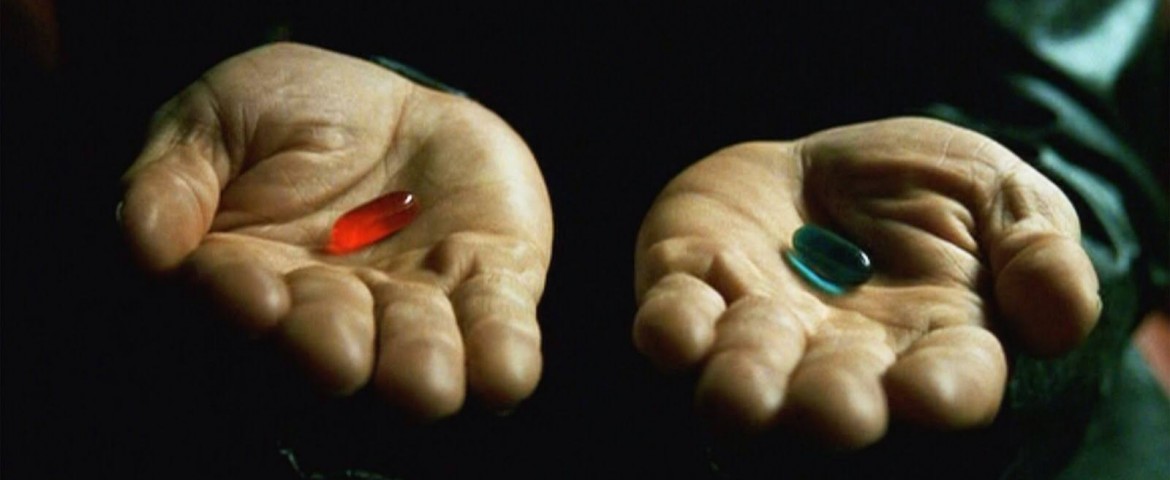
The red pill: The truth is, the lifetime risk of cancer is 1 in 2 for men, and 1 in 3 for women. It's inevitable that at some point in your life, either you or someone you love is going to have cancer, and there's nothing we can do about that yet today. Cancer is just a part of our humanity. Cancer can happen to anyone, including to young adults and children. We have little control over if we get cancer or not, but we can control if we accept it or not, and how we feel about it. I relented and accepted, but only after I could hurt no more trying to deny it. I came to accept that there were never any guarantees for anyone, that cancer and so many other diseases can happen to anyone at any time, that there's nothing I could do to protect anyone that I loved or cared about from such things, and evolved my thinking and my way of life around these undeniable truths.
"Accepting cancer" was the hardest and most painful pill I've had to swallow in life, but once I did, it couldn't hurt me anymore, and my depression about it went away as I evolved my life around this new reality. Be present in every day, never waste a moment, enjoy life today, go places that you've wanted to go, and do meaningful things with your life. Tell the people that really mean something to you how much you love and appreciate them, because they might not be around tomorrow to hear it. Live your life without regrets.
There's Nothing Wrong With You
As if having cancer as a young adult doesn't make you feel broken enough, try experiencing posttraumatic stress after cancer, and get back to me. Scratch that. I would not wish PTSD on my worst sworn enemy, it's that bad and inhumane. PTSD was so bad for the one six week period where I actually had the full blown disorder and couldn't get it shut down, that if cancer wasn't going to kill me, I almost wanted to do it myself. I'd never felt more broken in my life than when I experienced posttraumatic stress, but in most cases this is very normal to experience, and is NOT something that's wrong with you, it's what's right!
We have incredibly powerful instincts that are designed to protect us from harm. If your house burned to the ground and you narrowly escaped with your life, you can't tell me that it wouldn't be "normal" to go running outside for your life whenever you smelled smoke or heard a fire engine. In the case of cancer, it's our own bodies that figuratively tried to burn themselves to the ground, yet we lack the ability to run away from and escape our own bodies when something reminds us of that danger. Maybe you see now just how difficult life after cancer can be. Our instincts tell us to run the hell away from the one thing we can't - our own bodies.
I was hurting because of posttraumatic stress, and then hurting more on top of that for feeling as though it was "wrong" to feel at all, but once again, you have a choice. I finally choose to accept what I was feeling, and embraced it and worked with it, rather than fighting against it. My posttraumatic stress after cancer told me to run away, and so I did. Almost every day for three years I went running over lunch, just to burn off this energy. I embraced it and gave myself an out, and learned to accept just how useful these instincts really are. Human beings haven't come to our position of dominance on our planet because we have poor instincts. We have extremely powerful instincts that shouldn't be told they're "wrong" or not listened to. You're only doing yourself more harm when you don't listen to what your instincts are telling you. My periods of posttraumatic stress would be followed by periods of depression because I felt so defective inside, but once I learned to accept my instincts and work with them, it made the posttraumatic stress that much easier to deal with, and I no longer suffered the secondary depression that I had. You have a choice. Choose you.
Embrace Every Bit Of Yourself Exactly As You Are
Another thing that I used to beat myself up about was being "too emotional", and feeling things too strongly. I beat myself up for being too afraid, too sad, and too depressed about an "easy cancer", when everybody thought I should be ecstatic. There were more days than I care to admit where I was holed up in the corner in tears, because I was terrified out of my mind that my cancer was going to come back, and that I was going to be next.
Well for starters, there's no such thing as a good cancer, and on top of everything else I'm also a Scorpio, not exactly known for having mild emotions. I've always had very powerful emotions, and having cancer (not the sign!) is what finally forced me to confront my powerful emotions in order to gain control over them, and make them work for me rather than against me. All of those Scorpio memes you've seen are true for me, and my mind felt like a Category 5 hurricane of emotions in my years after cancer. I could have kept beating myself up for this, but instead I learned to harness all of that energy into writing about what I was experiencing, and today I have an award-winning cancer website as a result of that.

Tell me again that there's something wrong with me for having powerful emotions? There isn't. It's just me, it's what I've always been, and finally allowed myself to be, and what I've done with it is something to be proud of.
Even hurricanes have a purpose.
Love Yourself Unconditionally
What I'm talking about in all of this, is self-love. We're all exactly as we were meant to be, we feel exactly what we were meant to feel, and all you have to do is love and accept every bit of yourself, without judgment or criticism. Why are you a certain way? Don't even question it. Our perceived faults are not flaws, and can be our most powerful assets. I didn't change my behavior to become something or someone else, I changed it to allow myself to be exactly what I was all along. After cancer, I just needed to be that person for once in my life, because cancer had already pushed me far beyond my limits. Be your own best friend, and not your own worst enemy. You can't control cancer, but you can control how you feel about it, and how you feel about yourself. Choose to love yourself. There's nothing wrong with you. You're exactly as you were meant to be, and are perfect as is.
StevePake.com

Overcoming Post-Cancer Depression
I happen to be a good baseline for what post-cancer depression can feel like, because there had never been even a single depressive ‘bone’ in my body prior to cancer. I was always upbeat and optimistic about everything, believed that there were solutions to every problem, and did not have pre-existing issues with depression or anxiety. My cancer diagnosis at the age of 33 is the first time I faced any mental health issues in my life at all, and they hit me like a load of bricks.
I happen to be a good baseline for what post-cancer depression can feel like, because there had never been even a single depressive ‘bone’ in my body prior to cancer. I was always upbeat and optimistic about everything, believed that there were solutions to every problem, and did not have pre-existing issues with depression or anxiety. My cancer diagnosis at the age of 33 is the first time I faced any mental health issues in my life at all, and they hit me like a load of bricks.
Forget About All the Statistics
First off, forget about any statistics you might have read about post-cancer depression, anxiety, or posttraumatic stress. I don't know of a single cancer survivor that hasn't experienced mental health related issues after cancer, it's just a matter of what it is, and how bad. You should never feel bad about yourself if you find yourself suffering from depression after cancer, because how could you not be depressed after something like this?
Post Cancer Depression Can Happen At Any Time
I thought I had been doing pretty well my first year or so after cancer, all things considered. I struggled in various ways, yes, but the heavy-hitting emotional fallout didn’t hit me until nearly two years later, when friends I had made started dying. Watching friends die of cancer is what finally made all of this real deep inside my mind, and not just a bad dream. Reaching two years out from my cancer diagnosis was a huge milestone. I should have felt like I was on top of the world, right? No. With one friend in the ground and another in hospice care, I was terrified out of my fucking mind, and felt like if something was going to happen to me, it was going to happen sooner rather than later, and I had the fear of God in me.
I didn't want this anymore. I was tired of feeling so afraid, tired of feeling so vulnerable, and tired of having my own body scaring the hell out of me with all of its strange post-cancer pains and behaviors, making me think my cancer had returned. I lost interest in various hobbies and things that had interested me, didn’t want to be around anyone besides my family and a few extremely close friends, and didn’t even really want to be around myself. I largely withdrew from the world, and stopped being social for a long time. I finally hit an emotional rock bottom and a very deep depression, two years after my cancer diagnosis and fight.
Nobody Could See My Depression
I didn’t stop living my life, but my inner struggles were invisible to the world. I would go out on weekends with my family, or with friends, and have the time of my life. We enjoyed great trips and vacations, and had so much fun together. But whenever we returned, this misery was always there waiting for me, the waiting, the wondering, the fear and the doubts. How could this not drag you down? I felt so vulnerable, defective, and worthless inside. I was literally damaged goods. Who would want to be around someone like me? Even I didn't want to be around me, or my body, but what choice did I have? I was so haunted inside, and just felt trapped. I wanted out of this experience and would have given everything I had just to escape this miserable life experience of continually waiting and wondering. Cancer is merciless. It will push you well past your limits until you break, listen to you screaming for mercy, and then just keep on pushing you relentlessly. The only person that could hear my internal screaming was me.
I enjoyed literally every second of this blissful week at Disney World with my family in the spring of 2013. Can you tell that I was in the midst of a terrible post-cancer depression here?
So What Can You Do?
Live Your Life Balls To The Wall. That's actually an aviation term, and nothing to do with male anatomy! Whatever you want to call it, just live your fucking life. It's okay to be a wreck, it's okay to be scared out of your mind, but never stop living your life. Don’t let cancer rule you like that. Keep living your life at full speed ahead, and don’t slow down for anybody!
Stop Worrying. I had to learn to let go. Worrying never got me anywhere, but it did distract from my ability to enjoy my time right now. I was depressed because I was so worried, and the more I worried, the deeper my depression became. It was a viscous cycle. Just let go, realize you have no control, and live your life in the moment.
Find Faith. I replaced my worry with faith. I was so afraid that my cancer was going to come back, and that I was just going to die of cancer anyways. Developing faith and an independent system of beliefs helped to relieve me of those fears.
Stop Identifying With Your Body. Repeat after me. “You are not your body.” We're so much more than that. I had to learn to stop seeing the shortcomings of my body as some sort of personal failure, and to recognize the true me for me, the beautiful soul within. Your body’s failure is not yours personally, so stop beating yourself up for that as though you’re any less of a person than anybody else. You’re not. You are beautiful, scars and all.
Find Forgiveness. Part of why I was depressed was because I feared dragging my whole family through this hell again, if my cancer were to return. I had to learn to forgive my body for failing me. This is the true nature of life. These things can happen. There are no guarantees for anybody. I stopped identifying with my body, and learned to forgive it for doing what bodies sometimes do.
Find the Right People. There are a few amazing people out there that just had a magical way of connecting with me that would immediately put me at ease, relax my fears and my mind, and help me to just live in the moment. Soulmates, soul brothers, and soul sisters, they’ve all meant the world to me. There are people out there just like this for you, too. If you haven’t found them yet, keep looking.
Find a Purpose. With apologies to my many engineering world colleagues, I knew that I was never going to make the difference in the world that I needed to make doing engineering things. My non-profit work and writing about life after cancer has been a purpose fulfilled, a great method of coping and healing for me and for others, and has reached hundreds of thousands around the world to help them heal and find their ways through this, too. If I were to get bad news right now, I know that I’ve done something meaningful with my time here, thus taking away another fear and source of depression. I've lived my life well, and have done meaningful things with it. That matters.
Periods of depression are inevitable after cancer, even many years later. You can’t necessarily stop cancer-related depression from happening, but you have the power and control over your inner and outer environments to make sure that such periods will be shallow and brief. With the right people, the right coping mechanisms, and the right inner and outer attitudes, you can power through these periods of darkness, and get back to thriving after cancer again!
StevePake.com

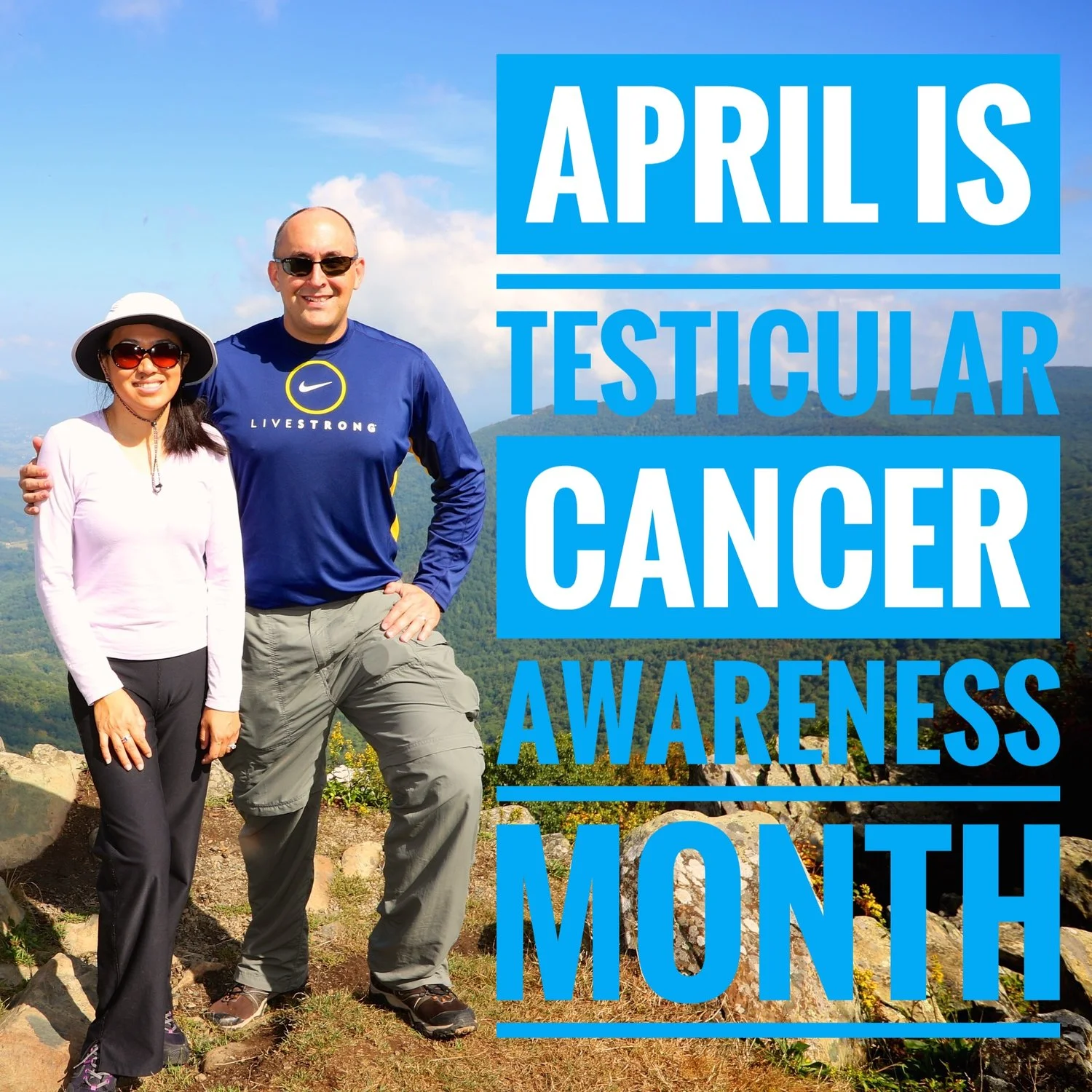
April is Testicular Cancer Awareness Month
April is testicular cancer awareness month, and as a 9 year survivor of this disease, I can tell you a few things about testicular cancer.The first is that contrary to what people might expect, testicular cancer is actually the #1 form of cancer in men ages 15-44 internationally, yet almost no one talks about the disease. It’s sad and frustrating that 20 years after the founding of a very famous organization in yellow by a now very infamous testicular cancer survivor, that we still have to struggle so hard for any sort of public awareness about this disease. Testicular cancer in young men is about as common as breast cancer is in young women, yet no one ever talks about testicular cancer! In the U.S. alone, someone is diagnosed with testicular cancer every hour, and someone dies of this disease every day.

April is Testicular Cancer Awareness Month, and as a 9 year survivor of this disease, I can tell you a few things about testicular cancer.
The first is that contrary to what people might expect, testicular cancer is actually the #1 form of cancer in men ages 15-44 internationally, yet almost no one talks about the disease. It’s sad and frustrating that 20 years after the founding of a very famous organization in yellow by a now very infamous testicular cancer survivor, that we still have to struggle so hard for any sort of public awareness about this disease. Testicular cancer in young men is about as common as breast cancer is in young women, yet no one ever talks about testicular cancer! In the U.S. alone, someone is diagnosed with testicular cancer every hour, and someone dies of this disease every day.
With an overall cure rate of over 90%, testicular cancer is a highly curable cancer, but it should never be considered an easy or a “good” cancer. Testicular cancer tends to be a pretty fast growing and aggressive form of cancer, and must be hit equally aggressively in order to get that cure. Orchiectomy alone, removal of the stricken testicle, can be enough to cure many Stage I patients, but the primary chemotherapy protocols and surgeries that are commonly used to treat people with metastatic disease are pretty rough, and can leave many additional physical and mental marks on people.
Regardless of the stage of the disease at diagnosis, testicular cancer is not an easy cancer to get through simply because of the younger men that it tends to strike. My 33 year-old self was unaccustomed to ever having anything more than the flu, and still believed that I was invincible and going to live forever. This loss of innocence and suddenly feeling so vulnerable at the prime of my life shattered my confidence. Mental health issues such as anxiety and depression are common, and posttraumatic stress to varying degrees is certainly not unheard of, either. Another thing that young men aren’t typically accustomed to doing, is asking for help when they need it. The rarity of young adult cancers can tend to leave survivors feeling very isolated and lost, which is why finding support from the young adult cancer community is essential. Regardless of gender or cancer type, young adults tend to face so many of the same inner struggles after a cancer fight. No one needs to fight alone.
There are a few risk factors for testicular cancer that include an undescended testicle, a family history of the disease, and being Caucasian, but most testicular cancer diagnoses simply come down to bad luck. Signs and symptoms include a painless lump or any change in size or any irregularity in the testicles. Pain or discomfort in the testicles, or any pressure sensitivity is certainly a potential sign, along with a dull ache or a sense of pressure in the lower back, abdomen, or groin. More advanced signs include significant weight loss, back or chest pain and coughing or difficulty breathing, and enlarged lymph nodes in the abdomen or neck.

Because testicular cancer isn’t preventable, monthly testicular self-exams are recommended for all men, and boys starting at 13. There are some groups out there that say not to bother, given that testicular cancer is so curable at any stage. This is terrible advice. Don’t listen to it. Just because a cancer has a high overall cure rate, doesn’t mean you should ignore any signs or symptoms until you have very advanced stage disease. I was lucky in that I actually had pain in my testicle that clued me in that something wasn’t right, and a thorough self-exam found the solid mass. Not everybody does, and that painless lump can quickly turn into a very dangerous advanced stage cancer in just a matter of months. Poor risk testicular cancer has a 50/50 cure rate, no better than a coin toss! Why leave your life up to a coin toss?
Believe me when I say that if you’re going to develop testicular cancer, you’re much better off catching it an early stage rather than late, as you’ll avoid significant trauma to both mind and body if you’re able to avoid some of the harsh treatments and surgeries that are used to cure metastatic testicular cancer.
There’s nothing to lose with a regular feel down below, and it could save your life.
StevePake.com

What I Have In Common With Prince Harry - Two Years of Total Chaos, After Cancer
As an American, I tend to not pay too much attention to what members of the British Royal family are up to, but I just became a huge fan of Prince Harry. It turns out that he and I both have something in common, and that is two years of total chaos after traumatic events in our lives. For Prince Harry, it was the tragic loss of his mother, Princess Diana, 20 years ago when he was just 12 years old, and for myself, my cancer diagnosis six years ago at the age of 33.
As an American, I tend to not pay too much attention to what members of the British Royal family are up to, but I just became a huge fan of Prince Harry. It turns out that he and I both have something in common, and that is two years of total chaos after traumatic events in our lives. For Prince Harry, it was the tragic loss of his mother, Princess Diana, 20 years ago when he was just 12 years old, and for myself, my cancer diagnosis six years ago at the age of 33.
It's been incredibly uplifting for all of us involved in the mental health movement to see Prince Harry opening up about mental health struggles. In an interview and podcast with The Telegraph, the Prince admitted that he had shut down emotionally for the past two decades after losing his mother, and only sought counseling for this recently with the support and encouragement of others in his life such as his brother, Prince William, after experiencing those two years of total chaos. As the Prince described, “I have probably been very close to a complete breakdown on numerous occasions when all sorts of grief and sort of lies and misconceptions and everything are coming to you from every angle.” This sounds all too familiar.
I experienced two years of total chaos in my life as well, after cancer, and like Prince Harry, the time in which we grieve or finally express our anxiety about a situation or tragic event doesn't always coincide with the event. Sometimes, it occurs much later, like twenty years later in Prince Harry's case. My cancer diagnosis was in 2011, and from a mental standpoint and at a subconscious level, I had basically been in denial after that anything serious had really happened to me. I distinctly remember thinking to myself in 2012, the year after my cancer fight, that it hadn't seemed like that big of a deal, and might have even been easy? It wasn't, and at the time, I still didn't even know what had hit me. Consciously, I knew that what I had been through was serious and traumatic, but subconsciously, my mind still deeply in denial, wanted to see my cancer fight as a really bad case of the flu. But this was cancer, not the flu. I had become friends with more than a few other cancer fighters, and watching some of them die of their diseases along with a terrible cancer recurrence scare I experienced myself, is what suddenly made all of this real. It wasn't the flu anymore, and I'll never forget the time at the end of 2012 when all that I had experienced finally started processing.
I might have appeared orderly on the outside and like I had everything together, but that only goes to show how well we can conceal our pain. The truth is, I spent every single day in 2013 trying to stay one step ahead of PTSD meltdowns and anxiety attacks. I became depressed and withdrawn, and didn't want to be around anybody except for my family and a few extremely close and trusted friends. I was a complete wreck inside, and didn't know how to live my life or how to move forward, but fortunately, with the right friends and the right support, I found my way.
2014 was an off year. I thought I had resolved all of my inner issues and turmoil in the previous year, and went the entire year without a single posttraumatic stress episode or meltdown, only to have it return in 2015. I was so disheartened. I thought I had worked my way through everything, but I was still deeply afraid inside of my cancer returning, and didn't know how to stop being afraid. My mental health issues in 2015 were less about anxiety and posttraumatic stress, and more about depression. I felt like a failure and a huge liability to my family, and didn't know how to let go of that. In the meantime, a few friends and even family members had disappointed me immensely in years past, but I couldn't seem to let go of that either. Prince Harry described being on the verge of punching someone; I had a short list of people that I seriously wanted to throw out of windows. I didn't know how to stop hating them, but needed to let go of this because it was just dragging me down, but I didn't know how. I had to learn how to forgive myself, forgive others, and to transform myself spiritually.
You don't have to be the same person that you were yesterday, and today I'm not. I'm a much better and much more evolved person than I've ever been. Like Prince Harry, having worked through my issues, I'm in a much better place today. How did I do it? There's no single method, but running and writing proved to be my go to cures. Running outdoors specifically, with the wind on my face and scenery passing me by, gave all of the terrible anxiety that I had been feeling inside a place to go. At the same time, it was the solitary processing of my thoughts as I ran, away from the stress and distractions of work and family, that I finally began to unravel my issues and for the true healing to begin. Prince Harry took up boxing and just started having conversations with others about his issues. I started having conversations with myself through journaling, which evolved into a major essay about surviving a young adult cancer, and from there turned to non-profit writing and my own website.
As with Prince Harry's struggles, it's been through "having conversations" that's helped me to heal from my own demons, and in turn, the conversations that I have with others through my writing helps them to heal as well. The point is, there's no need for this "stiff upper lip culture" as the Princes have described. It's okay to talk about things like this. You don't have to keep it all inside, and nobody has ever resolved inner pain like this by completely ignoring it and never talking about it. We're all human beings. This is all normal to experience, especially when one has experienced traumatic events in their lives. In the case of posttraumatic stress, it's not even something that's wrong with us, but rather, what's right. It would be more abnormal to not have mental health related issues after traumatic experiences. Having them is perfectly normal. It's what makes us human.
Prince Harry, along with his brother, Prince William, and sister-in-law, the Duchess of Cambridge, have setup the Heads Together charity to promote better mental well-being. "Too often, people feel afraid to admit that they are struggling with their mental health. This fear of prejudice and judgement stops people from getting help and can destroy families and end lives. Heads Together wants to help people feel much more comfortable with their everyday mental well being and have the practical tools to support their friends and family."
With the blessing of Prince Harry, and the Duke and Duchess of Cambridge, I hope this will encourage more people and especially young men to start opening up about mental health struggles. Mental health struggles can tend to hit the testicular cancer community particularly hard, and this is a wonderful mission! Thank you Prince Harry!
StevePake.com
Longing To Feel What I Know I'll Never Feel Again After Cancer
The mental challenges that we can still face in our minds, even many years after cancer. "I've been feeling extremely restless lately, and I haven't known why. I realized I've been longing for that security that we all felt about our lives before cancer, and the restlessness is because I know I'll never feel that again. At the conscious level, I've understood and accepted this for a long time, but it doesn't mean that we don't subconsciously still long to feel that again, and that it can't affect us. A bit of depression perhaps, finding myself once again longing for something that I know I'll never feel again?
I've been feeling extremely restless lately, and I haven't known why. I realized I've been longing for that security that we all felt about our lives before cancer, and the restlessness is because I know I'll never feel that again. At the conscious level, I've understood and accepted this for a long time, but it doesn't mean that we don't subconsciously still long to feel that again, and that it can't affect us. A bit of depression perhaps, finding myself once again longing for something that I know I'll never feel again?
So, what can you do? Well, you can go to Europe now cheaper than ever!
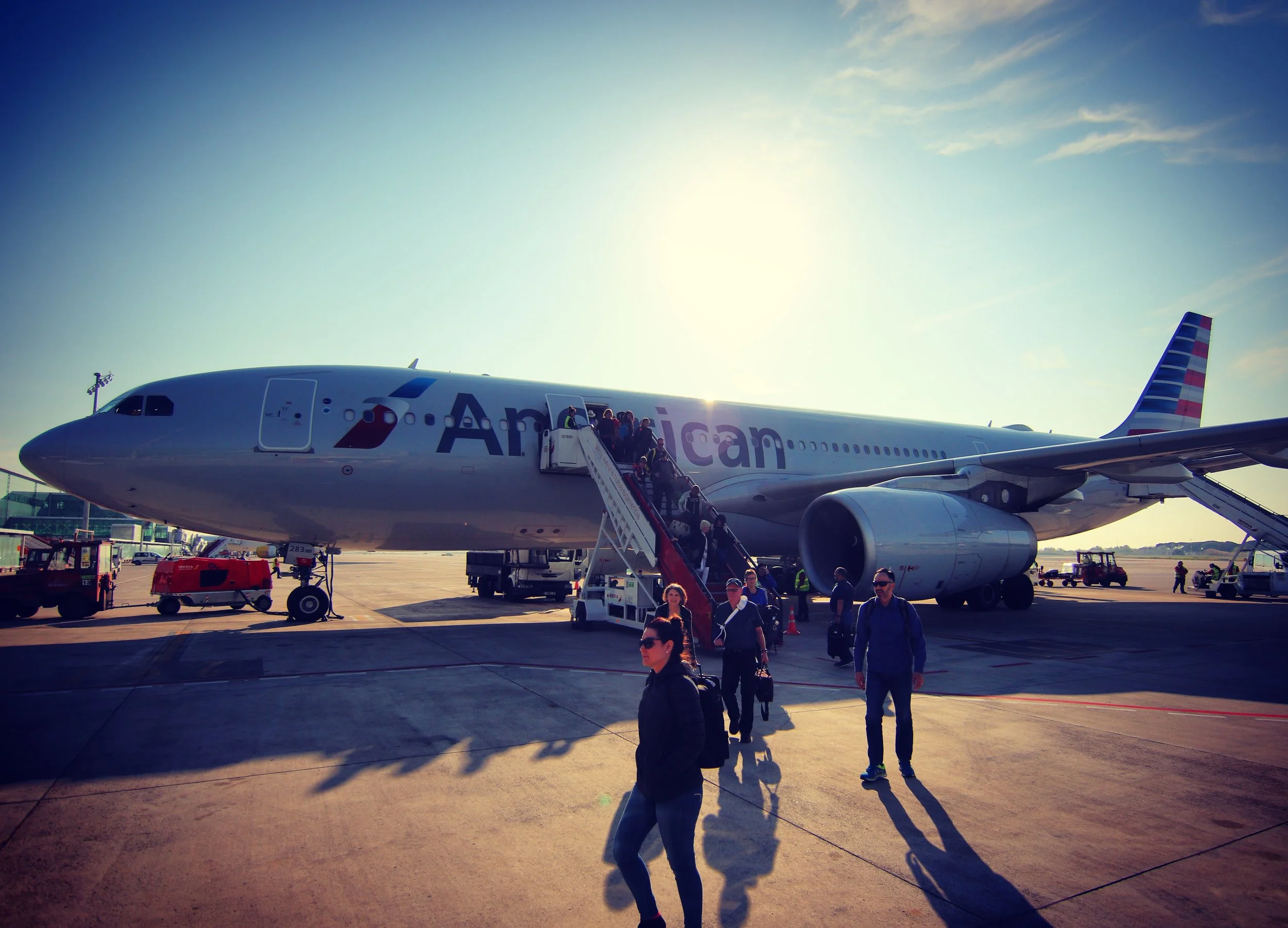
Disembarking in Barcelona, Spain for a week of fun and adventure with my family.
We've longed to come back to the continent for a long time, but have avoided vacationing in Europe for years because of the highly unfavorable exchange rates and sheer expense. But since 2015, the Euro has been trading at just about parity with the dollar, making European vacations cheaper than they've been in well over a decade. And, here we finally are in Barcelona for a week! What does any of this have to do with a history cancer, and getting caught up in the depressive uncertainties of life? Absolutely nothing, and that's the beauty of it. "The Best Way to Survive Cancer, Is To LIVE!" So get out there and do it! You don't need anyone's permission.
Once you've had cancer, you'll always have had cancer, and there's no going back. Our minds somehow manage to buy into this myth that we're going to live forever with certainty. Since the day I heard those words, "you have cancer," I've known how painfully that this just isn't so, and how hard it can be for our minds to let go of that, as here here I am six years later still fighting echos of this false belief. I can never truly slow down, and I can never truly relax, because feelings like these come back whenever I try. Sometimes I'm tired, but I just have to keep running, because that's the only way I know how to live, and that's what brings me the only peace that I know how to feel.
What brings me peace is living my life knowing that I haven't wasted my time here, whether it's enjoying my life, and family and friends, or by doing meaningful things. But I have to be doing something, otherwise these restless and insecure feelings come back. What does that tell you? It tells me that even six years after cancer, I'm still afraid in a way, and that's okay. It's what drives me to live my life and to do what I do. Esta bien! :)
My main challenge for the next week will be trying to see how much high school Spanish I can remember while in Spain. Considering everything else we've had going on in our lives, I have to say, that'll be a challenge that I'll thoroughly enjoy! Whether something happens to me next month or in a year is out of my control, but if something does, I'll be glad that I managed to check Spain off of my bucket list, and I'll remember this trip with a smile.
Disfrutar! ("Enjoy" in Spanish!)
StevePake.com

Why I'm Not Doing Scans Anymore
There were some fascinating inter-related but completely independent conversations amongst cancer survivor friends of mine this week that triggered an interesting cross-section of thoughts.
There were some fascinating inter-related but completely independent conversations amongst cancer survivor friends of mine this week that triggered an interesting cross-section of thoughts.

A few days ago, a very thoughtful friend of mine reached out to me, hoping I would at least consider doing annual MRI scans, knowing that I had hopped off of the "scanwagon" after I reached 5 years out from good risk testicular cancer last year. A doctor we both know couldn't imagine not having at least an annual scan done, but I smiled and politely said no. I really do appreciate that this person was thinking of me like this, and it's very sweet to know that friends of mine do actually worry about me. :)
On that same topic, another group of survivor friends were discussing an article I had written a few years ago, comparing cancer surveillance scans to emergency landings in planes, and repeatedly having to subject yourself to that mental trauma over and over again, feeling so helpless without any control. We're lucky. We're cured and not six feet under, right, so we shouldn't complain, somebody always has it worse, went the conversation. But it's dismissive, said another friend. We never really know if our cancers are truly gone or not, and it doesn't mean that our lives are "easy". Most of the time we'll be fine, but there's always that chance that we'll careen off the runway and burst into a massive fireball, or not even make the runway and crash into the woods or the river. You brace as you descend below a hundred feet, not knowing what's going to happen and feeling so helpless, and that's your whole life right there, that moment of sheer helplessness. And guess what? You get to do that shit all over again next month, and the month after that, and the month after that.
It all reminded me of why I'm not even doing annual scans anymore. Because FUCK!!!!!!!!!!!!!!!!!!!!!!!! All of these scans just completely broke me, that's why. They completely broke me as a person, having to voluntarily subject myself to the same repeating emotional trauma over and over again. I've been broken enough. I don't need to be broken anymore unless there's a good reason to be. Just the thought of having to do more cancer scans brings all of those feelings of having been so broken right back to the surface. I just couldn't do it anymore, and so I'm not. Fuck it.
Granted, my tune would change if I'd had advanced stage disease in a higher risk category. I do firmly believe that those that had advanced stage testicular cancer should be followed at least annually for life, but I luckily didn't. Not only was I "merely" good risk, but I did both primary chemotherapy and the primary lymph node dissection surgery by one of the top doctors in the world for that surgery, thus bottoming out the odds of ever having a late recurrence. If I'd left that 1.4cm lymph node, maybe my tune would be a bit different also, but no. At the time, when I was fighting, if there was even one fucking little sleeping cancer cell left in there that would come back and try to kill me again one day, I just wanted it gone. And so I did the RPLND surgery, and boy did it cost me, but I did it. So no more scans for me, thank you very much. I'm still getting an annual blood tumor marker check and a scrotal ultrasound on the remaining side with my annual physical, which is, enough. More oncology office visits though? No. Fuck that shit. I'm done. I just couldn't do it anymore, and so I'm not.
I'm at a place in life right now where I just need to move on and forget about all of this shit that's happened in my life. The reason I sat down at my computer night after night and just BLED into the keyboard like crazy, is because I needed to get this out of me, it helped to heal me, I knew it would be a huge help to others, and knew there would come a day when I would overcome all of this spiritually, and that finally, I would start to FORGET. And that's where I'm at now. I've forgotten all of this for awhile, and it needs to stay forgotten for awhile. I can't read much of my own writing right now, about scanxiety, or about PTSD, because it takes me back to such unbelievably dark and painful times.
Looking back on this, and these times, I can't tell you how unbelievably good it feels to NOT BE BACK THERE again. Doing scans again, even an annual MRI, would put me back there. It's the wrong direction I need to be going in, and just notfuckinghappening dot com. ;)
StevePake.com

Inside Our Minds When There's a Recurrence of Cancer - With Nalie Agustin
In my years after cancer, I experienced several recurrence scares that were so bad and so real, that I thought for certain that my cancer had returned, that I had just lived my last good day, and that I was going to die. This is what's going through our minds when there's a cancer recurrence, real or imagined, captured with the help of breast cancer thriver, Nalie Agustin
Note to friends and family. No, my cancer hasn't come back!!! I'm just writing about the topic. Okay to breathe. ;-)
So, 2016 wasn't exactly the best year for my family and I, but you know what? My cancer didn't come back, so that sort of put things in perspective. While we weren't dealing with cancer, we were in the midst of handling not one but three different terrible crises within our own family or with near and dear friends, all of which were tremendously painful to experience and sort out. While we still had a great year, it really put a damper on things and our spirits.
Nalie Agustin, Young Adult Breast Cancer Thriver at Nalie.ca. Image used with permission.
Sometime during 2016, I managed to discover Nalie Agustin, a breast cancer survivor with an unbelievable spirit, vibe, and energy about her. I quickly became addicted to her bubbly excitement and enthusiasm for life, and loved seeing all of her Insta Story updates living the good life, enjoying times with friends and family, celebrating birthdays, and getting the inside scoop on all of her big plans and dreams that she was working so hard to make happen. Nalie's energy was simply infectious - you just couldn't watch any of her updates and not smile. I've never met Nalie personally, but during a time when my own family was hurting so badly, Nalie was one of a few people who managed to keep me going by constantly reminding me of how life was meant to be lived after cancer.
As the New Year of 2017 rang in, I was just as excited about getting back on track to make some of my own dreams happen as I was for Nalie's. She was working so hard on launching her own YouTube show, lining up tons of guests, and was finally on the verge of launching it, when...
Nalie found out that her cancer returned on Friday, January 6th, just days before she was to launch her show.
Full Stop. Everything on hold again, and devastation.
Nalie published a 10 minute video a few days after she found out, about everything she had been feeling. If you want to know what cancer survivors fear and what we go through when a recurrence happens, this is the video that you need to watch. The message is driven home even more for those of us that know Nalie, even if just through social media. To see this beautiful young soul, and shining star for young adult cancer survivors everywhere, go from being all pumped up and excited about everything she was hoping to finally make happen in 2017, to being ground to a halt and dampened by a recurrence of her cancer, was simply heartbreaking.
Give her video a watch.
Every single thing Nalie speaks of in her video, I myself have felt and feared. I'm very fortunate in that my cancer has never returned, and I pray that it never does, but I've very much been "here" before, spiritually and emotionally. In my years after cancer, I experienced several recurrence scares that were so bad and so real, that I thought for certain that my cancer had returned, that I had just lived my last good day, and that I was going to die. One scare I had was so bad that it triggered six solid weeks of PTSD, and it opened the floodgates to every unprocessed fear and emotion about cancer that I'd unknowingly repressed at the time. It took me an entire year to recover from that.
Here are all of the things that we feel when there's a recurrence, real, imagined, or otherwise.
- Shock and Disbelief. How could this be happening to us again? Young adult cancers are rare. We're unlucky enough to have cancer the first time, but how could we be so unlucky to have a recurrence of it and have to fight again? We have the worst possible thoughts, of possibly not emerging out the other end alive, and that we might have just lived our last good days. As a parent, the times I've had recurrence scares, I've always thought of my children, and of making video messages for them for later in their lives so that I could still be there for them in some way, even if I didn't make it. Death instincts. I could never even think of what to say, as the mere thought was just so distressing that I collapsed in tears.
- Frustration. When we know there are others out there that are abusing themselves, and smoking and doing all sorts of drugs, but our cancer is the one that comes back? Why us??? I never smoked or drank or did anything prior to my original cancer diagnosis, so how the hell am I the one that even got cancer in the first place? That's a question that I had for a number of years, and the only answer is simply bad luck. This is life. There's never been any guarantees for any of us, and things like this can happen. It's a tough and bitter pill for young and invincible adults to swallow.
- Fear and Sadness. When there's a recurrence of our cancer, we've been through all of this before. We know just how brutal a cancer fight is and can be, and the naivety is gone. We know what can happen and we're so afraid, and so sad at the same time. We're sad for ourselves, but sad for our families and loved ones as well. When I've had recurrence scares, I felt so ashamed and worthless. I didn't want to drag my family through a terrible cancer fight again, didn't want to be a burden, and especially didn't want my children to have to see me. They were too young to know what cancer was before. All they knew was that their daddy was very sick for awhile. They're older now and they know what cancer is, and that people can die from this.
When I thought for sure that my cancer had returned a few years ago, I just wanted to run away from the world and hide. I wanted to be driven out to the countryside somewhere and left to die. If I was going to die from cancer, I just wanted to die alone, and didn't want anyone that I loved or cared about to have to witness me dying a slow and painful death from cancer. Hey cancer, if you're going to take me, just take ME, and don't put my family through this. That's what I wanted, and I had never been more depressed in my entire life. I felt so worthless that I didn't want to be around anyone at all, not even my own family.
- Resolve, and the Return of the Warrior Mindset. What I loved seeing at the end of Nalie's video, though, was the return of that warrior mindset and fighting spirit that we all have inside. This is something that we gain when we're fighting cancer without realizing it. You think you can't do something, but I'm telling you that there's a warrior deep within all of us, and it's what allows us to get through chemotherapy and radiation treatments, and it's what allows us to jump right into highly invasive surgeries with weeks long recovery times without so much as batting an eye, because there's no way in hell cancer is going to rob us of our lives.
Two weeks after my orchiectomy for testicular cancer, we had pathology results and scans done, we knew what we were dealing with, had consulted with the very best doctors, and had a plan to move forward. I didn't have time to be afraid anymore. I just had to fight, and win. I never expressed even a lick of fear going into 12 weeks of brutal chemotherapy, and after post-chemo scans showed a residual mass, I never expressed even a lick of fear going into the RPLND surgery, either. I was a warrior, and I didn't care what I had to do to beat this stupid cancer. I had a life and a family to get back to, and there was no way in hell cancer was going to take me away from all of that. Little did I know just how afraid I really was. The warrior spirit overpowers everything, including our fears.
- Relapses are Terrifying for Supporters As Well. I've long said to others that the cancer community and support groups can be a double-edged sword. On one hand, it provides us with invaluable support that simply can't be found anywhere else. There are so many things about fighting and surviving cancer that only other cancer survivors can understand. We can't be without this support, yet, seeing others experience recurrences of their cancers and friends not making it, can shake our wobbly post-cancer foundations. This is what makes it real. This isn't the flu that we're getting over. Yes, our cancers can come back, and yes, people can die, but it doesn't mean that you will too.
As Nalie says in her video, just because she's experienced a recurrence of her cancer doesn't mean that others will too. Indeed, it was partly the stories of a few cancer survivor friends that had experienced recurrences, that had spooked me so badly into believing that my cancer had returned as well, and that I was next. We connect with each other so personally, and can have such close emotional and spiritual bonds. But what's going on in another's body is within their body only, and has nothing to do with yours. What can you do? Pray, yes, but just keep LIVING every single day that you have.
- Love Conquers All. Just as you don't fight cancer by yourself, you don't fight a recurrence of cancer alone, either. You need a Crew, an Army, or an all of the above support system. As painful as it had been to see Nalie go through this, it's been inspiring all the same to see her family, her parents, her brother, her boyfriend, Vee, and so many friends and "Nalie's Army" all rally by her side, and to fill her life with so much love. It's what tells us you're worthy, you're loved, you're cared for, and we need every bit of that, because of how worthless we can feel.
Similarly, my recurrence scare triggered the sudden release of every single fear I'd never felt, because my warrior spirit had locked them all away. I felt like I was falling off of a cliff and as good as dead, only to be lifted up by angels. My wife rallied to my side, my children inspired me, friends new and old were there, including ones I didn't even realize I'd had, all suddenly appearing at the exact time I needed them, and I'll never forget this or these people for as long as I live. These beautiful souls rescued me from a great spiritual abyss, like a relay team of angels in my life, and some of them had no idea of the role they were playing. Talk about inspiration.
FIGHT LIKE HELL, NALIE!
I believe with all of my heart and soul that you're going to beat this, because you have so much to do in this world. 2017 might not have started how you had hoped, but this is not your time. You have so much to do, and we in the young adult cancer community everywhere are with you, and believe in you.
Blessings and Godspeed from myself personally, another Scorpio young adult cancer thriver, and from all of us at the Testicular Cancer Awareness Foundation!
You can learn all about Nalie and her journey here.
She still launched her YouTube show, by the way. Love it!!! :-)
StevePake.com
The Young Adult Cancer Time Warp
Most people experience the various stages of life in a relatively linear and predictable fashion, but what happens with all of this when you're diagnosed with cancer as a young adult? Forget about an early midlife crisis. This entire linear progression of time and life stages are blown sky high, and you experience an "entire life crisis" all at once.
How Most People Experience Life Stages

Most people experience their lives and its various stages in a relatively linear fashion. We're children and adolescents, and then become young adults. We finish schools, are building our lives and launching careers, and are getting married and starting families, too. In middle adulthood, we're maximizing our potential and trying to make a difference in the world, and trying to raise children that will become successful and productive members of society also. In late adulthood, we can finally slow down a bit, reflect back on all of our accomplishments, and enjoy life a bit more. Failure to achieve what we feel we were meant to achieve at one stage, can lead to problems and the inability to progress through the next. All of these life stages are described in Erik Erikson's Stages of Psychosocial Development, which is good background reading. Most people are already at least somewhat familiar with these stages, as the popularized "midlife crisis" represents what many experience at some point as they transition towards middle adulthood, perhaps feeling as though they hadn't lived as fully as they had hoped in their younger years. Sound familiar?
How Young Adult Cancer Survivors Experience Life Stages
All of this is very normal, but what happens with all of this when you're diagnosed with cancer as a young adult? This entire linear progression of time and life stages are blown sky high, and you experience an "entire life crisis" all at once. When I was diagnosed with cancer at the age of 33, I genuinely feared that I was going to die. After I didn't get a complete response to my cancer from chemotherapy alone, I nearly did die from a serious complication during a highly invasive surgery trying to evict the stupid cancer cells that way. And I once again feared death after a terrible recurrence scare in the years after. My end of life "death instincts" kicked in numerous times through these years, and what did I have to reflect back on? I feared that I had suddenly and abruptly reached the end of my life, but didn't really have anything to show for myself. How had I really lived? What had I really done? What kind of difference had I made in the world? How had my life been meaningful? These are questions that those in late adulthood might face, but instead I was facing them now, as a young adult. I didn't have any answers, and I was panicked.
At the same time I'd been facing those end of life questions, I felt like I hadn't been living and enjoying my young adult life to anywhere near its potential. I had terrible regrets for having lived my life so conservatively at the time of my cancer diagnosis, thinking I had all the time in the world to enjoy life later. Cancer made me realize that I didn't, and I had to start enjoying life at full speed right now, because there might not be a later. I needed to be young, wild, and free for once in my life, but I had yet more questions that needed to be answered also. What was I really meant to do and accomplish in this life, and how could I make a difference in the world at the same time? How could I bring meaning into my life? These were the "Generativity vs Stagnation" questions of middle adulthood per Erikson that I was also simultaneously facing, and for which I had no answers, either!
I've joked to friends for years that I'd already had my midlife crisis very early, thanks to cancer. As I look back on all of this, I realize what a short shrift that was of what I really experienced. Young adult cancer is really an "all adult stages of life crisis" all at the same time, and this explains the panicked rush that so many of us feel to really live our lives and accomplish our dreams so quickly after cancer. Life becomes a time warp where we feel the need to engage with and accomplish things at all of the adult stages of life, all at the same time. All of the plans we'd had for our lives, and all of the things we'd planned to do when we were younger or older, all becomes right now, and it's completely overwhelming.
Feeling Conflicts From All Adult Stages of Life at Once is Normal
I want you to know that all of this is normal to experience. You're not going to have all of the answers, but be true to yourselves. Listen to what your hearts are telling you, and not what others are telling you, nor what societies and cultures expect of you. Just be you, and nothing but you. Keep your hearts and your minds open, and you'll find the answers that you need with time. Be courageous. It can be difficult or even terrifying to make the changes and major course corrections that might be needed, but sometimes what you're most afraid of doing is the very thing that will set you free.
Cancer survivorship can bring with it moments of clarity, where you might realize you've been headed in the wrong direction, or living your life the wrong way. This is what it can feel like to change course, but it's also what will really set your soul free.
You're not going to figure all of this out at once. You can't; it's impossible, so don't demand that of yourself, and don't beat yourself up when you don't know. You have to let things come naturally. I didn't realize it at the time, but I just needed to be incredibly productive in some way, and tapping into my inner talent for writing and expression for young adult cancer advocacy non-profit work just came naturally. I've felt very fulfilled doing this, but ask me when I realized that this was something I really needed to do? It took me a few years after cancer to figure it out, and it might take you a few as well. You don't suddenly wake up one day as a young adult cancer survivor with an epiphany and vision about all that you need to do in this world. I've had some moments of clarity like that, but they've represented smaller pieces of a larger puzzle.
All of this takes time when we feel like we have none, and hence the panicked rush of young adult cancer survivorship. If you can't figure things out, DON'T WORRY. Just live and enjoy your life! I figured that out first; what to do with myself came after.
Where Am I Now As a Six Year Survivor?
I know some normal people that have done really stupid things, and have made extremely poor decisions for themselves as they've reached midlife. I've reassured family and friends that as I approach 40, I'm not going to be having a second midlife crisis this year. But if that's not where I'm at, then where exactly am I?? That's when I realized that a part of me is actually reaching not middle adulthood this year, but rather late adulthood instead!
As I exit my young adulthood and six years of cancer survivorship this year, I see what I've really been through at a very high level for the first time. On one hand, I'm very proud of all that I've done and achieved as a young adult cancer survivor through what was actually a first highly productive generativity phase in my mid to late-30s. Cancer put me far ahead of the curve, and because of that, I'm now feeling the wisdom and satisfaction that comes with the "ego integrity" of late adulthood when you feel as though you've been successful in these earlier stages of life. And how bizarre is it that I feel this at the tender age of 39 rather than 65, on this warped young adult cancer time scale?! There's so much more that I'd like to do, but if cancer were to take me now, I'm at peace with all that I've done and accomplished. On the other hand, I'm only turning 40 this year. I very much have a second life and a second generativity phase at my disposal. I have no idea what I'll do, but I'm not slowing down too much and plan to make the most of that, too.
Young Adult Cancer Survivorship Is A Very Different Life
Young adult cancer survivors are on very different paths through life than most. It's normal to feel the conflicts of and the need to engage with all of the adult stages of life at once. It's a mess to sort out, and some have to make the ultimate leap far before their time. I know just how blessed I've been with the gift of time to figure my life out, such that I've been able to live a fulfilled life here in this realm. Not everybody is granted this, and I know this, so perhaps this gift of time has been my greatest gift and blessing of all. I pray that you'll have this time as well, and that hopefully my words of wisdom can help to ease a bit of this inner conflict, and that it can help to expedite your path to living a more fulfilled life in our time warped young adult cancer world.
God Bless.
StevePake.com

How I Finally Found Peace After Cancer
An essay looking back on six years of young adult cancer survivorship. If cancer were to take me now, if today were my last day, and if this were my last sunrise, how would I feel right now?
My six year cancerversary is February 14th, 2017. This is an essay looking back on these six years of young adult cancer survivorship. If cancer were to take me now, if today were my last day, and if this were my last sunrise, how would I feel right now?
If Cancer Were To Take Me Now... I've Enjoyed the Love of a Beautiful Woman for Over 20 Years Now.
My wife is everything to me. She's my best friend, my lover, my soulmate, mother to my two beautiful children, and so much more. She's the one that's always made all that's been so wrong so right. We've supported each other through our very worst times together, but also shared in so many of our very best. After all that we've been through together, there's still only one person I'd want to be stranded on a deserted island with. Her. I'm so lucky. Not everyone is blessed with a love like this. I'm turning 40 this year. To have had such an amazing and beautiful woman along on this ride for over half of that journey has been the greatest gift a man could know. If cancer were to take me now, to my wife, thank you. Thank you for being so perfect, for providing me with such unconditional love, and for finding your way into my life so early. I pray we'll have so much more time to enjoy this love that we share in this lifetime, but if cancer were to take me now, I'm so grateful to have enjoyed our love for as long as we have. I love you. Thank you.
If Cancer Were To Take Me Now... My Children Know Their Father.
When I was diagnosed with cancer at the age of 33, my children were just turning 2 and 4 years old. Ask me what my biggest fear was. It wasn't dying of cancer or of a life not lived, but of leaving this world early with these two amazing young souls never having a chance to truly know their father. We've filled these years after cancer with so much quality time, and fun trips and adventures everywhere. A lifetime of happy memories has been created in just a few short years. They're still so young and have so much growing up to do, but at nearly 8 and 10 now, I've had the chance to see them grow so much. I've had a chance to know them and to have had an impact in their lives, to let them know how much I love them and believe in them, and to help them find their way in our crazy world. I pray we'll have many years of love and adventures in the future together, but if cancer were to take me now, I've been so grateful for these years, and the opportunity for my children and I to have known and loved each other. It's meant so much to me.
Just a small and by no means complete collection of truly beautiful souls in this world that we have come to know and really appreciate in large ways and small.
If Cancer Were To Take Me Now... I've Enjoyed Some Truly Wonderful Friendships.
Through my cancer fight and so many challenging years as a cancer survivor, my friends have meant the world to me. Whatever I've needed in a friend, the world has seemingly provided at the moment I was in greatest need. The love that I feel for my friends, and those that have truly been there for me through such dark times, knows no boundaries. It's such a deep love and appreciation that transcends the limits of our language to describe, and my ability to express. Let's just say that if I were to depart this world a bit early, if cancer were to take me now, that these friends of mine will have an angel watching over them up in the heavens. And when it's their time to make this transition, they'll soon see a familiar face welcoming them, and guiding them on their way up.
My friends have restored my faith and renewed my hope when I had completely lost it, and have represented the very best that humanity has to offer. I couldn't have made it through all that I have without these beautiful souls. If cancer were to take me now, I'm so thankful for our friendships, and for the differences we've been able to make in each others lives. Passage of time and the varying trajectories of our lives might take us to different places in our physical world, but the bonds of these friendships are for a lifetime, and will never be forgotten. I will love you all until the very end, and until we meet again. Namaste!
If Cancer Were To Take Me Now... I Know That I've Evolved.
I'm not the same person that I was before cancer or after. I'm a far more spiritual, connected, and compassionate individual than I used to be, or ever could have been. I've evolved more in these past six years of cancer survivorship than many might evolve in an entire lifetime. Such a huge transformation at a relatively young age has been incredibly painful at times, but now I have the privilege of living the considerable numbers of years I could have left in my life as a far better and far more evolved version of myself, and for that I'm very thankful. I'm neither afraid nor haunted anymore thanks to this evolution, and I'm free to live my life fearlessly. I'm finally at peace with all that I've been through, and have learned to be grateful for this journey. I pray that I'll have many more years, but if cancer were to take me now, I know that I'll be leaving this world as a far better soul than when I arrived, and for that I'm very thankful.
If Cancer Were To Take Me Now... I Know That I've Made a Difference in the World.
It's funny how having cancer as a young adult can warp and accelerate such linear concepts as time, and stages of life. We can feel this rush to truly live our lives, to accomplish things, and to make a difference for others and leave a legacy, all at the same time! I was lost for awhile, and didn't know what I was supposed to do, or how I was supposed to live my life after cancer. How do you accomplish things in every stage of life all at the same time? I was so frustrated, and took to writing just trying to sort everything out. At first, my writing was just a private coping mechanism for me, but it transformed into a powerful tool to help uplift and empower hundreds of thousands of others across the world, helping them find their way through their own life journeys and struggles as well.
It's through my writing that I found a purpose and the direction that I needed. I was meant to write, and so I've written, over a hundred thousands words so far. Being named a top cancer blog out of hundreds of entries by a huge cancer website helped me feel as though a life purpose had been fulfilled, and I've been so grateful for that. I have so much more I've yet to write, but if cancer were to take me now, I'll feel complete knowing that I put my inner talents and life experiences to good use in this world, that I've made a difference for so many people, and that I'll have left this world a better place than when I found it. Nothing is more honorable.
The purpose of life is not to be happy. It is to be useful, to be honorable, to be compassionate, to have it make some difference that you have lived and lived well.
Ralph Waldo Emerson
A special thanks to those that have believed in me, and that have given me the opportunity to share my writing on platforms with such a broad reach. Namaste!
If Cancer Were To Take Me Now... I Know That I've LIVED.
It took me a few years to really understand what Mark Twain meant in this quote, but I get it now.
The fear of death follows from the fear of life.
A man who lives fully is prepared to die at any time."
-Mark Twain
I was too afraid to ever really start living my life before cancer, and was afraid of not having one to live at all after. My second biggest fear after not being around for my children, was of a life not lived. My cancer diagnosis rocked our world. We started living our lives fully and completely after cancer, and have never looked back. You don't need permission from anyone to get out there and live your lives. The only person holding you back is you. We've gone to some amazing places, and have done some amazing things. We've had the time of our lives so many times over, and have created so many wonderful memories as a family, and with friends.
As I look back on six years of cancer survivorship, I'm so glad that no matter how lost, depressed, or afraid I'd felt at times, that I never stopped pushing forward, and never stopped living my life. I've lived more each year since cancer than I had in all 33 years of my life before cancer combined. That's a whole lot of LIVING in a few short years. I've not wasted a day, and I know that I've lived each and every one of them since cancer. I pray I'll have many more years on this grand adventure, but if this is it for me, if I get bad news tomorrow and learn that cancer is going to take me now, I won't be afraid, and will have no regrets. I know in my heart and soul that I've lived my life fully and completely and the best I know how, that I haven't missed a thing, and that I'll be thankful for every joyous day that I've been blessed with. I'm not afraid anymore, because I've known that the best way to survive cancer is to LIVE, and lived I have.
This is not a collection of our adventures over these past six years. All of these photos are from just ONE year, 2016, and we've made every single year since cancer just like this one. This is how life is meant to be LIVED! What are you waiting for? You don't need anyone's permission!
How Did I Finally Get Here After Six Years?
How did I finally get to where I am? How do I sleep so peacefully at night, and how do I live my life without fear or worry after cancer? Make no mistake, there were plenty of days where I was so distraught that I could never even get out of bed that day, nor leave that proverbial corner. But dammit I pressed on!
I never gave up, and I never stopped believing in myself, even when nobody else did. When I had fears, I confronted them. When my own attitudes and beliefs were just getting in the way and no longer serving me, I was smart enough to realize that and let them go. I always kept an open heart and mind, and adopted new ones so that I could move forward again. Our attitudes and beliefs are self-fulfilling prophecies, including towards ourselves. You'll find exactly what you look for, so look for something wonderful. Some people had really hurt and disappointed me in this journey. I let them go too, so that I could find better souls in this world to have along on my journey with me. I found so much fulfillment with these new friends, and learned that you never need to fear closing doors, because better ones will always open for you. I learned to forgive those that had hurt me, not because I felt all were deserving, but for me, so that I could again feel love and peace in my soul, rather than continuing to have it dragged down with so much hatred. I loved my wife, and I enjoyed my family and my friends endlessly. I stayed true to myself and went with what my heart told me. When people had made such a difference for me, I told them so, and let them know how much I loved and appreciated them. I lived my life fully and completely, and found a purpose through which I've been able to make a difference for so many others. I always strived to become a better person, and refused to ever allow myself to turn ugly. Sometimes it took everything I had to not become destructive to myself or others. You don't have to be the same person that you were yesterday. You can evolve. You can become a better version of yourself, but you have to want it to happen, and you have to work hard for it. It was so hard to have felt so wounded in life, and it was twice as hard to evolve, but twice as rewarding when I finally succeeded.
TL;DR - Just Grab Life By The Balls! ;-)
As I approach 40, I realize now more than ever that we're only here for a very short time. It's okay to be afraid, and it's okay to have a meltdown. Just don't stay there for very long. There's no time for that. Our lives are made up of two dates and a dash, and no amount of stressing or worrying can ever tell you when that second date will be. Just make the most of the dash. No matter how afraid I was, I never stopped living my life. The best way to survive cancer is to LIVE! Get out there and live your lives fully no matter what's hanging in the background. I've been blessed with all of these years since cancer, but I wouldn't be where I am today had I not been truly living my life. Read Twain's famous quote again. Read it over and over, and repeat it to yourself every day to let it sink in.
The fear of death follows from the fear of life.
A man who lives fully is prepared to die at any time."
I pray I'll have many more days, but if today is my last day, and if cancer were to take me now, I know that I've lived my life fully and without regret, and that I'll be at peace and ready. This is the ultimate peace that one can feel after cancer, and it again transcends the limits of our language and my ability to express to even begin to describe how wonderful this feels, after so many years of inner struggle.
Mission Completion. Hallelujah, I'm finally there! The next chapter begins now.
God bless,
StevePake.com
If you're lost and looking for some inspiration, you can never go wrong with TobyMac's #SpeakLife. I'm spiritual but not very religious, but you don't have to be Christian to appreciate and enjoy either his message or his music. I write about many of these and more in the Daily Inspiration section of my website!
Nickelback's "If Today Was Your Last Day" is a song that's really spoken to me as a young adult cancer survivor, and has been a favorite of mine for many years now. This is exactly how my life has felt like to live, and I can relate to almost every line of the song. Lyrics here.
Cancer Is Not Just Rogue Cells - And Not Just Inside the Patient
As I approach six years of cancer survivorship, never has it been more clear to me that cancer is not just a disease of our physical bodies, but a disease of our minds and souls as well. Thus, the argument that many make, is that cancer is not just a matter of eradicating the rogue cells from one's body, but of curing the entire patient.

A few words for World Cancer Day 2017.
As I approach six years of cancer survivorship, never has it been more clear to me that cancer is not just a disease of our physical bodies, but a disease of our minds and souls as well. Thus, the argument that many make, is that cancer is not just a matter of eradicating the rogue cells from one's body, but of curing the entire patient. To rid a patient of the physical disease, but to ignore the residual emotional and spiritual disease, does not a cure make.
In these six years after cancer, there's much more that I've had to overcome than a bit of testicular carcinoma. The chemotherapy did a number on my body, and I've had to overcome chronic fatigue because of chemotherapy induced peripheral neuropathy, but those were the easy parts. My anxiety was overwhelming at times, and I constantly feared that my cancer would come back. Some friends of mine didn't make it, and on several occasions, I thought for sure that my cancer had returned, and that I was next. I fell into depressions several times, and suffered from posttraumatic stress. I struggled emotionally for years, and even four years out from cancer, I couldn't stop being afraid.
Irregular hormonal levels for several years didn't help, either. Doctors of testicular cancer patients all seem to believe that because men have two testicles, that the other will "pick up the slack" and that we'll be able to keep flying along as normal, like a twin-engine aircraft. We survivors know otherwise, that it's not necessarily true, not nearly that simple, and that there's actually no evidence out there to support such assumptions, as no studies have ever been done! Because our testosterone levels might still test in an impossibly wide "normal" range, we're sent packing. Meanwhile, our moods, energy levels, and mojo can be flailing around all over the skies from 30,000 feet down to treetop level and back again, barely able to stay in the air at times. While having to contend with so many post-cancer fears, we're also having to contend with non-compliant bodies, and doctors that don't understand our problems. Life after cancer can be so cruel and unfair.
Loved ones and caregivers suffer right along with us, and should not be overlooked anymore, either. Where there is love, there's transference of emotion, transference of anxiety, and transference of cancer as a disease of our minds. Yes, caregivers suffer from the disease called cancer as well, and for them, it tends to be a more silent battle. They need to be strong and the pillar of support for the ones doing the physical fighting, but feel the same fears and anxieties as the actual patient does. Caregivers are fighting cancer as a disease of their minds, too, and deserve equal consideration for care. Don't just ask how the cancer patient is doing - ask how their caregivers are doing as well. It's entirely possible that no one has ever asked, while they're crumbling inside in the same way as the patient.
Survivorship care has come a long way in six years, but there's still much to this fight that's not well understood in medical professional circles, and so the drive to share in our journeys and our many struggles after cancer continues.
StevePake.com
Originally written for World Cancer Day at the Cancer Knowledge Network

Negotiating Surveillance and Long-Term Follow-up for Testicular Cancer
The National Comprehensive Cancer Network (NCCN) Guidelines for are the bible by which Testicular Cancer patients are treated and managed. The follow-up care recommendations within these guidelines only goes out to 5 years, and even within those 5 years, there's been some significant adjustments to the recommendations over time. It's entirely possible that if you were diagnosed with testicular cancer within the past few years, that you might be able to make some adjustments to your follow-up schedules in favor of fewer scans or appointments, but what do you do after that? It's up to you and can go on a case-by-case basis. Here are some answers.
The National Comprehensive Cancer Network (NCCN) Guidelines are the bible by which Testicular Cancer patients are treated and managed. The follow-up care recommendations within these guidelines only goes out to 5 years, and even within those 5 years, there's been some significant adjustments to the recommendations over time. It's entirely possible that if you were diagnosed with testicular cancer within the past few years, that you might be able to make some adjustments to your follow-up schedules in favor of fewer scans or appointments, but what do you do after that? It's up to you and can go on a case-by-case basis. Here are some answers.
Changes to NCCN Follow-Up Recommendations Within Years 1-5

The NCCN Guidelines are literally the most important guide for any cancer fighter or survivor to have, and the bible by which doctors should be treating their patients.
First off, there have been many, many changes to the NCCN follow-up recommendations since I was diagnosed with testicular cancer in 2011, and the latest testicular cancer guidelines (2-2017 as of this writing) states that "further study is required to define optimal follow-up durations." In other words, they just don't have the evidence to know what the best answer is here. What is too much and what's too little? Scan frequency has gone down quite a bit to minimize the risk of secondary malignancies from radiation exposure, especially from CT scans, but they don't have the evidence to know where the sweet spot is, thus making these follow-up schedules very much open to debate and negotiation. Yes, your follow-up schedules for testicular cancer are negotiable.
In my case, for Stage II non-seminoma good risk disease treated with both primary chemotherapy and the RPLND surgery, the changes to the follow-up recommendations have been significant. At the time of my diagnosis in 2011, the NCCN guidelines called for as many as 20 scans (chest x-rays) and follow-up appointments over 5 years. I was seen at Memorial Sloan Kettering Cancer Center (MSKCC) in New York who went above and beyond the guidelines, and I had a total of 27 chest x-rays over the years, with 18 of those coming in the first two years alone. Given I had the RPLND surgery, only one CT scan was needed 4 months post-op, and otherwise just chest x-rays for me.
As of 2017, how many scans are recommended by the NCCN guidelines for someone like me now?
SEVEN.
Just 7, with 8th and 9th scans in Years 3 and 4 being optional, and no scans at all in Year 5. Granted, I'd still need a total of about 16 office visits, but that's still a whole lot less stressful than twenty-freaking-seven. When I first saw how significantly the NCCN follow-up recommendations had changed and how many fewer scans they were recommending these days, I about fell out of my chair, and then needed to go sulk in a corner for awhile. This is really great news, as it shows that, yes, treatments for testicular cancer really are highly effective and completely curative most of the time, and that there really isn't a whole lot to be afraid of, despite the unavoidable and unimaginable amounts of worrying that it brings patients. Most people are just fine after treatments. Thanks to our collective piles of chest x-rays and CT scans that have never shown anything for most over the years, testicular cancer survivors will have far fewer scans to worry about after treatments today, and that's a very good thing.
Making Mid-Course Surveillance Schedule adjustments
A part of me regrets not questioning so many scans, especially now that not even a third of those scans are required today, but that's water under the bridge at this point. It wasn't easy, to put it mildly, but I got through them all. If you were diagnosed with testicular cancer a few years ago, there's a chance that you might still be on a more scan-heavy schedule. If so, you might be able to modernize your follow-up schedule after review with your doctors. Here's what you can do:
- Download the latest NCCN guidelines by registering for free at the NCCN website. Navigate to the Guidelines section, then to Cancer by Site, and then Testicular Cancer to get to them. Find the follow-up table that's relevant for your cancer about midway through the document based on type (seminoma or non-seminoma), and then stage, treatment path, and level of treatment received, and pay close attention to the super-scripted notes. Review what the current follow-up recommendations are now, against what you're actually doing. It might be quite different.
- Review With Your Doctor. With how many scans they've pulled from the follow-up schedules in recent years, chances are you might not need nearly as many now, or perhaps you could just do chest x-rays for scans and skip any further CT scans at this point, followed by the usual history and physical, and blood tumor marker checks? No more CT scans, wouldn't that be nice? If you look very closely in the guidelines you'll also see that scrotal ultrasounds are now mentioned as well. Sound like something worth doing? It was for me, and I'll get to that below.
- Do What's Best For You, with Your Doctor's Blessing. Whether you're at the point of cutting yourself free from oncology care if you so choose, or are making mid-course corrections between 1-5 years out, do what's right for you, so long as your doctors are on-board with your plan. There's both "scanxiety" from the follow-up appointments, but also anxiety from not having them. I don't know of a single person that actually enjoys getting CT scans done, but some might have more anxiety without them. Be true to yourself and your needs. If you're struggling, it can be worth it to make adjustments, and still meet the standards for care.
Of course, now that I've made it through 5 years and twenty-seven freaking scans, I have the moment of revelation that maybe I should have asked more questions than I did, but most of these scans were in the first two years, and before the NCCN started pulling back on the number of scans required. What's done is done, and I'm happy to have exited my 5 years of active surveillance.
How To Make Your Post 5 Year Follow-Up Plan
So, what to do after 5 years? Here's what I did.
You're the patient, you're the boss. You can do whatever you want to do after 5 years. If you feel like you're ready, you can opt to be formally discharged from oncology care, or if not, you can continue to be seen at whatever interval you're comfortable with. Your doctor will be more than happy to keep seeing you. It's up to you, and there's no right or wrong answer. The correct answer is whatever you're comfortable doing, with considerations for any specifics of your case, and that your doctors are on-board with.
For me, with good risk disease, primary chemotherapy and the RPLND which most people in my risk classification tend to skip, I just needed to be cut free. If I'd only had 7 to 9 scans and a dozen and change office visits over the years as opposed to 27 of them, maybe I'd still want annual follow-ups with my oncologist. Maybe I'd still want annual follow-ups had I skipped the RPLND, and I'm quite certain I'd still want them were I in a higher risk group. Instead, I've found myself totally and completely burned out emotionally from so many oncology office visits, and I just didn't want to have to keep going if there was no compelling reason to do so. I love my oncologist and he's a great guy, and my favorite oncology nurse (hello Trish!) has become a friend for life type with me, but I just needed to walk out of that office for once without another appointment scheduled. I really needed that like nothing else, otherwise everything would just keep perpetuating in my mind. I needed the closure of not having to go back, and so we developed a plan that supported that.
The first condition for my formal discharge from oncology care, both from my wife and from my oncologist, was the insistence that I have an annual physical exam done by my primary care every year. No problem there, and cancer survivors especially should have these done annually as it is. Next up, scans or no scans? For my stage of disease and level of treatments, one is more likely to see a false positive from a chest x-ray at this point than disease recurrence, and so I opted out of any more chest x-rays. I think 27 has been more than enough. Although my tumor markers (bHCG and AFP) had always been negative and resulting blood work not that useful, I elected to continue doing these. You're having blood work done at an annual physical anyways, so why not throw it in? Continuing with these tests are useful for catching a potential second primary testicular carcinoma that might have a slightly different signature, and that could be positive for these markers.
Testicular Ultrasounds. This is something that I'd highly recommend doing for every testicular cancer survivor out there at least annually. Testicular ultrasounds weren't in the NCCN guidelines when I was diagnosed with testicular cancer back in 2011 other than for initial workup, but they're included now for follow-up care as well, for obvious reasons. As with the above, testicular cancer survivors are at elevated risk for developing testicular cancer again on the other side versus the general population. If anything was ever going to catch this early, and give a heads-up that something is going on before there were symptoms or other signs, a testicular ultrasound is what could do it, and so this was a no-brainer thing to do.
Do a full hormone panel. It's not mentioned anywhere in NCCN, and not something that oncologists ever really pay much attention to, but get a full hormone panel done. Despite what doctors say about the other testicle "picking up the slack", there is literally no information out there to support that, and we survivors know very well that this isn't necessarily true. It's a given that we're far more likely to face hormonal issues as we age due to only having a single testicle. Almost nothing is known about male hormones, and we're pretty much on our own here. The more data points we have on ourselves, the easier it will be in the future to know what's going on, if and when hormonal issues do develop.
Why a full hormone panel and not just a testosterone level check? Some long-term testicular cancer survivors who are symptomatic of hypogonadism are finding not that their testosterone levels are too low, but rather that their estrogen levels are too high, and have had some success in being treated with estrogen inhibitors, rather than testosterone replacement therapies. Please note that this is all highly experimental reports from individuals within the testicular cancer community, and not from official studies, of which there are none to go on. The point is, just start collecting as much hormonal data about yourselves as you can now, as it will potentially be very useful later.
STICK WITH YOUR PLAN
Honor yourself, the doctors and nurses that helped you through your cancer treatments, and your family and friends that have been there for you as well, by sticking with whatever your agreed upon plan is. After the hell that so many of our bodies have been through fighting cancer, and the significant emotional investments made by so many supporting us, we owe it to ourselves to do everything we possibly can to maintain the best possible health for ourselves going forward. A big part of that is having an annual physical done, and should be a part of every cancer surveillance exit plan.
I'm happy to say that I just had my annual physical, and that it went very well. My cholesterol, HDL/LDL levels and ratio were all good, as was my blood pressure and fasting glucose levels. A few things that have been messed up since fighting cancer are still messed up, but stable. My creatinine levels have been 1.4-1.6 since cancer (normal was around 1.0 before), due to some damage to my left kidney sustained from chemotherapy, and then a complication from the RPLND surgery didn't help it out at all. My platelet levels also run low at around 100, which is due to some permanent bone marrow damage also due to chemotherapy. None of that has changed in years, and it's good to know that.
One thing in my CBC report has tracked a bit high, but that's always correlated with my weight, and I've vowed this year to finally lose every last "cancer pound" I'd ever gained. Before cancer, I was around 240-250 pounds, which was considered to be a good weight for me considering my significant height of 6'3", and my large frame. Because of how chemotherapy, steroids, and surgeries had all affected me while fighting cancer, I ballooned all the way up to 300 pounds as I exited MSKCC in New York after my RPLND surgery. Due to chronic post-cancer fatigue from chemotherapy induced peripheral neuropathy, I could never exercise hard enough in my first few years after cancer to burn that off. My weight has floated around 270 pounds for the past few years, but running helped me to get beyond my fatigue issues, and there's no excuse anymore.
I refuse to turn 40 later this year in anything other than the best shape of my life. When we Scorpios commit to something, we're either all-in 110% or don't bother, and so I'm all in with a gym membership and regular exercise, a strict diet and paleo foods, and all that. This will happen. Turning 40 will be the start of a new era and decade for me, and this baggage from cancer, including the residual flab on my sides, is not going to be a part of that.
At the time I walked out of my oncologist's office for hopefully the last time ever back in June of 2016 (knocking on wood), I wasn't able to really feel or appreciate that moment at the time due to so many other things going on in our lives. As I'm typing this now, over a half year later, I'm finally feeling that emotional release and tears of joy from this for the first time, and the relief of such an enormous burden in my life having been lifted.
I just couldn't accept having to keep seeing an oncologist every year for the rest of my life. I've finally made it. I know how quickly things can change, and am going to keep living my life exactly how I've learned to LIVE it after cancer, but this is done now.
I'm finally free, and I can't wait to see so many friends and connections I've made in the testicular cancer community finally reach this huge milestone, too.
StevePake.com

On The Power of Writing to Help You Heal
Writing about cancer and all of this inner pain that it had brought into my life has never been easy, but the rewards for doing so have always far outweighed the hardship. It's one of the hardest, but also simultaneously one of the best things I've ever done.
Writing became an important coping mechanism for me many years ago, when I was really struggling after cancer. My post-cancer demons had me in such a dark place that I had contemplated suicide as a means to an end, and it was at that point that I realized I needed help. My wife did her best to support me, and to make me feel loved and valued at a time when I felt completely worthless. I called my oncologist's office for a therapist, I called my cancer mentor for help and guidance, I started running every day over lunch to bleed off the extreme anxiety that I felt on a day to day basis, and, I started writing. The writing in particular really stuck, and as this website is proof of, has never really stopped.
Writing About Cancer Isn't Easy
Writing about cancer and all of this inner pain that it had brought into my life has never been easy, but the rewards for doing so have always far outweighed the hardship. It's one of the hardest, but also simultaneously one of the best things I've ever done.
My wife, Debbie, came up to me one day a year or two ago with a very befuddled and frustrated look on her face. I was in tears at my computer once again, doing some writing with a glass of wine next to me. She asked, "why do you write if it hurts you so much?," obviously not wanting to see her husband in pain. The answer wasn't that I was hurting because I was writing, I'm writing because I'm hurting, trying to release more pain, and trying to find ways to heal and keep moving forward in life. I was four years out from cancer at that point I think, and couldn't stop being afraid. I was fearful of developing a second cancer, or experiencing an extremely dangerous recurrence of my first, and frustrated to no end. We don't have conscious control over very deeply rooted feelings like these. I couldn't stop being afraid, but refused to live in fear any more, and vowed to do whatever it took to overcome this perpetual post-cancer fear once and for all.
The blog that I ultimately published in late-2016 about overcoming fear after cancer, was probably my biggest blog of the year, getting many thousands of hits, comments, and shares on social media and at the IHadCancer.com website. Cancer isn't just a disease of our bodies, it becomes a disease of our minds also, that can persist and continue to haunt us for years, long after cancer has left our bodies. Thus, the argument that we make in cancer advocacy circles, is that healing someone from cancer means healing the whole patient, and not just eradicating their bodies of the cancerous cells. I saw this all over the comments in response to my blog about overcoming fear. There were no shortages of comments from those that were many years or even decades out from their cancer fights, and still living in a state of fear from it all. Many of these people had been cured or in full remission, yet cancer still continued to affect them as a disease of their minds, in the form of the fear it leaves inside of us.
Writing Is One of The Most Rewarding Things I've Ever Done
Cancer as a disease of the mind had persisted inside of me for years, too, and that's why I've continued to fight it, in the form of writing. The process of writing, and of putting raw emotion down on paper, has always helped me to channel what I've been feeling into something more coherent. Writing is a cathartic experience, and the writing process helps me to understand what I'm feeling and why, and ultimately, what I could do about things. Once I've written about something, I feel as though I've overcome it. Then, the only thing you have to be willing to do, is finding the courage to make the changes that you need to make in your life in order to keep moving forward. Or maybe you don't need to do anything at all, and just needed to get it out?
Writing has always been a bit of a damned if you do, but more damned if you don't affair for me. It's easier to not write at all, yet if I don't process pain that I've felt inside it's impossible to ever move beyond it, like posttraumatic stress, and perpetual fear after cancer. When I write, it does bring a lot of painful memories from the back burner to a full boil. Why not just leave them on the back burner? Because I grow weary of having them there, resent the needless mental clutter with these worries in the background, and occasionally they sneak up to a full boil on their own and make a mess, when I'd rather just be free of it all. If I bring it front and center and just crank it up to eleven and burn it all off through writing, then it's gone for good and will never bother me again. Isn't that better? It is, but it can take time to finally get there.
Writing About Cancer Takes Time
Contrary to what many think, when I publish something about cancer, it's not something that I'm experiencing right now. In almost all cases it's been at least a year ago, and even moreso now, many. Some of the things I'd been through with respect to cancer had been so painful and traumatic that it took me a few years just to open up and start writing about them at all. My physical fight against cancer was in 2011, but it wasn't until 2013 that I really started "writing" about cancer, and not until 2014 that I started doing so publicly. Posttraumatic stress after cancer had hit me hard at the tail end of 2012 and the beginning of 2013, and I suffered from it throughout 2013. It wasn't until the tail end of 2015, nearly three years after its onset, that I was finally able to publish my first of three major essays about PTSD.
It takes that long to find your way through it, for the pain to lessen, and for thoughts to mature to the point that you can write in a way that doesn't cause yourself harm, and is uplifting and beneficial to others. When it came to writing about PTSD, which is something I really needed to do, as soon as I would go there mentally it would trigger all of those terrible protective instincts again, and I just couldn't. When I write about a very hurtful topic, it's often because I'm finally fed up enough with those repeating back burner flare ups that I'm ready to finally take something head on, and rid myself of it for good. I've not had any issues with PTSD in years now, and it was only after I took this elephant in the room issue head on, and worked my way through it via my writing, that I was finally able to heal from it and move on.
On Writing Publicly About Cancer
You don't have to have a blog or a website, nor do you have to write publicly about something to benefit from writing. You can write just for yourself, in a private journal of some sort, just as I did early on. The decision to write fully publicly about my cancer experience was a big one, but I'd had a ton of encouragement from a few close friends who had seen early drafts of my first cancer survivorship essay. They knew that writing like this could make a big difference for so many people, and that it had the potential to not just help young adults such as myself facing a cancer crisis, but anyone facing a crisis or difficult period of their lives.
I blog using my real name. Anybody can Google me and find out all sorts of things about me, that I've had cancer, experienced PTSD and suicidal thoughts, and either you're comfortable with that or you're not. Ultimately, I decided that I had nothing to hide, nothing to be ashamed of, and actually quite a bit to be pretty darned proud of. My story is a positive story, one of having been through some extremely dark places after cancer, but finding your way through it, empowering yourself to make the changes that you need to in your life, finally coming back into the light, and using that experience to help uplift others. I'm very proud of my cancer journey, complete with all of its dark and twisted moments. It's made me who and what I am, and not only am I proud of the person that I've become after cancer, but it feels so good to be recognized for that in a significant way as well.
YOUR STORY COULD BE THE KEY THAT UNLOCKS SOMEONE ELSE'S PRISON
There's a lot of things I enjoy about fully public cancer writing, but what I enjoy the most is helping people to know that they're never alone. Especially as young adult survivors, we have so few peers that have been through anything like what we have given that young adult cancers are so rare. Feelings of isolation are common. We all think we're alone in our struggles, but we're never alone. I love reading through the comments on my blogs and seeing "My God, this is me!" and "I thought I was the only one!", and then "I know I'm not alone now!" I love seeing people light up like this. We think we're all so different, and that we're so alone, but our humanity binds us. We're all human beings, we have the same thought processes, and when faced with a life crisis such as cancer, we all think and feel so many of the same things. Seeing such common responses to my writing has been a very unifying and comforting thing for me to witness as a writer. We're not so different after all, and we're never truly alone. I love all of the comments that I get, I love all of the interaction, I love the people that I get to know, and I love knowing that all of my efforts are not just helping me to heal and recover, but helping others as well.
What I love more than anything though, are the occasional messages that I get that leave me speechless, and stopped in my tracks. Numerous people have told me that my first essay about surviving young adult cancer has changed their lives, and is the best thing they've ever read. A childhood cancer survivor who is now an adult, told me that they had felt every word of my essay and had wanted to write something just like it for years, but hadn't even known where to start. They finally felt the release that they had needed to feel for years, through reading the words of another. A testicular cancer survivor had been suffering from PTSD for years, but had never realized that was what it was, nor that it was even a possibility, until they read my PTSD After Cancer essay series. Another life changed, and another person unlocked from their own mental prison such that the true healing could finally begin. I've had a professional therapist send me a note, telling me that they were using my PTSD story to help patients that had been suffering from posttraumatic stress as well. I have much respect for professional therapists, but sometimes it's best to hear it from another real live human being that's really been there, too.
One of the best comments I've ever received though, was from another testicular cancer survivor a few years ago who was a 10 year survivor, but had never opened up to anyone about his cancer history. He had felt so trapped and alone for years, but felt all of the same fear and anxiety that so many of us do. Without any true outlets or people to open up to, he had found himself in such a depressive downward spiral that he had become suicidal. He read my essay titled, "The Best Way to Survive Cancer is to LIVE!", and found himself in my writing so strongly that it helped to finally pull him out of the depressive and suicidal downward spiral that he had been trapped in for years. In moments like these when I know that I've made such a profound difference in the lives of others, every bit of pain and frustration I've ever felt while writing, and all of the tears and sleepless nights becomes worth it. My writing mission doesn't just helping myself and others to heal, it's potentially helped to save lives as well.
My young adult cancer survivorship writing mission hasn't just changed my life and that of others for the better, it's potentially helped to save lives as well. It can be terrifying to put such dark things out there about yourself, but the profound good that can be done by sharing such experiences is immense, and shouldn't be underestimated.
How Do You Write?
I have a huge confession to make. I don't really know how to write, nor how to describe any particular writing process! I'm a guy and and actually an engineer, so obviously I can't write, but I just write, and am now an award-winning writer about a very challenging subject no less. I asked my good friend and writer pal, Hanssie, for help, hoping that maybe she'd know of some sort of formal process to help people get started, especially knowing that she was a teacher. Hanssie writes about the painful divorce she's been through at her website in the same manner that I write about cancer on mine, but she wasn't of much help either! Hanssie did provide us with the only thing that one really needs to know about writing as a means of coping or healing, in the form of this Ernest Hemmingway quote.
"There is nothing to writing. All you do is sit down at a typewriter and bleed." - Ernest Hemingway
Perfect! That's really all there is to it, and pretty much where my writing has come from. As Hanssie described to me, "I realized I could write when I was teaching my 4th grade class on creative writing. I wrote a bit when I blogged about photography and then I 'bled' after the divorce when I just didn't know what else to do to keep moving forward."
It was the same exact experience for me in the aftermath of cancer. I had always known that I had some inherent writing ability that I could utilize, and many people had told me over the years that I had great writing skills. I figured nearly ten years ago, long before cancer entered my life, that I ought to use that ability someday and write a book, but I didn't know what to write about. Alas, this decade of my 30's has given me plenty of material. I finally started tapping into this ability when I'd reached rock bottom from my cancer experience, and just starting "bleeding" into a private journal. The journal writing evolved after a year into my first major essay about cancer survivorship, then onto fully public writing about cancer at the Testicular Cancer Awareness Foundation, IHadCancer.com, and now my very own award-winning website. Not bad. :)
If you want to give writing as a coping and healing mechanism a try, just sit down and write, and see what comes out? You have nothing to lose, and it could change your life.
StevePake.com

StevePake.com Awarded as a Top Cancer Blog of 2016 by IHadCancer.com
"Steve has a way of taking ordinary experiences and turning them over to reveal a side we had never seen before. Time and time again he has united the IHadCancer community with his work as he writes about the subtle ways cancer affects us years after we're given our NED card.
Best for: finding the strength to push through the physical and emotional challenges of a post-cancer new normal."

My website was just recognized as one of the Top Cancer Blogs of 2016 by the I Had Cancer Community.
"Steve has a way of taking ordinary experiences and turning them over to reveal a side we had never seen before. Time and time again he has united the IHadCancer community with his work as he writes about the subtle ways cancer affects us years after we're given our NED card.
Best for: finding the strength to push through the physical and emotional challenges of a post-cancer new normal."
Nailed it! That's exactly what my website and all of my writing is about.
This is a huge honor to be chosen as a top cancer blog out of hundreds of submissions. Honestly, I had nearly forgotten about this and just assumed I hadn't won. I'm speechless. A whole lot of time and effort, or more accurately, bottles of wine, boxes of tissue, and lately, scotch and bourbon, goes into my website and all of my writing. ;-)
I started writing a few years ago in 2013 after a friend of mine had died of testicular cancer, I'd had a terrible recurrence scare and thought for sure that my cancer had returned (and that I was going to die), at which point the emotional floodgates just opened on me. I was nearly two years out from my cancer diagnosis and still all clear, but completely lost. I was suffering from full blown "afraid to leave the corner" PTSD, and didn't know what I was supposed to do with myself. I called my oncologist's office to get connected with a therapist, but the best the two people they referred to could do for a first appointment was 6-8 weeks. My mind was on fire. I needed help now, not six weeks from now. I just started writing, and keeping a journal of my daily thoughts trying to sort everything out, among other things. Writing stuck as a coping mechanism, proved to be an invaluable tool in my mental and spiritual healing and recovery from cancer, and that's how all of this started.
My writing was private and just for me at first, but a number of friends encouraged me to go fully public with my writing and to put myself out there, knowing it could really help others. The closest thing I had to a website at the time was my old CaringBridge blog (which is still up and public), and posting Notes on Facebook, where I published one of my first essays on young adult cancer survivorship, didn't seem like the proper place for it either. I'm eternally grateful to Kim Jones at the Testicular Cancer Awareness Foundation, who graciously granted me the helm of the TCAF blog in 2014, and completely free reign to write whatever I wanted. This was the more formal start to my cancer writing, and I finally launched my own website on October 27th, 2015. Today, my blogs appear at TCAF, the IHadCancer.com website, and select blogs also appear at CURE magazine, and the Cancer Knowledge Network. My website is a one-stop shop for everything that I've ever written, including some exclusive content that has never been published outside of my website, such as my essays about PTSD After Cancer, with some additional sections for Daily Inspiration, life updates, and a bit of photography.
It's impossible fully track traffic when cross-publishing, but annual readership of my blogs across platforms is somewhere in the neighborhood of 10-100k unique readers, and 100-500k+ total page hits annually. From bottles of wine and entire boxes of tissue paper all over the floor night after night at 2am because I was such a wreck a few years ago, to an award-winning website. Well worth the effort, and not a bad way to start 2017. :-) Didn't I just say that 2017 was going to be a great year? Our attitudes and beliefs are self-fulfilling prophecies. As much as I've already written, there's still so much more to write and do, and I'm looking forward to it.
THANK YOU, to all who read and comment on my blogs, and follow me on social media. This is all for you. One of the biggest things I've learned from blogging at IHadCancer in particular, from reading through hundreds or even thousands of comments in response to my blogs, is that our humanity binds us. Despite such different backgrounds, different ages, gender, and cancer types, fighting and recovering from cancer is very much a shared journey. We think and feel so many of the same things, have so many of the same struggles inside, and we're never alone in this. It's a great honor to be a recognized voice not just for young adult cancer survivors on which I focus, but for all cancer fighters and survivors, and to have been named a Top Cancer Blog of 2016 by IHadCancer.com. Thank you!!!
God Bless and Happy 2017!
Steve Pake

Scorpio Cancer Survivor Problems - Betrayal
Of all the signs, Scorpios are said to handle betrayal the worst, and it's true. So true. Most people come to know feelings of betrayal from failed friendships and relationships. As awful as any of these things are, you can distance yourself from people who have hurt you or cut ties entirely, but what about when it's your own body that's betrayed you? A cancer diagnosis is the worst possible betrayal one can face, as it's our own bodies cheating on us with death. What do you do then? How do you get away? You can't.
Of all the signs, Scorpios are said to handle betrayal the worst, and it's true. So true.
Most people come to know feelings of betrayal from failed friendships and relationships. As awful as any of these things are, you can distance yourself from people who have hurt you or cut ties entirely, but what about when it's your own body that's betrayed you? A cancer diagnosis is the worst possible betrayal one can face, as it's our own bodies cheating on us with death. What do you do then? How do you get away? You can't. A Scorpio will want nothing more than to rid themselves of anything or anybody that has betrayed them, but when it's our own bodies that have betrayed us, we're simply trapped. Even worse, we have to learn to live with the fact that our bodies could betray us and try to start killing us again, if our cancers were to come back. This is a tough reality for any cancer survivor to live with, but it's especially hard for a Scorpio who values trust and loyalty above all else.
It took me a very long time - measured in years - to even start to feel any sort of security in my life again. Imagine waking up everyday feeling terrified to varying degrees because your own body had betrayed you in such a terrible way, and you have no means to escape or isolate yourself. This broke me, and even five years later, I still don't feel safe in my own body. Once trust is broken with a Scorpio, it's difficult to ever regain it.
I came to realize that I was never meant to trust my body again, and that I was wrong to have ever trusted my body in the first place. There are so many diseases and cancers out there that can strike anyone, at any age, even without any risk factors. Life is a precious gift that isn't meant to be wasted, and I had to learn how to play the game a different way.
It's not the years in your life that matter, but rather the life in your years.
I hadn't really been living my life, and needed to start. I live the life that I do with my family, a life rich with travel, adventure, love, fun, and friends, not because I'm still afraid of cancer, but because I've been so betrayed, and can never trust my own body again. I finally had to teach myself how to forgive, just so that I could let go of things and start to move on, but I can never forget. Yesterday it was testicular cancer; tomorrow it could be something else. There's no real guarantees for our health, there never were in the first place, and never will be.
I had to grow beyond my body. What I have full faith in today are my spiritual beliefs, that we're more than our bodies, and that we have some place to go after we leave this physical realm. These spiritual beliefs are what I have full faith in today, and no matter what might happen to my body, those beliefs can never be taken from me. I can't trust my body again, and so today I have full trust in my beliefs.
StevePake.com


How To Overcome Your Fears After Cancer (Or COVID)
Experiencing fear on a regular basis comes with the territory of being a cancer survivor. It's a very normal and even healthy part of cancer survivorship, but something that needs to be managed, so here are six tips on how to help cope with and overcome it.

[April 3, 2020 Update: It’s been surreal to once again be experiencing so many of the same fears and feelings that I did as a cancer survivor in the midst of the COVID19 pandemic, and then having to engage the same exact coping mechanisms that I had developed so long ago. You can replace the word cancer in this blog with “COVID-19”, and it’s really about the same thing. Just stay 6 feet away from your friends. :) ]
Experiencing fear on a regular basis comes with the territory of being a cancer survivor. It's a very normal and even healthy part of cancer survivorship, but something that needs to be managed, so here are six tips on how to help cope with and overcome it.
1. It's Okay To Be Afraid
It doesn't matter what type of cancer you're diagnosed with, what your age or prognosis is, nor even if you have a "good cancer". The fact is, when it's your ass and life that's on the line, and you're the one left wondering if you're going to live or die, a cancer diagnosis is just plain terrifying. It's okay to be afraid, it's okay to not have the answers that we need, and don't let anyone tell you otherwise.
2. Fear Might Come When You Least Expect It
Fear isn't just something that we face at the time of cancer diagnosis and treatment. It's normal to experience fear in the years after while "S.O.S" (Stranded On Surveillance), and can hit you at the most unexpected times, and in the most bizarre ways. Like when standing in line at Starbucks one day, almost a year after my cancer fight had ended. I had been feeling good for a change, and had finally managed to forget about cancer for awhile, only for two people behind me to start talking about how a friend had been diagnosed with cancer, and how awful that was. My heart sank into my stomach, and it all came back.
I'll never forget the day that I was out for a run, when a paralyzing wave of fear swept over me that was so intense that I collapsed onto the curb in tears. I couldn't even believe what I was afraid of. I was terrified at the prospect of having to get the retroperitoneal lymph node dissection (RPLND) surgery done for testicular cancer, except that I'd already had this surgery done 18 months ago! I had always wondered why I hadn't so much as batted an eye going into that brutal and highly invasive surgery. Sometimes our fears are repressed in order to get through challenging situations.
I sat on that curb in tears for about 15-20 minutes, letting it all out about a surgery I'd already had long ago. I was so embarrassed and ashamed. I didn't understand why I was feeling this now, but it felt so good to release whatever this was. I was never afraid of that surgery again, and the recurring nightmares I'd been having about it stopped for good. I quickly realized that I had so many more repressed fears bottled up inside of me like this, and that they just needed to come out. My emotions had simply switched off while fighting cancer, and now they were finally coming out, years later.
3. Find Healthy and Productive Outlets
Running over lunch became my daily ritual. It was an hour just for me, away from the office and away from my family, where I could privately work my way through all of my inner pain, without distraction. There's nothing worse than having fight-or-flight type anxiety freewheeling inside of you with nowhere to go. Running, specifically outdoors, with the wind on your face and scenery passing you by, was just so satisfying in a very primal way, and gave this dark energy the perfect place to go. No matter how badly I'd been feeling before, I always felt so much better physically and mentally after a run. Running didn't just work wonders for my body, it worked wonders for my mind as well.
I also took up writing, per the encouragement of a friend. I didn't always understand what I was feeling or why, and plenty of times my thoughts or fears made absolutely no sense. Writing about them, in the form of a private journal at first, helped me to make sense of my inner hurricane of thoughts. Slowly but surely I managed to unravel what was truly behind a lot of these inner fears and insecurities, who and what I really was inside and what I needed, and began to find ways to heal. Plenty of quality time with family and friends along with an active lifestyle became a necessity for life in general, but running and writing became my two primary outlets for processing all of my inner fears and pain.
4. Be Your Own Best Friend and Advocate
It's important to be your own best friend and advocate. Don't make the mistake that I did, where for years I was closer to my own worst enemy, beating myself up for being afraid of a "good cancer," with a good prognosis. Stop this. It's okay to be afraid. Our fears come from the deepest and most true part of ourselves. Never deny what you feel, and don't deny your true self. Clean up your inner dialog and be your own best friend and advocate.
When you're overcome with fear and find yourself sitting in a corner in tears, would your best friend beat you up for this? No. My own best friends have told me that they couldn't possibly imagine what I've been through, and have been mortified knowing even half of what my cancer experience has entailed. They're not the ones mourning the loss of friends that didn't make it, sweating out scans and dealing with scanxiety, nor are they dealing with so many physical and mental challenges such as bodies that don't work like they once did, and depression or even posttraumatic stress. Cancer survivors need strong support to make it through all that we do, and that has to start from within. Cut yourself some slack, and kill off that negative internal dialog. Love and accept yourself and all that you feel unconditionally, and be your own best friend and advocate for yourself in handling your fears.
5. Find People That Can Support You*
When fears about cancer are already pushing you beyond the limit, you're going to notice more than ever how other people in your lives affect you. Make sure that you have the best people for you in your life, that can help bring a sense of calm, and positive energy into your world. Part of being your own best friend and advocate, is allowing yourself to find those people, and removing others that just aren't working for you. Especially as young adults, cancer can be such a lonely and isolating experience, because so few peers at our age will have experienced anything like what we have. Community support can be vital, and today I enjoy a wonderful mix of both regular and cancer community friends that I couldn't be without. They all add so much to my life, and help me to feel complete.
*But with respect to the COVID19 pandemic, just make sure you keep your friends at least 6 feet away, unless you’ve been co-isolating together. :)
6. A Little Faith Can Go A Long Ways
Slowly but surely, I found my way through my years after cancer. I found the outlets that I needed, I continued to run and write as my outlets, and led a busy and active lifestyle surrounded by family and friends that always managed to put a smile on my face. But I couldn't stop being afraid. My fears about cancer always managed to find ways to come back and haunt me, and with it, periods of depression that could last weeks or even months, and periodic episodes of posttraumatic stress that would put me back in that corner again, huddled up in tears.
Ultimately, it was neither an attitude, a routine, nor lifestyle, that helped me to finally overcome my fears. It was faith. When I talk about faith, I mean that in the broadest possible sense to encompass anything and everything that faith can be. I don't go to church, and I'm still not a part of an organized religion, all things that I had shunned in the past and continue to shun today. What I finally developed was an independent set of spiritual beliefs that worked just for me. I gave myself something to believe in about what we are, and where we go after our physical lives end, all based on things that I've experienced and believe in myself. There's no right or wrong answer when it comes to something like faith. Developing faith is just as individual of a journey as surviving cancer is. For me, after years of struggle, finally allowing myself a system of beliefs took the wind out of the sails of my fears of death and dying of cancer, and today I'm living my life without fear for the first time. I'm free.
A little faith can indeed go a long ways.
StevePake.com

5 Years Cancer Free, Now What?
The irony had not been lost on me that, literally, a week after my 5 year oncology follow-up for testicular cancer, that I would be hopping on a plane to attend the celebration of life service for a young man who had died of his cancer after 9. I’d known periods of huge contrasts in my life after cancer before, but none like this. Here I was quietly celebrating 5 years cancer free and finally feeling the closure that I had longed to feel for years, and so much weight being lifted off of my shoulders, yet feeling so humbled at the same time by the death of my friend, while prepping my eulogy speech to deliver at his celebration of life service on July 8th.
The irony had not been lost on me that, literally, a week after my 5 year oncology follow-up for testicular cancer, that I would be hopping on a plane to attend the celebration of life service for a young man who had died of his cancer after 9. Make no mistake, reaching 5 years cancer free and being formally discharged from the care of my oncologist has been a huge moment for me - I only need some limited checks that can be overseen by my primary care during annual physicals now. I’ve finally felt a sense of closure in a way that I hadn’t after Year 2, when every oncologist told me that my odds of a recurrence had basically zeroed out at that point. If that were really true, then why did I continue to need follow-ups through Years 3, 4, and 5? The answer is because although they're very rare, clinically late-recurrences of testicular cancer can and do happen, and are extremely dangerous and terrifying. They typically have a poor prognosis, the odds of survival aren't very good, and they can happen to anybody. This is something that could still happen to me today, and it's exactly what happened to my friend.
My friend who died wasn’t just anybody. His name was Jordan Jones, and he was the son of the Founder and CEO of the non-profit Testicular Cancer Awareness Foundation (www.tcafinfo.org), for which I’ve been blogging for the past few years. Jordan was diagnosed with Stage 4 (3c) Testicular Cancer at just 13 years old in 2007, and his survival back then was a miracle. Jordan lived an amazing life, and the news of his late-recurrence at his 7 year check-up came as a shock to everybody. Jordan fought hard for nearly a year, but there was nothing that could cure him him, and he passed away on June 8th, 2016. I’d known periods of huge contrasts in my life after cancer before, but none like this. Here I was quietly celebrating 5 years cancer free and finally feeling the closure that I had longed to feel for years, and so much weight being lifted off of my shoulders, yet feeling so humbled at the same time by the death of my friend, while prepping my eulogy speech to deliver at his celebration of life service on July 8th.

Balloon release at Jordan Jones Celebration of Life on July 8th, 2016, in Grand Junction, CO.
So what changes in my life moving forward, now that I’m five years cancer free? Ask me when my next oncology appointment is, and for the first time I'll be able to tell you that I don't have one. It feels so liberating in a way that I don't even know how to describe yet. Do I forget all of this, and go back to living my life how I did before? Not a chance. Cancer and the challenges of life after have marked my life in ways that are permanent, and I've had to evolve in ways that are permanent in response. There's no going back.
A cancer diagnosis as a young adult is a very deeply traumatizing experience in that it strips us of every sense of security that we might have had about our lives, our health and supposed longevity, and our futures and if we'll even have one anymore, all during the period of our lives when we're supposed to feel invincible. The cold hard truth is that I've never regained even a single bit of this shattered false security back at any point in the past five years. That tree burned to the ground and was never going to come back to life, but a new one did start growing right beside it, out of the ashes.
I've gained a new sense of security over these years by learning to live fully in the moment, and by never wasting a day. People who know my family and I well know that we're always going places, doing things, and having a great time on our own and with friends. We can never know how many days we have, or if our cancers will come back or not. Living my life fully in the present each day, helps me feel secure in that I'm not wasting my days or my life. Life is short, live it well. I've also found a sense of security from all of the writing and cancer advocacy and outreach work that I do. It's a purpose fulfilled, and a way to give back to humanity and a community that I couldn't have been without. Lastly, just in the past year, a newfound sense of spiritual security has finally taught me how to stop being afraid of death and dying of cancer, and how to live my life for the first time without these fears continuing to haunt me. These three things, living life fully, finding and having a purpose, and a strong sense of spirituality, are what provide me with that inner security today that we all need. It's a very different sense of security than what most people have, and a far different way of life and living than most, but such is the life of a young adult cancer survivor.
One last beach trip. Living life fully, Virginia Beach, VA, September 2016
I fully expected to feel the closure that I do today after just two years rather than five, but never did. I even sent a big message out to friends, family, and colleagues at the time, thanking them for all of their support after I reached two years cancer free, thinking this was finally over, but I was still just as afraid in the months after as I was before. Surviving cancer can be a long journey. You'll feel closure and a sense of having moved on when you were meant to feel it, and when you're truly ready. I'm so grateful to finally feel that closure today. It's all of the changes that I've made in my life, and all of the ways in which I've evolved past cancer, that have finally allowed me to feel this. It didn't just happen by itself - I've been working hard at it for years, and it's bittersweet to finally feel it.
So what changes? How do I live my life going forward? The answer is that I keep living exactly as I've learned to live in the aftermath of cancer. As I wrote in the eulogy speech that I delivered to 200 of Jordan's friends and family at his celebration of life on July 8th, Jordan and the Jones family inspired me as a cancer survivor not just for their incredible story, but by how they lived their lives in the aftermath. They never wasted a day and lived their lives at full speed ahead exactly as I have, and found purpose in their non-profit organization which has reached millions worldwide, for which I've been both proud and grateful to have continued to be a part of. And the same sense of spirituality that helped Jordan and his family find comfort in the time of their great loss, is the same sense of spirituality that's helped me to finally overcome my inner fears of cancer once again re-entering my own life, and to finally live my life fearlessly.
"When it's my time to go, if I can look back on my life and feel as though I've accomplished even a fraction of what Jordan and the Jones family have, I think I'll have that same feeling of peace and fulfillment in life. Jordan will forever be my hero for not just inspiring me by how he lived, but by showing us all how to die with grace and dignity, and with the confidence of a life purpose and mission fulfilled.
Jordan will continue to drive me and inspire me for the rest of my life. I'm a big dude, 6'3" tall and I wear size 15 shoes, but Jordan's footprint in this world is immeasurable. I have a lot of work to do. We all do."
Rest in Peace, Sunshine.
Dedicated to Jordan Paul Jones, November 8th, 1993 - June 8th, 2016.

Your life is made up of two dates and a dash. You have no control whatsoever over the two dates, so just make the most of the dash.
StevePake.com