The Best Way to Survive Cancer, Is to LIVE!
If there's one thing I've learned over the years as a cancer survivor, and just one thing I could say or one piece of advice I could give to cancer survivors everywhere who might be struggling in these challenging new lives as I had been, it's that the best way to survive cancer is to live the best possible life that you can.
If there's one thing I've learned over the years as a cancer survivor, and just one thing I could say or one piece of advice I could give to cancer survivors everywhere who might be struggling in these challenging new lives as I had been, it's that the best way to survive cancer is to live the best possible life that you can.
I've been through some pretty dark periods during my cancer survivorship - and have written a bit previously about depression and indirectly about the PTSD that I experienced during the first half of 2013. It’s only natural if you’re experiencing either to become withdrawn, and especially if you’re experiencing post-traumatic stress your world becomes very small. Your mind’s protective instincts kick into overdrive and grip down on you hard, and the lines between real, perceived, and imagined threats become blurred such that everything and everyone around you becomes a potential threat to protect yourself from. When you’re having such terrifying and depressive thoughts, caregivers and loved ones will all tell you not to think about such things, but they don’t understand. When you’re in such a state you don’t have full control over your thoughts and emotions, and might not even have any control at all. The bad thoughts just find you, and you might not be able to consciously stop them. You must push back against this and get help if necessary. I've read the stories of fellow cancer survivors having been trapped in such states for years, and even know a few myself. People who have had pre-existing issues with anxiety and/or depression prior to cancer are especially prone to this, and I know just how easily this could happen. It’s no way to live, and if anything such dark periods are especially the time to double down and to truly “attack life”, as I know a friend of mine would say.
As I first started trying to pull myself out of this very dark period that I had experienced, it was important for me to spend and enjoy as much time with my family as possible. We had done some pretty cool things the previous year as a family just during the tail end of the year alone. We went to Disneyland over Thanksgiving of 2012, and in October just my wife and I managed to score some alone time without our kids and went on a private getaway to St Lucia to celebrate our anniversary. It was our first real getaway together since my cancer fight, and it was an incredible time. We knew what worked from 2012, and doubled down in 2013. We followed up our Disneyland trip with a trip to Disney World in the spring of 2013, and went to Chicago and on an awesome road trip across the Midwest in the summer, ending at the Minnesota State Fair in Minneapolis. We hit the beach more times than I could count, almost every weekend we had fun places to go and things to do locally, and my wife and I managed another private getaway again that October. I took care of myself, I did little things just for me each day, I rid my life of toxic influences to help clear my mind, and I kept a full and busy schedule.
As wonderful as my wife and family have been for me, supporting someone like me through such a painful and confusing time is far too big of a job for one person alone to handle. We have a family to take care of and a household to run, but the support I needed would have been an all-consuming effort for one person alone. As I’ve written previously, it takes an entire village to keep a cancer survivor feeling whole, especially when dealing with a lot of metal health fallout. During this time more than ever before in my life, it was important for me to find and develop friendships with people that “got me”, that I could stay engaged with, and most importantly that I felt safe around while sorting out post-traumatic stress. In February of 2013 I had plans to go to a basketball game with a long-time friend, but nearly cancelled at the last minute because my mind had been in all the wrong places that day. I forced myself to go though, and had a wonderful time. It was a few hours where my mind had plenty of things to concentrate on and stay engaged with besides cancer related demons, and it was a breathe of fresh air. A month or so later another friend invited me out to go hiking. It’s something I’d always wanted to try but just hadn't made the time, and it was another wonderful few hours with a trusted friend. I greatly enjoyed the outdoors, the wonderful change of scenery and the fresh air, and it was great exercise that forces you to focus outward on the trail and your surroundings, rather than what might be going through your mind. Around this same period of time I had just managed to meet a family at their daughter’s birthday party, which I almost didn't go to also for the same reasons. Bad thoughts had been plaguing me again that day and I just didn't want to be around people, but I forced myself to go. We quickly became friends when we realized that we lived right down the street from each other, and that there were so many common threads and interests between us. On outings together with our families, whether we were going hiking, to a museum on a day trip, or just out to dinner, I realized that there was a such a nice mix of personalities that I was able to stay engaged with these friends for an entire day, and not have a single cancer related thought even once. It was all such a relief and a huge mental breath of fresh air.
There was so much more going on here than just spending as much time with family and friends as possible. I was definitely having a great time and enjoying life, but by keeping me focused and engaged, all of my friends were collectively helping to rescue me from my own painful and terrifying thoughts that I didn't yet know how to control. By keeping my mind focused and engaged with them and whatever we happened to be doing, they aided in my healing process by throttling and slowing the rate of all of the painful thoughts I was experiencing to the point that I could process them one by one as they came. I had been drowning and was sinking, but friends helped slow this down the point that I could keep my head above water. It also lessened the strain on my wife, and gave her a breather. She needed her husband back, our kids needed their daddy back, and I needed to be able to stand on my own two feet. I’m truly grateful for and feel so much gratitude towards those that were there for me in my time of need.
By the end of the summer of 2013 around this time last year, everything finally clicked, and the answer all along was so obvious. The more engaged with life and living I was, and the more engaged I kept myself with friends, the less time I had to worry about things that might not ever happen, and the better off I was going to be. That’s not to say that I didn't still think about cancer because I did, and it’s not to say that I wasn't afraid because I was. After having kept so many bad feelings repressed and locked away inside of me for so long, I finally allowed myself to feel and express these terrible feelings. It was a great release to finally let them out, and like a huge weight had been lifted off of my shoulders, but I didn't stop living while doing so.
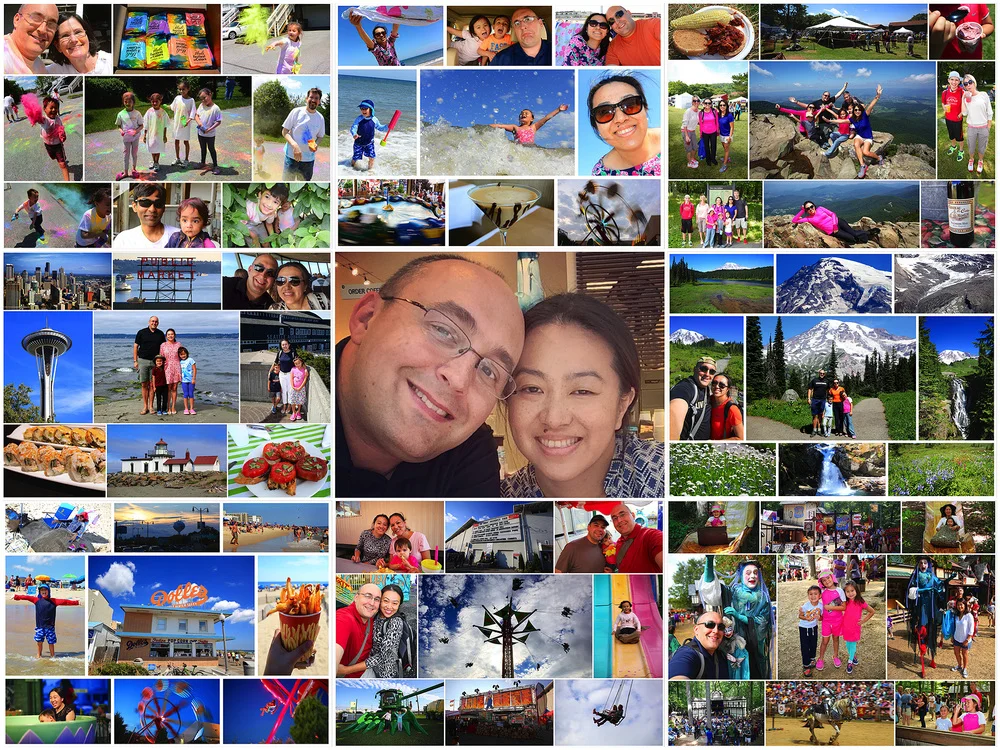
The Best Way to Survive Cancer Is to LIVE: When you find your magic formula, lather rinse and repeat! Another fantastic summer for 2014 is now in the books. Top row, left to right: a Summer Kickoff Color Party that I threw with friends, our first trip to the beach over Memorial Day weekend, and a trip to Shenandoah National Park for the Blackberry Festival with friends. Center, our trip to Seattle and Mount Rainier National Park, which was spectacular. Bottom: One last beach trip with another in between, the County Fair, and the Maryland Renaissance Festival.
Towards the end of the year I finally managed to process and release all of the repressed fears and memories that had been haunting me, and I learned how to better control these things as they came such that they wouldn't ever gain the upper hand on me as they had been during the beginning of the year. I got the breathing room that I needed from the end of my two-year period of active surveillance, and stopped worrying so much about my cancer coming back. And I consciously chose that I was no longer going to worry myself to death about all of the things I had been worrying about before. Because we've had cancer once, we’re automatically at an elevated risk level for so many other types of cancer. Because our bodies had to endure the harsh and toxic treatments to beat said cancers, we’re automatically at an elevated risk level for secondary health problems later in life relating to said treatments. And because we commonly develop permanent side effects from said treatments that affect us today, there’s always the chance that they could get worse over time and we might not have the quality of life that we had expected as we age, especially if we’re faced with another health crisis. What if we experience a late relapse? I struggle in various ways today, what about tomorrow? What if we do develop another cancer? Will our bodies be able to handle it? What if something else happens? What if we don’t make it? How would our families go on? The list of worries never ends!
I quite literally had worried myself to death, from a mental health standpoint.
The harsh reality for everyone is that there’s never been any sort of guarantee on our health or longevity, and especially as cancer survivors there’s always going to be some sort of a dark cloud or question mark floating above our heads. There’s no sense in worrying about that which you have no control over, advice I had given myself long in the past but seemingly had forgotten. Take the best care of yourself that you can, both to minimize whatever risk factors you face and to maximize the potential of your body, and then simply live and enjoy your life today and every day as best you can. It’s a huge undertaking to be able to let go of your old ways and to completely change your attitude and approach to life, but once I finally managed to free my mind from all of these worries to fully focus on enjoying and maximizing the potential of each day instead, my healing process completed itself. I became a free man mentally and emotionally for the first time in years, and I've never been enjoying life more than I am today. Worry not about tomorrow, live and enjoy your life the best you can today.
The Best Way to Survive Cancer, Is to LIVE.
StevePake.com

Cancer and Depression
The death of lovable actor Robin Williams was both untimely and tragic, and shocking to so many. What a great man and a great actor, probably one of the best in Hollywood, loved and adored by many millions of fans. His passing is a great loss, and to learn that he had been battling a very deep depression and that his death was an apparent suicide just made it hurt that much more. Although Mr. Williams was not known to be fighting cancer of any sort, depression is something that commonly finds its way to cancer fighters and survivors, and sadly neither of these topics are strangers to me.
The death of lovable actor Robin Williams was both untimely and tragic, and shocking to so many. Most all of us probably have memories of movies that Robin Williams played a role in that we were quite fond of, and the impression left upon us by both the actor and the man. Just looking through his extensive list of movies and roles on IMDb.com, "Good Morning, Vietnam", "Mrs. Doubtfire", "Good Will Hunting", "What Dreams May Come", "Patch Adams", and the voice of the Genie in "Aladdin", are the ones that ring a bell with me. How many movies have you seen where Robin Williams starred, and you knew that only he could have pulled off that role? What a great man and a great actor, probably one of the best in Hollywood, loved and adored by many millions of fans. His passing is a great loss, and to learn that he had been battling a very deep depression and that his death was an apparent suicide just made it hurt that much more. Although Mr. Williams was not known to be fighting cancer of any sort, depression is something that commonly finds its way to cancer fighters and survivors, and sadly neither of these topics are strangers to me.
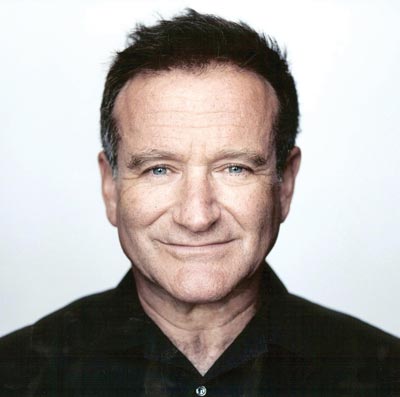
Robin Williams, 1951-2014
My best childhood friend ended up committing suicide in 10th grade. We had drifted apart somewhat after elementary school as teenagers, but it didn't make it hurt any less when he was gone. Another high school classmate ended up committing suicide during his freshman year of college, and a good friend also lost one of her sons to suicide while he was in college. I thankfully have never had suicidal thoughts or tendencies, but I know what a deep depression feels like and just how big and impossible of an emotional hole you can feel yourself trapped in.
Depression is quite common among cancer patients and cancer survivors. According to various studies out there depression occurs in 15-25% of cancer patients, but I personally think that those numbers might be a bit low. Many of my TC support group peers who were diagnosed with testicular cancer at around the same time as me had also reported experiencing very depressive periods as I had been (lasting more than 3 weeks) during survivorship and surveillance, and particularly around 18 months out from our treatments. We were really struggling day-to-day with depressive symptoms, with the rigors of cancer surveillance seemingly having worn so many of us down as we closed in on the all-important 2 year cancer free milestone for non-seminoma.
There's an excellent online brochure on Cancer and Depression by the National Institute of Mental Health that's definitely worth a read for anybody facing cancer or who has someone in their lives who is.
The signs of depression are:
- Ongoing sadness, anxious, or empty feelings
- Feeling hopeless
- Feeling guilty, worthless, or helpless
- Feeling irritable or restless
- Loss of interest in activities or hobbies once enjoyable, including sex
- Feeling tired all the time
- Difficulty concentrating, remembering details, or making decisions
- Difficulty falling asleep or staying asleep, a condition called insomnia, or sleeping all the time
- Overeating or loss of appetite
- Thoughts of death and suicide or suicide attempts
- Ongoing aches and pains, headaches, cramps, or digestive problems that do not ease with treatment.
I really struggled mentally and emotionally during the last 6 months of my 2 year period of active surveillance from January through June of 2013, and could have checked the boxes on 8 or 9 of those 11 symptoms. I know what it feels like to be hanging on by the smallest of emotional threads. I know what it feels like to be right at the edge feeling like you're going to completely lose it all, and that the slightest misstep by you or anyone close to you could send you falling. This is more PTSD than depression, but I also unfortunately know what it's like to have voices in your head telling you terrifying things. And I know what it's like to have cancer flashbacks and experience fear from the past as if it's in the present. I was tired of being afraid, I was tired of the mind games that cancer was playing with me, making me constantly fear for my life before and after every surveillance appointment, and I just wanted it to end. I was never suicidal, and if I was I would have immediately sought help, but I did want to be driven out to the countryside and left on the side of the road in the middle of nowhere. I was so spooked and afraid and felt my untimely demise was so imminent either from cancer or who knows what, that I didn't want my wife or my kids, or anybody that knew or cared about me to have to witness whatever was going to happen. I just wanted to be left alone, and wanted cancer to leave me alone too.
And of course I was perfectly fine, physically speaking. I had a cancer recurrence scare that triggered a lot of awful things inside my head, but my cancer (knock on wood) never came back. My life was never in danger, but my mind was tricked into believing that it was. These are the dark and terrifying places that the mental health fallout from a cancer fight and the rigors of cancer survivorship can put you in. It's why it's so important to find and have the support that you need not just during your cancer fight, but well beyond it into surveillance and survivorship as well. Depression can hit cancer fighters and survivors at any time, including even more than a year out from treatments as it did with me and peers of mine. My wife has a been a great partner for me in life and pulled me through the worst. The smiling faces and energy of my kids, and the enthusiasm for life that my son in particular has, helped to keep me engaged and smiling. And as I wrote in my last blog post on Stuart Scott and facing cancer, so many wonderful friends, mentors, work colleagues, my boss, and even neighbors down the road that I had only just met helped to pull me along and keep me engaged at a critical time during my survivorship. It took a lot of soul-searching and a lot of rebuilding, but with time I finally learned what it was going to take for me to truly survive cancer, and I managed to overcome my cancer induced depression and related demons.
If you're struggling with depression whether it's due to cancer or not, you need to know that help is out there and that you're never alone in either fight. Your family and friends are your first line of defense. You can also reach out to your primary care physician or your oncologist for local resources such as support groups and therapists. A cancer mentor, whether it's from a formal organization like Imerman's Angels or otherwise, is an invaluable resource as so many of us that have fought cancer have also had to learn how to deal with depressive episodes whether formally diagnosed with depression or not. Talk therapy is preferred, but anti-depressants can help and are common as well. Exercise can work wonders. I took up running, and although I'm not very good at it due to chemo-incuded peripheral neuropathy and a lot of muscle fatigue, it's always been a great way to get anxiety and bad feelings out when you can dump them into a workout. If you're to the point of having suicidal thoughts and don't have anyone to turn to, please do give the National Suicide Prevention Lifeline a call at 1-800-273-8255. Every single person I know is beautiful and unique in their own ways. We all have our calling in life, and have wonderful things to offer people and the world. Each and every death by suicide is tragic and a great loss. I still miss my grade school friend, I know a mother who still misses her son every single day, and I know millions are going to miss Robin Williams as well. I'm saddened that his demons managed to get the better of him, but at least they're not going to hurt him anymore.
Whether you're facing cancer, or depression, or are having suicidal thoughts, please know that you're never alone in facing any of them. Ever. Help is out there. Please don't make a terrible mistake. You're special and unique, and the world needs you.
God Bless you and Rest In Peace, Robin Williams. Thanks for all of the wonderful memories and laughs. You will be sorely missed.
StevePake.com
The Brilliant Words of Stuart Scott on Facing Cancer
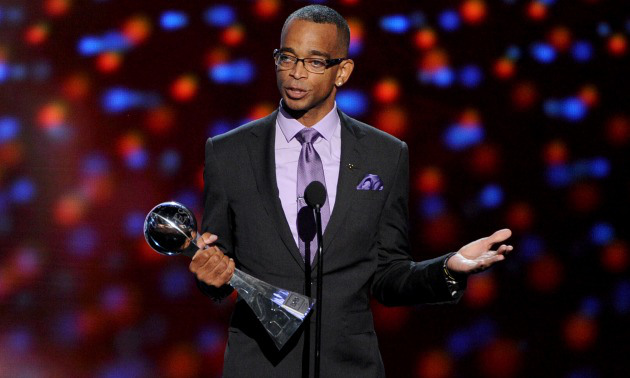
Last week on July 16th, Stuart was awarded the Jimmy V Award for Perseverance at the ESPY Awards, ESPN’s annual awards show. I can’t even tell you much about any of these awards or their meanings or histories, but I can tell you all about Stuart’s acceptance speech because it blew this cancer survivor away.
I’m not a particularly big sports fan. I don’t watch ESPN, and heck we don’t even get cable TV in our household, replaced a few years ago by an online streaming service or two. But I know who Stuart Scott is. Word travels fast in the cancer community when celebrities or public figures are diagnosed with cancer, or reveal their personal fights with cancer to the world. I’ve followed Stuart’s journey over the years through various reports in the news here, here, and here, and had admired his attitude and courage. One man fighting cancer as hard as he can in order to be around for his children certainly rings a bell with me.
Last week on July 16th, Stuart was awarded the Jimmy V Award for Perseverance at the ESPY Awards, ESPN’s annual awards show. I can’t even tell you much about any of these awards or their meanings or histories, but I can tell you all about Stuart’s acceptance speech because it blew this cancer survivor away. For those of you not familiar with Stuart Scott’s story, please do watch the first background story video first, and then his acceptance speech for the award (also on YouTube). It's definitely something that shouldn't be missed.
Just days out of the hospital where Stuart said he had been operated on four times in the span of a week, he stood completely upright and seemingly at ease to deliver a speech as if nothing had been happening at all. He described his seven year long fight against cancer as being far more difficult than he ever realized it would be. “This journey thing”, he said, hasn’t been a solo adventure and is something that’s required support. He went on to describe the times he’s needed to call his big sister or other family members or loved ones because he just needed to cry, and how he’s just needed people around him to talk, to listen, and to just be with him and love him. It was a truly beautiful speech, about fighting and living with cancer, but it’s fifty-four words near the beginning of Stuart’s speech that stopped me and friends of mine in our tracks. It’s fifty-four powerful words that so eloquently describe not just how to face cancer, but how to live and how to survive as well.
"When you die, it does not mean that you lose to cancer. You beat cancer by how you live, why you live, and the manner in which you live. So Live. Live! Fight like hell, and when you get too tired to fight, lay down and rest and let somebody else fight for you." - Stuart Scott
It is the darkest moment of the human experience when you feel as though you just cannot go on anymore and have lost all hope. You've expended every last bit of physical and mental energy that you have and have nothing left to give, but cancer keeps asking for more. You’re completely finished and broken, feel like you're about to be taken, and terrified of what’s next. Death instincts kick in, and you think of how to say goodbye to family and friends, and your children. You have the sudden desire to clean up any unfinished business, and to say things to people that might have been left unsaid. You feel yourself standing at the edge of and about to fall into a dark abyss that you cannot see the bottom of, but are powerless to stop it. You’re done, you’ve reached the end, you feel yourself helplessly teetering for a moment, and then you fall.
I was falling and I was terrified, flailing around helplessly like a nightmare that you can't wake up from, but then suddenly I was caught. It wasn’t the end. It wasn’t over. It was a surreal moment to suddenly have the feeling of safety and solid ground under my feet. When I had reached this point it was my wife, my soulmate and guardian angel, that was able to reach through and stop this fall. I just couldn’t hold on anymore and she reached out to me in a way that only she could, right into my heart and my soul, to let me know that she would love me until the very end, that it wasn’t my time to go yet and that everything was going to be okay, and that she would go to the ends of the Earth for me if that’s what it took to pull me through. I finally felt safe, but had fallen such a long ways, and it was still up to me to find and climb my way back up again.
The mental and emotional challenge of cancer is so ridiculously underestimated by so many, and has the very real and full potential to fling you right off of the mental cliff like this. Cancer isn’t something that’s just going to push you to your limits and then kindly stop. Cancer will push you straight past your limits mercilessly, no matter how badly it hurts. The fact that I reached this point in my own cancer journey not during diagnosis, nor during the cancer fight or even a cancer recurrence, but rather a recurrence scare, just goes to show how challenging cancer survivorship can be. My life was never actually in danger, but my mind was tricked into believing that it was, and that I was about to be sucked into a cancer black hole from which I might not ever emerge. I felt like I had just lived my last good healthy days. This underscores how important strong support is for cancer fighters and survivors, both during your cancer fight and even long after. You need the very best people for you, in your corner and on your side. Just like Stuart Scott, there have been times in my own cancer journey when I simply haven’t been able to go on, and have needed every bit of support that I’ve received in order to make it. I've needed people to fight for me when I was no longer able to.
As perfect of a caregiver and partner for life as my wife has been in supporting me, it's far too big of a task for one person alone to handle. It takes an entire village to keep cancer fighters and survivors feeling whole. I realized that I had been on the wrong path and approach to life in my cancer survivorship to have fallen the way I did, but which was the right path? Which way do I climb? It’s not something that my wife would ever have known, but my cancer survivor mentor did, and they opened my mind to other possibilities and helped me to find that path. A friend at work had such a sharp and spiritual mind, and she just had a way in which she could reassure me and talk me down when I was hurting, and helped to bring me much closer to God and the spiritual side of life. Like Stuart, I have the most incredible boss who just understands what this can be like, and said to take whatever time off that I needed while I was trying to sort my life out, and to not even worry about it. I got back in touch with so many of my cancer community friends, correcting the huge and critical mistake it was to drift away from them for a time. They knew my pain and my fears because they've been there, and were there to support and inspire and encourage me at every step of the way. A dear old friend introduced me to hiking which I very much enjoyed, another invited me out to a basketball game, and others kept me engaged on topics of interest and various hobbies. My favorite oncology nurse became not just an oncology nurse to me, but a trusted personal friend as well. Some other friends always helped me to laugh and smile, and occasionally even laugh my ass off to tears, which is some of the best medicine that you can get. Sometimes you just need to shoot the shit! And I can’t say enough good things about new friends of ours right down the street that I somehow had only just managed to meet during this very dark time. Such a wonderful source of support and encouragement, so many fun times and outings together, and such great chemistry and camaraderie between all of us. They’ve become truly wonderful friends in such a short period of time, and in many ways like a second family to me. Much like Stuart, I've needed to live my life as if I never had cancer, but I still think about it twenty times per day. These are the friends that I could spend an entire day with, and realize that I never thought about stupid cancer even once at all. You can't put a price on therapy like that!
As Stuart said at the beginning of his speech, “our life’s journey is about the people that touch us”. If the feeling of being at life’s end and falling into that dark abyss is the lowest and darkest point of the human experience, then the feeling of so much love and support surrounding me through the most challenging year of my life is the finest and brightest point of the human experience. It's a blessing to wake up every morning feeling all of this love and support, and it was such a surreal feeling for me last year when I was hurting so badly, and trying to find my way, to have this relay team of angels helping to guide me back to the top at every step. Every single last person who was there for me in my time of need has won a friend for life with me, and I really do feel as though I’ve been given a second chance in life. The experience has given me a new sense of urgency to not waste a day, to enjoy every moment that I can, and to love and enjoy my family and friends as much as possible. And most importantly of all, to pay these blessings forward to others in need, and to be that same blessing for them as others have been and continue to be for me.
It’s been a wonderful feeling these past six months finally feeling as though my own cancer journey has come full circle, but I still worry about my uncertain future. I’m well out of the danger zone for my cancer recurring, but do you ever really stop worrying? My body took the beating of its life fighting cancer once. Despite being in my mid-30’s, I have to nurse this post-cancer body of mine around as if it's 20 or 30 years older at times. What about when I really am 20 or 30 years older? What will my quality of life be like then? What if, God forbid, knock on wood, please let me not ever have to deal with this again for the rest of my life, I have to face another type of cancer someday? Will my body even be able to handle treatments at all? There’s never really been any sort of guarantee for anybody, but especially for young adult cancer survivors all bets are off. I’ve won for today, but what about tomorrow? I’ve felt like I’ve been in some sort of race to live and enjoy life as much as I can, while I can. It didn’t just take everything that I had to beat cancer once - it took more than everything I had.
What if I have to face cancer again? And what if I lose?
It's a question that's been stuck in my mind for quite awhile, and has been a puzzle to me that I just haven't been able to solve. But thanks to the brilliant words of Stuart Scott, I finally have the answer to that question and the missing puzzle piece.
“When you die, it does not mean that you lose to cancer. You beat cancer by how you live, why you live, and the manner in which you live.”
Repeat after me, “I Will Never Lose To Cancer”
Not ever! Amen. Thank you Stuart Scott!
It’s been quite a ride, but I’ve learned how exactly I need to live, what my priorities should be, and I know that my heart is in the right place. I’m living my life exactly the way I need to in order to feel this way, and am doing what I feel that I need to do in this world. I just needed the right mental framework and mindset to lock that in for life. We as a whole need to stop framing things in terms of loss, but rather in terms of the difference a person made, whose lives they touched, and how one lived and faced cancer while they were alive, just as Stuart suggests. People fighting with or trying to survive cancer need all of the support, encouragement, and inspiration as they can get. People with cancer in their lives don't need to hear about how someone lost, we need to hear about how they won!
God bless you Stuart Scott, and your family and friends and all those that love and support you. Thank you for sharing your cancer journey with the world, and for offering such profound and inspiring words of wisdom on your approach to life and how you face cancer. I'm in awe and my hat is off! All of us here at TCAF are praying for you and wishing you well.
RIP Stuart Scott, January 4th, 2015
StevePake.com
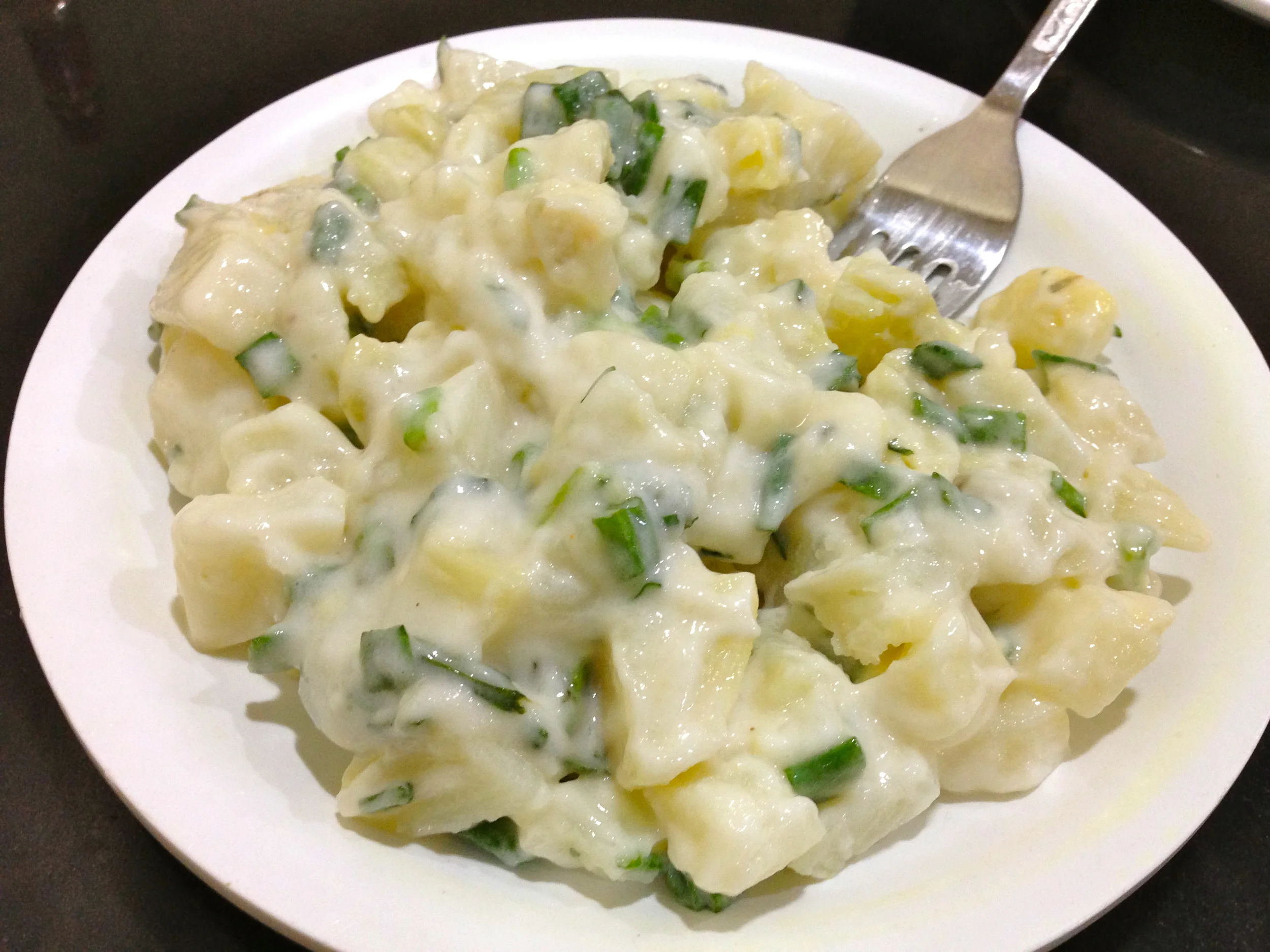
Fund Cancer Programs, Not Potato Salad!
I was never going to get cancer. It just doesn't happen to young guys like me (right?), especially not at 33 with two young kids that I had just brought into the world.
I was never going to get cancer. It just doesn't happen to young guys like me (right?), especially not at 33 with two young kids that I had just brought into the world. Cancer wasn't a part of my life plan, and it's not something that really runs in the nice boring "Camry family" that I come from. We just keep going and going and nothing bad ever really happens to us, just like Toyotas.
It's what we like to think, that nothing bad will ever happen to us, but cancer doesn't discriminate. It can happen to anybody at any age, even if you don't have any risk factors for a particular form of cancer. Hello, dark world. According to the American Cancer Society, the lifetime risk of developing cancer of any type is 1 in 2, and the lifetime risk of dying from cancer of any type is 1 in 4. It's basically down to a coin toss on whether you personally will develop cancer in your lifetime or not, and even if you don't it's all but inevitable that at some point in your life people you know and care about will develop cancer, and that some will probably die of it too. And when that cancer diagnosis comes no matter whose it is, everybody is going to want to know that there are solid treatment or management options out there for that cancer, if not a complete cure, and that there will be plenty of support resources for both cancer fighters, co-fighters, and survivors, right?
We sadly have such a long ways to go on this, and these sobering statistics on the true reach of cancer only underscores the need for robust funding for both cancer related research and support programs alike. Despite Testicular Cancer being considered a success story in the cancer and oncology world, the rarest form of the disease, pure choriocarcinoma, is still very deadly. Very few people who are diagnosed with pure choriocarcinoma testicular cancer manage to survive the disease, as it grows so quickly and aggressively that it's almost never detected before it's had a chance to completely overrun one's entire body. Someone still dies of testicular cancer every single day. And many of the treatments, cures and solutions for other forms of cancer simply don't exist yet, and require strong financial support today to develop the cures for tomorrow. All of this takes time, decades, or even generations to develop, but cancer doesn't care that the economy has been rough and that money is short everywhere today, and is all too happy that maybe people just aren't aware, or are too distracted and easily amused or don't care? Look at those statistics - it's down to a coin toss on whether you'll develop cancer in your lifetime or not, and nearly inevitable that someone you love or care about will. What about when it's you? Will the cure you need for yourself or a loved one be there tomorrow when you need it?
As important as funding for cancer programs are, it's been disheartening to all of us here at TCAF and to many within the cancer community to see just how quickly truly obscene five and six-figure amounts of money are being raised for completely meaningless and pointless projects on crowd-funding type websites out there, the latest of which involves potato salad. I have numerous cancer survivor friends that are out there, pounding the pavement, working hard putting in hundreds or even thousands of miles training for and participating in cancer charity rides and runs, and who work tirelessly trying to find creative ways to raise money for the cancer organizations that they're trying to support. And as soon as they've completed one event, they're back out there again gearing up for the next after a quick breather. It's tireless hard work, and they sacrifice so much time away from their families while riding or running or training, all in the name of trying to raise a few bucks for cancer research and support programs. To see more money being raised in a week for 'potato salad' on a crowd-funding website than some of my cancer community friends might raise in a few years of hard work for cancer is a slap in the face. It's not just sad, it's disgraceful. "Man Raises More for Potato Salad in a Week than another Raises Running for Cancer in Years". You'd expect to see a headline like that on a satirical website like The Onion, but that's very much a real headline. What does this say about us as a society when people are so proud to be a part of the "potato salad" social fad, while cancer researchers everywhere are struggling to secure funding for their work? One is meaningless, and the other could save your life or that of someone you love someday. This is beyond shameful.
If you want to be a part of a real program that will affect real people and make meaningful differences in their lives and possibly your own someday, there are so many cancer related organizations out there that you could donate to that are in far more urgent need of your money. Favored organizations here at TCAF are bothImerman Angels and the Make-A-Wish Foundation, as just two of many examples. Imerman Angels, founded by a testicular cancer survivor, helps to connect cancer fighters and caregivers with a Mentor Angel who will help guide and support those affected by cancer through their cancer fights. Nothing is more terrifying than a cancer diagnosis, but nothing has helped me to feel more secure than a mentor who has been there and done that and helped guide me through the experience. As someone who has both been mentored and has provided the mentoring informally, the one-on-one support mission advocated by IA is something that we all believe very strongly in here. The Make-A-Wish Foundation is very well known for helping children with life-threatening medical conditions to live some of their dreams and enjoy life a bit with their families, when many of them have only seen the insides of hospitals for years, and have medical bills the size of mountains that would make such experiences otherwise impossible. And TCAF could always use your support as well, either via direct and tax-deductible donations, or through our online shop. Our mission here is to spread knowledge and awareness about the number one form of cancer that affects men aged 15-35, but is almost never talked about. TCAF has also helped to provide financial support for families in need, some of whom have been turned away from other prominent organizations that testicular cancer survivors have actually raised significant amounts of money for.
I know it's not as cool or as fun to talk about cancer as it is about the latest social fad or trend that you were so proud to have supported on a crowd-funding website, but I'm not kidding that it makes me feel physically ill and nauseous when I see tens or even hundreds of thousands of dollars being thrown blindly towards things as ridiculous as potato salad, when that campaign in particular was started as a joke with a $10 goal! That same money could be used to help fund cancer research programs that could help save your life or that of someone you love down the road, could be used to send a terminally ill child and their family to Disney for whom there is no cure today, or could be used to help connect someone who has just been diagnosed with cancer and is afraid for their lives with a local mentor angel that can help guide them and show them the way.
I was never going to get cancer, and nobody else ever "planned" to get cancer either. Never in my life or in a million years did I ever think that cancer would impact my own life in such a way, but here I am as a 3 year survivor of testicular cancer blogging at TCAF to an audience of tens of thousands. I've wised up and know that cancer can strike anyone at any time, and am trying my best to make a difference today, so that the next me and the next you will have an easier time with this tomorrow. What about when it's you? How are you making a difference in the fight against cancer?
Will the treatment and support that you might need for the cancer that you or a loved one might face in the future be there tomorrow?
It might not be, if we're too distracted or easily amused funding 'potato salad' today.
Cancer is relentless and requires continual focus and support, and long-term planning if we ever hope to overcome it.
I've personally decided, on my own, that I'm going to make proportional matching contributions to a few cancer related organizations of my choosing at the conclusion of this 'potato salad' campaign on August 2nd, because otherwise I'm just not going to be able to sleep well at night. As of this writing the potato salad funding stands at just shy of $50K, and at one point was up to as much as $70K. If the funding happens to land at $100K, then I'll be making a few $100 donations to support a real cause (or $50 for $50K, etc). It shouldn't be easier to raise tens of thousands of dollars for potato salad than it is to help support cancer research and support programs. I hope some of you reading will join me in doing so as well, because this just isn't right and it makes me sick.
StevePake.com
Happy July 4th - Wishing You Freedom and Independence from Stupid Cancer!
It was on this day three years ago, July 1st, 2011, that I finally got the call I had been waiting for.

It was on this day three years ago, July 1st, 2011, that I finally got the call I had been waiting for. After 5 months of pure hell, going through the terrifying month of being diagnosed with cancer, fearing that I was going to die leaving my wife and two kids alone in this world, running around frantically trying to figure out what the plan was, three months of chemotherapy misery, and then the RPLND surgery up at Memorial Sloan-Kettering Cancer Center in New York, the moment of truth had finally arrived. It was Jose, Dr. Sheinfeld's PA, who was finally calling with the news that the full pathology report from my RPLND surgery had been released. It was a Friday, and I sure am glad he called when he did, because if I'd had to wait through the holiday weekend to get this call I was going to lose it right then and there. Everything was good on the pathology report. All 51 lymph nodes removed from my retroperitoneum were benign. No active cancer, no stupid teratoma, no nothing. Just necrosis (dead tissue), including the 1.4 cm mass that was still showing on my post-chemo CT scan. And in that moment I was set free. My body was declared free of cancer, and I had finally won my freedom and independence back after cancer had wrongly taken it prisoner, and held me and my entire family hostage for five months. The long nightmare was finally over.
As I started writing this blog, I tried to remember how I felt at that moment but was confused. I couldn't recollect. I wondered if I had even felt anything or reacted at all, when suddenly it hit me. An unexpected surge of emotion seemingly out of nowhere, extreme feelings of relief and joy mixed with tears. I sat down on my couch and just wept softly for a few minutes letting that and the anxiety and tension drain away, and then quickly went to pour myself a half glass of wine. Finally, three years after the fact, the long repressed emotions of what it was like to get my first all clear were finally released from the far corners of my mind and expressed. I had been in a warrior mindset throughout my cancer fight, and didn't allow myself to feel anything after the initial shock of the cancer diagnosis wore off in the name of keeping a brave face on for my family. Learning how to deal with repressed emotions has been yet another challenging element of cancer survivorship for me, and is something that I plan to write about more in the future here on the TCAF Blog. But for now, here's to those ALL CLEARS!!!!
What cancer has taught me above all else, is just how fragile, precious, and uncertain life can be. In an instant life can change and will never be the same again. I've always been the type of person that thought I had forever, was in no real rush to go anywhere or do anything, and was happy to plan things for 10 or 20 years from now. It was my cancer experience that taught me just what a false sense of security we all have about our lives and supposed longevity, and that we might not be around in this world for as long as we'd all like to think, and that I'd better start living and enjoying life and each day and moment before me right now. Every day that I wake up and have my health, and get to keep being a husband to my wife and a father to my children is a good day in my book, and something worth celebrating. Those that know my family and I well know that we're always up to something, going places and doing things, and having the best of times together. It's how we've needed to live our lives to cope in the aftermath of our cancer fight, to find ways to enjoy every moment that we have when cancer could have cut it all tragically short. Nothing is taken for granted in our lives anymore. We've filled our lives with as many fun and memorable experiences as possible to help write over the painful memories of our cancer fight, and also the fight for survivorship.
After your first all clear, as soon as you're physically able, get out there and start living! Make some plans to go somewhere or do something special with your family, friends, or whomever it is in your life that's been meaningful to you and that you've held dear in your heart through such extraordinary times. We hadn't even really had much of a bucket list, but we do now and have been making progress on checking them off! And it's not just big things, either. The daily little things count just as much if not more so! Do a little something each day just for you, that you know will put a smile on your face. Meet up with an old friend for lunch or go for a run, take the long way to work because you like the drive better, or maybe a little treat from your favorite coffee shop. Start living life and doing things for you. Take control and live each day on your own terms. No matter who or what we are, the future is always uncertain. All we really have is the day and the moment before us right now. Celebrate life, celebrate each day, and get busy living!
No matter where you are in your cancer journey today, on behalf of all of us at TCAF I'd like to wish you all a Happy 4th of July, and Freedom and Independence from Stupid Cancer!
StevePake.com
The Value of Testicular Self-Exams and Early Detection from the Survivorship Perspective
There’s been some debate in recent years about the true value and effectiveness of certain types of cancer screenings.
There’s been some debate in recent years about the true value and effectiveness of certain types of cancer screenings. This is, of course, a perfectly reasonable thing to be doing both in the name of advancing medical science, and especially in an environment where there's so much downward pressure on the costs of healthcare. One of the types of cancer screenings that has been discussed are for testicular exams, and it's been surprising to so many of us in the testicular cancer community to hear that screenings for testicular cancer have actually come back as not recommended or not worth it by some prominent organizations. Consumer Reports magazine even gave the testicular cancer screening one of their infamous little solid black dots, as if it were bad for you and something to avoid! The rationale is that because testicular cancer has such a high cure rate even in advanced stages, that overall survival rates don’t budge significantly whether the cancer is detected early or late. Furthermore, not everybody who is diagnosed with testicular cancer will be able to detect any irregularities in their testicles, which can make it a bit of a hit or miss type of test. So don't worry about testicular exams, some say. If you’re diagnosed with testicular cancer, just go get chemotherapy or radiation treatment or surgery or whatever it is that you need, and get cured.
All of this is perfectly fine and rational from a business and financial analyst perspective, but is completely cold and missing the human cancer survivor perspective on this. We're so much more than just a binary "1" or "0" on someone's spreadsheet on whether we're alive or dead. We're very much analog creatures, and cancer survivorship itself is a million shades of gray. And I have to say, I personally was just a little bit taken aback and offended by the nonchalant manner in which I saw Dr. John Santa, Director of Consumer Reports Health Ratings Center, describing how curable testicular cancer was at any stage, to not worry about self-exams or screening, and to just go get chemo if you're diagnosed with testicular cancer on the Dr. Oz show last year. It made for good TV, and I could sense some pride in Dr. Santa's voice and body language when talking about how curable testicular cancer is these days, as TC is indeed one of the great victories in modern medicine. But it's still a real disease and a real cancer that kills real people. Somebody is diagnosed with testicular cancer every hour in the U.S., and someone dies of it everyday. A cancer warrior brother of mine who had been diagnosed with testicular cancer around the same time as me just happened to be in hospice care and living his last days as this particular Dr. Oz show had aired. To his credit, Dr. Oz defended the practice of testicular self-exams and said he still thought they were a good idea to do, but it was as if I had been punched in the stomach to hear how curable testicular cancer was "at any stage" as my friend was dying of it. And don't believe for a minute that chemotherapy is some sort of miracle pill, and that life will go on just as it had before when it's all done, as that's hardly the case for so many.
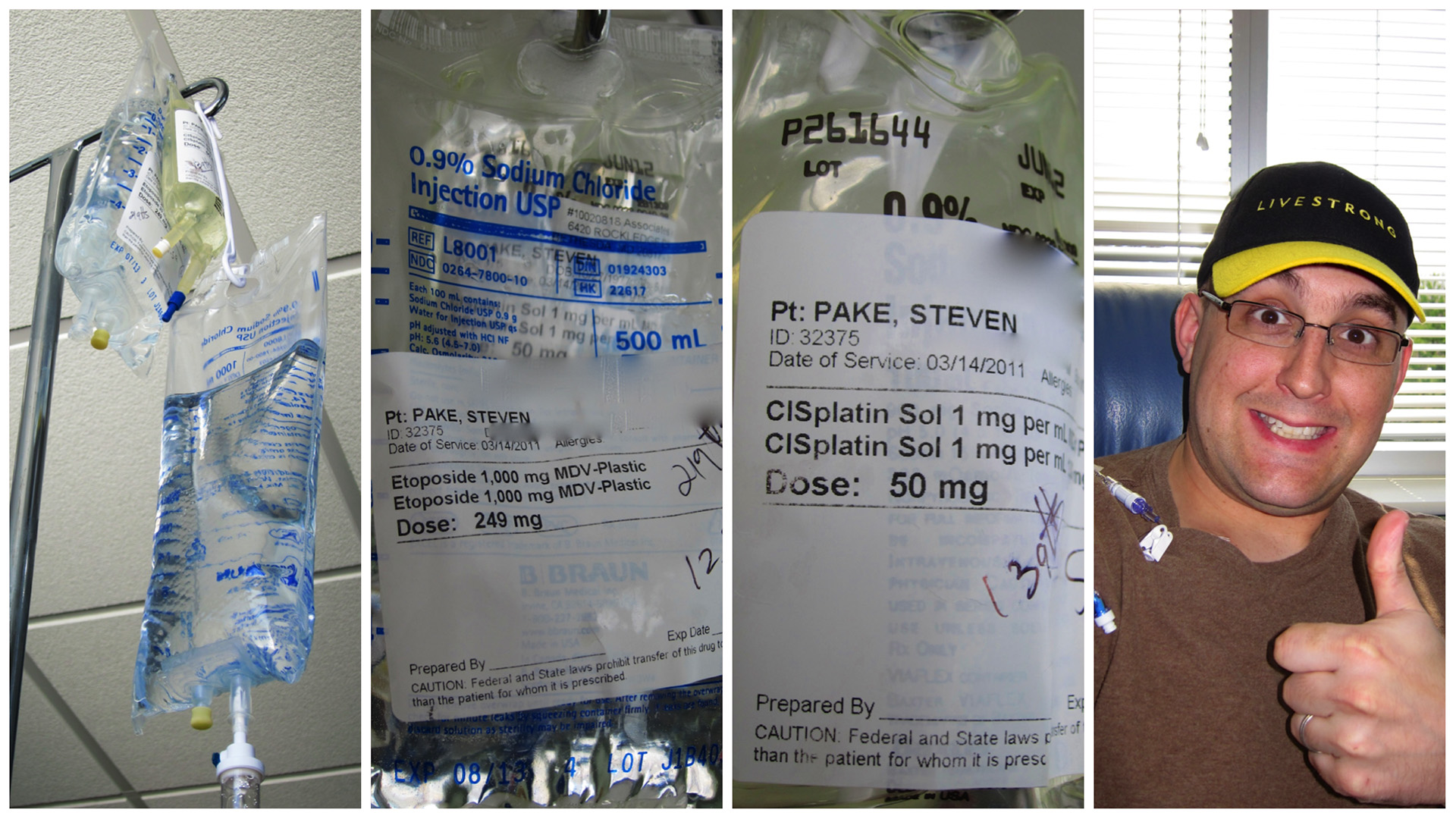
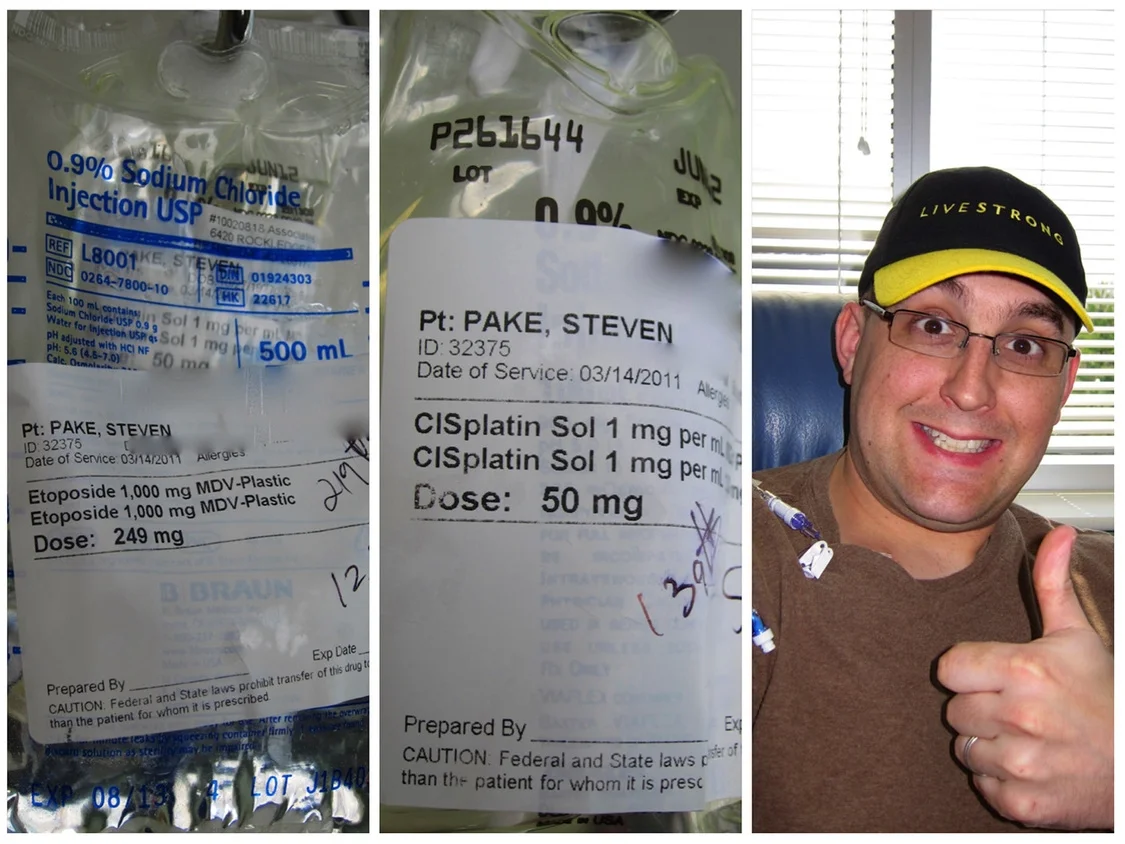
My chemo cocktail, Etoposide and Cisplatin for my first round of EPx4, March 2011. Yum yum!!
Testicular cancer is a pretty fast and aggressive type of cancer that can quickly overrun your entire body, but can also be cured completely if it's hit hard and fast. Chemotherapy protocols for testicular cancer are no joke. I'm now casually recalling the movie 'Star Trek IV - The Voyage Home' when Doctor McCoy gives the ailing patient in that San Francisco hospital a pill that miraculously fixed their failing kidneys. I wish it was, but it ain't like that!! The drugs of Cisplatin,Etoposide, and especially Bleomycin that many of us are familiar with are all very serious drugs. There are numerous warning labels right on the bags, and oncology nursing staff handle them with masks on under vented hoods for good reason! They certainly do an awesome job of killing cancer, but they're really not kidding when you read the datasheets for these drugs and look at the potential side-effects that can become long-term or permanent issues. Anybody facing chemotherapy after a testicular cancer diagnosis would be well advised to look at the potential side-effects and risk factors of these drugs, and evaluate them against your personal and family medical history with your oncologist. I did EPx4, and I can personally check the boxes for kidney damage, nerve damage and peripheral neuropathy, and muscle fatigue among other things, along with fertility loss from my RPLND surgery. There's increased risk of developing leukemia with the EPx4 protocol, as well. Potential risks with Bleomycin for the more mainstream BEPx3 protocol are blood vessel damage and Raynaud's, increased risk of heart disease, and potentially nasty effects to your lungs. It's rare, but there are cases of people having beaten testicular cancer, only to end up dying from complications due to Bleomycin. It's not uncommon to hear about cases for people with advanced stage disease who started with BEPx4, but ended up doing BEPx3 + EPx1 either due to complications from Bleomycin (drop in lung function, other severe side effects), or due to getting a good response and just to spare them from the additional Bleo exposure. These drugs are no joke!
In my case, I might have been able to avoid much of what I went through if only I were more aware of Testicular Cancer. I started having strange pains in my right testicle two months prior to my diagnosis, but passed it off until the pain finally got so bad that I couldn't even sleep at night. I had not even considered the possibility that this could have been cancer when symptoms were first noticed, because I simply wasn't aware of the disease. Had I checked myself into my primary care provider earlier, I might have been able to catch my cancer at Stage I rather than Stage II, and avoided much of the physical trauma to my body in the process of fighting cancer. And for others, it could mean the difference between life and death! I personally have fought off depression and have had PTSD flashback episodes from my chemotherapy experience that have played back in my head like the trailer for some horror flick, and the same for my RPLND experience. It's not just physical trauma that our bodies experience while going through our treatments, but emotional trauma as well. I certainly could do without such terrible memories of this hell that I've been through.
About the only thing that was more fun than any of this stuff was the Magnesium Citrate that I had to take before the RPLND surgery for "bowel cleansing". It didn't just cleanse my bowels before surgery, but during and for long after as well! It was the gift that kept on giving, but at least the effects were temporary. The havoc wreaked and damage done by the chemotherapy drugs can stick with you forever!

This stuff gave me diarrhea every 2 hours for 36 hours straight, AFTER my RPLND surgery. They thought it was Clostridium difficile aka "C. diff" but nope, just this stuff continuing to work its "magic".
It's by far the most important thing to simply survive cancer and to be a "1" on that spreadsheet as opposed to a "0", and it's certainly important to find the most cost-effective ways of treating and fighting cancer as well in order to extend our limited resources to as many people as possible. But early detection is also important for minimizing impact to quality of life after your fight with cancer and during cancer survivorship. Harsh treatments that weren't needed because a cancer was caught early can't traumatize your body. They can't traumatize your mind. They can't leave you with permanent and lasting side-effects. And they can't rob you of your fertility. If you manage to catch testicular cancer at Stage I and are able to just do surveillance, it doesn't mean that you won't still struggle because I know people who have. We all do in some way. But the less you have to go through to get that cure, the better off you're going to be down the road both physically and mentally. Cancer isn't just about curing the disease, but curing the person and the soul within as well. My cancer fight was a brutal 5 month affair that spanned from February through June 2011, but it wasn't until December of 2013, nearly two and a half years after my treatments ended, until my soul was finally cured of cancer too. As TCAF Founder Kim Jones put it, what comes after your cancer fight really is a "fight for survivorship".
I've made peace with all that my body has been through, and have accepted and know how to manage the various bodily dysfunction and limitations that I have after my caner fight, including having accepted the loss of my fertility. And I've made all of the significant mental adjustments that I've needed to make as far as my approach to life and my attitude as well, but none of this could ever be considered easy. I want the next me and the next you to have a much easier time with this, and spreading awareness about testicular cancer and how to do proper self-exams is exactly the way to go about achieving that. We can't prevent testicular cancer, and what exactly causes it is not even understood yet. So no matter which way you look at things, the earliest possible detection of testicular cancer when it does develop remains the key. It gives you the best possible shot at beating the disease, it minimizes the cost of treatment, and helps to minimize impact to quality of life during survivorship. A testicular self-exam takes less than a minute and is something that should be done at every annual physical, and can and should be done via self-exam once per month. The cost is practically zero. This knowledge and practice is the first line of defense against the most common form of cancer among men aged 15-35, and is hardly something that should be avoided. There's nothing to lose by spreading Awareness about Testicular Cancer and encouraging the practice of Self-Exams. It's a Win-Win-Win.

What I wish had been hanging in my shower in December of 2010, when I first noticed symptoms but ignored them.
StevePake.com
Steve Pake's Top 10 Guide to Surviving a Young Adult Cancer
At the start of 2014, after suffering from a year of such terrible anxiety, depression, and post-traumatic stress, I finally had my life figured out again after cancer. I was in the midst of this moment of clarity where I had an intimate understanding of all that had gone wrong in my cancer survivorship and why, and all that had gone right as well. I couldn't afford to let this moment of clarity go to waste, because never again in my life did I want to suffer as I had throughout so much of 2013, hurting as I had been, yet not knowing what to do. After four months of writing, I finally released this essay into the world, and was happy to see it spread far and wide. If you only ever read one thing from me, let this be it.
To mark the end of Testicular Cancer Awareness Month this month, and as a late way to honor Young Adult Cancer Awareness Week which was also in April, I'm pleased to be able to share with you all a young adult cancer survival guide that I've written.
Especially for Young Adults aged 15-39 and faced with a cancer diagnosis, there are so many unique challenges that we face compared to other age ranges. It’s not just our lives that we fear for at a time when we’re supposed to be invincible, but the fear of so many of our hopes and dreams that we’ve had for our lives slipping away right before us. As young adults, we’ve come so far and worked so hard in life, and are finally on the verge of being able to live if not already enjoying so many of these dreams. But in one fell swoop, a cancer diagnosis threatens to destroy and take all of that away from us. It’s so unfair, and we feel so crushed and cheated having to set all that we’ve worked so hard and made so many sacrifices for aside, just for a chance to even live at all. A cancer diagnosis is truly the ultimate betrayal. It’s our own bodies cheating on us with death at a time when we were counting on it the most, and all of the confidence and security we had about life vanishes in an instant. It’s beyond devastating, and it hurts so bad to be betrayed by our own bodies in such a terrible way at a key time in our lives.
Being struck with a cancer diagnosis and fight is challenging enough as it is. But if in mid-2011, right out of my brutal 5-month long fight against testicular cancer, someone with a crystal ball had told me that the mental and emotional challenges I would face in the coming years as a cancer survivor would exceed the physical challenges I had just faced fighting the cancer itself, I’d have given them some pretty funny looks, told them that they were crazy, and shaken my head with looks of disbelief and confusion and walked away. Because what could possibly be worse than the hell that I had just been through, right? Right? But today I know just how true such a statement would have been, because it’s exactly what happened to me, and it’s exactly how I feel today long after. I still can’t believe it myself, but I know it’s true. I had heard some stories, and I had even read Lance Armstrong’s book before my treatments started, but didn’t think any of the challenges of survivorship would apply to me. I was naieve and so very wrong, and know painfully now that the challenges of cancer survivorship should never be underestimated.
My cancer ordeal and the new challenges that I faced in life as a cancer survivor forced me to go through a personal evolution of self, and brought about the need to fundamentally change and restructure my approach to life and way of living in order to accommodate this new reality of mine. For the first time in my life I was truly scared, was afraid of living in my own skin, and was ill-prepared to deal with the anxiety and emotional rollercoaster that is “scanxiety”, as we go for follow-up appointments month after month, praying that our cancer doesn’t come back. I know what it feels like to have finally gotten your life back, only to fear losing it all over again from a terrifying recurrence scare that I experienced. I know what it feels like to have lost all hope, and feeling like you’re next, just waiting for the moment for more bad news to come, and that you’re going to be taken from the family that you love so much again. I know what a very deep depression feels like because I’ve been there. And I wish I didn’t know a thing about PTSD, which is single-handedly the worst thing I’ve ever experienced in my life, but I know all about that too. Rest assured that the real thing is far worse than any portrayal that you’ve seen in the movies. Your mind simply loses track of what’s real and what isn’t, and so many of your fears from the past find their way to the present, with little ability to distinguish between the two. And it potentially doesn’t stop… for weeks. It’s been over 3 years since my cancer diagnosis and over 6 months since any PTSD episodes, but the whole of this experience from diagnosis through today has hurt me so badly and deeply inside that I can still evoke tears on the spot, as I recall such painful episodes in my life as I write this.
My cancer survivorship experience spurned a personal evolution that finally began, way too late at the beginning of 2013, nearly two years after my initial cancer diagnosis. I knew that my entire approach to life needed to change, and that I was going to have to shake things up. Everything and everyone in my life was given scrutiny, including the person staring right back at me in the mirror. I was tired of cancer hurting me and my family, and set off to do whatever it would take to beat these terrible demons off for good, and for me to feel whole again. It took a full year to complete this evolution and it involved a lot more pain and trial and error, because I didn't know or understand what my needs were anymore. I needed to find out and re-discover my new self, whatever that may be. Towards the end of 2013 I was at last able to declare victory, and since the beginning of 2014 I’ve finally developed the emotional strength to begin looking back on all of this. After 4 months of reflection and more than a few tears and bottles of wine, I’m proud to finally be able to share with the world today my recipe for success. All of my secrets, my biggest lessons learned, everything that’s kept me going, and what’s really worked for me over the past few years as a young adult cancer survivor who has struggled to find my way in this new life of mine.
1. Remove All Toxic Elements from Your Life
First and foremost, remove all toxic elements from your life. Fears, uncertainty, and doubts about cancer managed to fill every corner and crevice of my mind to the point that it broke me as a person. When you’re so overwhelmed with negative thoughts, you literally become crowded out and can lose the ability to feel anything good at all, such as the love and laughter of your family. I slowly learned how to deal with and overcome all of this through the steps in this guide, but it came at a price. Having to focus inward so strongly has left the new me with neither the energy, nor the patience, to deal with much in the way of external toxicities. The news and its daily death count, who’s killing whom in the various wars that always seem to be raging around the planet, and the nasty blood-boiling political debates of the day have all needed to be switched off. Trust me, you don’t need it and can get by just fine without it. And if Rome really is burning, you’ll manage to hear about it through word of mouth or at the office water cooler anyway. No need to be bombarded with such news 24/7. Focus on the good in your life and the world, and stay away from dark places and sources of negative energy.
2. Remove Toxic People from your Life
Similarly, if you’ve had people in your life that have repeatedly crossed lines with you, that have gone treading where they shouldn’t, or have rubbed you the wrong way one too many times, it’s high time to let them go too. Cancer is going to be playing enough head-games with you as it is, so the last thing you need in your life are actual people that are doing this to you too. True friends don’t do this. Let them go. God will not only bring much better people into your life when you do, but will reward you two-fold if you can forgive those that have hurt you, especially in such difficult times. I regret the few times that I’ve had to push people out of my life in these past few years as a cancer survivor, but it’s hard to imagine life without having met those that God brought into my life afterwards. These people have added so much to my life, helped to fill voids that I didn’t even realize existed, and I love, cherish, and appreciate these people so much. Make sure that your heart is in the right place, cut ties as gently as you can, and forgive those that have wronged you when you’re able and move on. Have faith that God will take care of you.
3. Find People that you Feel Safe Around and that Help you Feel Good
As someone who has suffered from post-traumatic stress disorder from my cancer, I’ve had to completely restructure my social life and social circles all based around how “safe” I feel around people. To this day, I still struggle to even begin to explain what exactly it is about some people in their ability to help me feel better, safer, more protected, or more understood in my life. Perhaps it’s some sort of deeper connection or understanding, or a common thread between souls, but these people are out there, and these are the ones you should try to develop closer ties and deeper friendships with, and spend more of your time with. These people are the gifts that God will bring to you, if you can manage to do the above and remove from your life those that have been toxic to you. Even if you’ve been hurt and are afraid to reach out, trust what your instincts are telling you about some people. The new or deeper friendships that I’ve developed with “safe-zone” people in my post-PTSD world have meant the world to me, helped me to heal, and helped me to feel safe and whole in my own skin again. Don't waste your time with people that bring out feelings of uneasiness in you and make you feel unsafe. They're no good for you.
4. Stay Engaged with Life and Enjoy Each Day
A history of cancer in our lives takes so much away from us. It changes our reality forever with an entirely new set of life circumstances. Memories of the brutality of our treatments haunt us, all while the future becomes so uncertain and terrifying. We worry if our cancer might come back, or if we’ll even have a future at all. All we really have left is the day and the moment before us, and nobody can take that away from us. Carpe Diem! Learn to live in the moment, and to enjoy and cherish each one that comes. Don’t let a day pass where you haven’t done something for yourself, anything that you know will put a smile on your face to give you some enjoyment in life. Take the long way home because you like the drive better, go out to lunch with friends, or sneak out of work early to go for a run or for some private time with your significant other before your kids come home from school. After you’ve fully enjoyed today, make plans for tomorrow, and fill your calendar with fun things to do for the days, weekends, and months ahead. Keep your calendar full, and your mind engaged on enjoying the days and the life that you have before you, right here and now. Enjoy today first. Worry about tomorrow when it comes.
5. Take Back Control, Don’t Be Afraid to Do Your Own Thing
Among the many things that we lose as cancer fighters and survivors is the sense of control that we thought we had over our lives. It’s a helpless feeling as we shuttle from one doctor and one treatment to another just fighting to live, which is another traumatic life experience all by itself. Both at the time of our diagnosis, and during survivorship if we have a scare or fear our cancer might be back, it's not just our lives that we're fearing for once again, but that sinking feeling of being taken prisoner and our lives once again being held hostage by cancer, and the fear of losing all of the freedom and control that we had over our lives. It's a truly helpless and humiliating feeling to suddenly feel dependent on so many others at a time when we're supposed to be fully independent, and realizing just how little control we have. During survivorship, it’s all too easy to be caught up in the plans and schedules of others. Don’t be afraid to break with the group and make your own plans, or to do your own thing, in your own time, and on your own terms. It’s a very healthy exercise that will help you to gain a sense of getting some of that perceived control and independence back. Especially if you’re struggling emotionally or are trying to stay one step ahead of depression or PTSD as I have, every bit of control you can gain over your external environment is important. There are times when I couldn't even ride in a car with someone else, because I just felt like I needed to have that extra bit of control in my life, to drive my own car, at my own speed, and to have the ability to come and go at a time of my choosing and no one else's. When I've been hurting so terribly inside dealing with the after effects of post-traumatic stress, little things like this helped me to gain back some sense of control, and slowly my world was able to expand again. Enjoy your friends and the plans of others, but don’t be afraid to do your own thing and live life on your own terms as often as you need.
6. Find Healthy and Productive Outlets for your Stress and Anxiety
Cancer truly is about the worst kind of betrayal you can face in life, which is why it’s not just a suggestion but a requirement that you find healthy and productive outlets for the stress that you’re likely to experience as a cancer survivor. Writing in my private journal has been a great way to vent away painful feelings, or to help understand confusing emotions. I’ve unlocked a lot of secrets about what makes me tick through writing in my journal, which in turn has helped me to understand what I need in my life and how to take care of myself better. When I’ve been anxious or afraid, executing my exercise routine has been a great way to bleed that energy off. I commonly run a 5K over lunch, which also serves as my private “me” time where I’m free to just meditate, or try to sort out whatever is on my mind. When I’ve been angry I’ve gone to the local shooting range with paper cancer targets in hand, and it’s strangely satisfying rapidly unloading a pistol or better yet a shotgun into those stupid cancerous cells. When I’ve been too afraid to be alone and my wife has been tied up with work or other things, I’ve made plans to spend time with some of those friends that I’ve felt very safe around, and it’s always been a great time. I never used to drink, but I’ve become a bit of a wine connoisseur, and can tell people a bit about different types of wines. I’ve never been on anti-depressants as it just wasn’t the right choice for me, but a nice glass of wine as needed has always helped to calm my nerves, ease my pain, and help take the edge off of things for me. And hobbies are a truly wonderful thing, along with the friends that come with them. I have photography buddies, car buddies, shooting buddies, among others. There’s always a circle of friends out there that I can engage with on my hobbies, and this has always helped to keep my mind out of the dark places.
7. Accept your Limitations, and Listen to what your Post-Cancer Body is Telling You
Your body is never going to be the same again after fighting cancer. Chemotherapy regimens are extremely toxic and can leave lasting damage, and highly invasive surgeries have their own risks that can permanently alter the landscape of your body as well, even when performed by the world’s best surgeons. Cancer itself means that a part of our bodies went terribly wrong and likely had to be removed in part if not in full. There’s excess capacity and redundancy built into our bodies in many cases, and we can go on living, but it absolutely doesn’t mean that our bodies will go back to normal. There’s likely to be some if not a lot of dysfunction as our bodies struggle to adjust, and our hormones and other levels fluctuate around, not to mention the chronic pain issues that so many of us experience too. What happens when a twin-engine aircraft loses an engine? Are pilots trained to keep flying it and get it on the ground safely? Yes. Is it business as usual? Heck no! Cancer means that our bodies just lost something permanently, and you’re going to have to learn how to keep yourself airborne without that, for the rest of your life.
It took me a pretty long time to let go of the fact that I didn’t have the body that I once did. I pushed myself trying to do the things that I could do before and thought that I still ought to be able to do, but just kept failing. I became more and more frustrated with myself, my body kept breaking down, and my mood sank. I had been crashing and burning hard. Once I let go of my expectations for my old body, started listening to what my new post-cancer body was telling me, and the more I learned to respect what its new needs were, the better my life became. You’re never going to be able to learn what your new post-cancer body can and can’t do until you fully let go of what it was capable of before. It’s going to take some time, and it might even take years as it has with me, but once you fully know your body again and what exactly it needs and when, you’ll feel empowered and your quality of life will improve. I’ve let go of my frustration and disappointment at what my body can’t do and the various dysfunction that I have to deal with, and have just learned to become appreciative of what it can. I can't reach the altitudes that I used to and have to be extra careful in crosswinds these days, but I’m in the air and know how to keep myself there now, and dammit I’m proud of that!
8. Don’t Try to Forget – Stay Engaged with the Cancer Community
It’s all too common advice from friends, family, and even medical professionals to tell you to “just try to forget this and move on”. They’re all crazy. It’s tough enough to forget a supposed friend who stabbed you in the back, and it’s also tough to forget a failed romantic relationship or marriage especially if there was cheating. So how on earth can we be expected to “just forget” the ultimate betrayal or our own bodies? Maybe someday you’ll be able to make peace with and forgive your body, and hopefully this guide will help you a bit, but you’ll never be able to forget that you had cancer. It’s been far too painful for me to forget, because reminders of this terror inevitably find their way to me, which then brought this terrible history back in a sudden and uncontrolled way. The most helpful advice I’ve ever received during my cancer survivorship was from my dearest mentor, who suggested the completely counter-intuitive approach of NOT forgetting. Rather, embrace it. Do some good with it.
My mentor had been writing articles for an association magazine for her own cancer, which she asked me to proof read and which I found to be inspiring. Numerous cancer survivor friends of mine participate in LIVESTRONG events across the country, which had also inspired me. And there are plenty of support groups and organizations that you can join to help others through their own battles. Staying engaged with the cancer community and outreach groups is also a way of holding onto that warrior instinct that you had when you were fighting your own cancer, and gives you additional strength when you're feeling weak. And when your own cancer demons really come knocking hard, it's your friends in the cancer community that will know and understand what you're feeling the best. It's good to surround yourself with people like these. We all help to support each other in the cancer community, and even those that have done so much to inspire and support others need support themselves at times.
There’s not a day that goes by when I’m not thinking about cancer at some point, my experiences and what I’ve learned through my cancer journey, trying to help someone else going through their own cancer fight, or the ways in which I could help others in the world facing cancer with my own knowledge. Becoming a Young Adult Cancer Survivor is the last thing I ever thought would happen to me. But it’s the life that I’ve been given, and just as my mentor has, I’ve not just accepted it but embraced it as best I know how. I don’t want to think about cancer everyday, but it’s the very best way forward for me. Staying engaged with the cancer community is a way to give back to this community and other people in need, and a way to do some good with this terrible knowledge that I possess.
9. Love and Support your Supporters and Caregivers
As hard as it is to be the one fighting cancer and then having to heal both physically and mentally, don’t underestimate just how much pain it causes those that love you to be along for this terrible ride in the passenger seat. Fighting cancer is a deeply traumatizing experience not just for the person fighting, but for anybody emotionally involved in their lives. It tears them apart inside too. Cancer survivorship is a time of healing for all involved parties. Take time out of your lives for your loved ones. Go on some nice trips and getaways together and really enjoy each other. Let no moment go to waste. You all know how short and precious life can be. Live it up! If not now, when? You’ll never forget what you’ve been through, but the new wonderful memories you’ll make together with those closest to you, will go a long way towards helping you heal.
I’m especially grateful to my wife, my family, closest friends, my cancer mentors, and spiritual guides and confidantes for their active support, and have let them know just what a difference they’ve made. I wouldn’t have made it to where I am today without their love, support, and friendships. And there are some that have just been exactly the right people, the right souls in my life, at exactly the right time, without even being aware of the difference they had been making in my life. Just the presence of their persona was able to have such an effect on me. It’s a very powerful feeling to know that you’ve helped to make such a wonderful difference in the life of another, especially just by being yourself. Share the gift of this knowledge with these people and let them know. I guarantee you that they’ll be honored and filled with joy.
10. It's Okay for Young Adults to Cry Too
The bottom line is that all of this just plain hurts. It's okay to cry, and don't let anybody tell you different. I've been so distressed and spooked, haunted, afraid for my life, afraid for my family, and so tired of being afraid of so much during these past few years as a cancer survivor, that I cried everyday for an entire month at one point. It's the body's way of relieving extreme stress, anxiety, and tension. It's beyond terrible to hold so much pain inside of you as I had been. I was completely wrecked inside and needed to release it all in whatever way I could, with whatever outlet I had. Most people probably don't know or understand what it's like to carry so much pain that you could cry everyday for a month, sometimes numerous times per day. The potential for emotional distress and mental-health issues for Young Adult cancer survivors is right up there with parents that have lost children, losing a significant other, or soldiers returning from war suffering from PTSD. I wish I could say this has been a lot easier, and I hope to never feel pain like this ever again in my life, but it really can be this bad. But you must release this pain. When you're at your lowest and darkest point, you can't begin to resume life as a more fully functional human being again until you do so. This 6-foot 3-inch large-framed bruiser of a guy that many have thought surely must have played [American] football or whom must have been in Army Special Forces is telling you that it's okay to curl up on the couch and cry it out. It's okay. Go for it. Just let it fly, and you'll feel better after you do.
Despite all of the challenges that I’ve faced in my life as a result of cancer, I know that I’m also truly blessed in so many ways. Many young adult cancer survivors find dating and relationships to be so awkward. How and when do you tell a love interest about your cancer history, and will they be accepting of that or not? Cancer becomes yet another layer for potential rejection in something that’s already difficult. What a blessing it’s been then, to have the true love of a soulmate by my side all these years. My wife and I will celebrate our 10 year wedding anniversary this year, and will have been together for 18 years total. I’m married to an angel, and my wife is truly God’s greatest gift to me in so many ways. I wake up every morning feeling like a blessed man with my wife by my side. She makes all that’s been so wrong, so right.
Like all too many young adult cancer survivors, I’ve suffered a complete loss of fertility as a result of my cancer treatments as well, which I'm revealing in public here for the first time. And with that loss, any hopes of my wife and I having more children together were gone with it. What a blessing it’s been then, to have the two awesome children that we had in the years just prior to my cancer diagnosis. We had maybe wanted a third at some point, but this is an impossibility now. I’ve shed tears over this, but we’ve made our peace with the situation. We both love the two children that we have so dearly. They’re our lives and our everything, and literally irreplaceable. For all too many young adult cancer survivors though, the dream of ever experiencing the joy of a family and children of their own at all are fraught with challenges, and for some the dream is lost for good. It can become yet another layer of devastation in the life of young adult cancer survivors.
And what a great gift it’s been for me to both work in an environment where my needs and challenges as a cancer survivor have been so well understood from the top on down, and to have such a wonderful network of friends and supporters that have helped me along at every step of the way, almost like a relay team of angels. Not everybody is so lucky to have the supportive work environment that I’ve had, nor the network of support that I’ve had in my personal life, and the lack of either can cause very big problems for cancer survivors, too.
So perhaps a final lesson that can be learned as a result of the sum of my experiences as a young adult cancer survivor, is to appreciate the blessings that you do have in your life. Life doesn’t always turn out how we expect it to, and we don’t always get what we want. When you’ve reached rock bottom and have lost all hope, and feel as though you have nothing left as I had, simply appreciate the air that fills your lungs. For as long as you keep breathing life is going to go on. And as sure as the sun rises every morning, God’s blessings will be coming too. Have faith, and be open and ready for these blessings. Lastly, always know that you’re never alone in this. There are more and more young adult cancer survivors just like me around everyday. We understand because we’ve been through it all ourselves, and we’re ready, willing, and able to help. This is pure hell. Don’t be ashamed. If you’re sitting in the dark alone and afraid, reach out to us, and we’ll help guide you back to the light.
God bless,
StevePake.com
April 30th, 2014
Dedicated to all of the wonderful people that have been a part of my life in the past few years, and especially in 2013 when I had been struggling so badly. Thanks for making a difference in my life.

As the Summer of 2013 Ends, My Soul has been Renewed
Those of you that have been following along with this Cancer Survivorship journey of mine know that I started off 2013 on a truly terrible note.

Those of you that have been following along with this Cancer Survivorship journey of mine know that I started off 2013 on a truly terrible note. I was so scared and depressed, was experiencing a downward spiral of very dark and terrifying feelings, and was clearly a very distressed and barely even functional human being. As long as I live, I'll probably never forget how good I had to become at finding quiet corners to cry in, pretty much every day in the month of January, sometimes multiple times per day, because I was so distressed. I'm amazed to this day that I even made it in to work and managed to stay productive, but somehow I did. It was only the endless and everlasting love and support from my wife Debbie, the unique love and support that only a soulmate so deeply in love and wanting her husband back could provide, that got me out of this nose dive that I had been in for going on 2 months at the end of January. This allowed for a new beginning, a fresh start, and a months long and at times very painful healing process to begin.
In January I was so distressed that I just wanted to skip all of 2013 and wake up in 2014. It's truly a very big moment for me to be able to say now that that would have been a mistake. As this summer of 2013 comes to an end, I feel as though the good times and fun memories that I have from this year finally outweigh the bad for the very first time, and that in more than a few ways I truly feel reborn as a person. This is so big of a moment for me to be able to experience feelings like these, that tears of joy fall as I type this. Many of you have been amazed at how much we get out, and all of the fun things that we do as a family. A big reason for that is because it's what I've needed. July of this year marked being 2 years cancer free and is as official of an indication as I would ever get that I had truly beaten and overcome the cancer that I had faced in 2011, but I hadn't yet overcome all of the emotional trauma it had put me through. Positive experiences and new memories being made, and shared feelings of love and friendship and joy and laughter overcome the extreme negatives with time. People joke about PTSD, but I know what it's like for real, and just what a challenge it is to crawl out of the very deep and dark hole that it puts you in, afraid at times to even step out of your own home and not wanting to leave or stray too far from your safe zones. Months ago I felt like I was gaining a foothold on all of this and knew I was on the right track at long last. Lather, Rinse, and Repeat. I feel as though I'm finally there, with solid ground under my feet, for the very first time.
Having to fight cancer and deal with all of its ugly aftermath, especially with two completely silly and adorable young little kids at home that you love and cherish so much, is the most terrifying thing in the world and strips every ounce of security that you had about life away from you. Much of that is a false sense of security, and a big part of my journey in these past two years post-cancer has been learning to accept that for what it is, that I was never going to get it back, and to live without it. Let's just say that I had a very big false sense of security about life, as many people probably do, and that it's been a huge adjustment for me learning to live without that. It doesn't happen overnight, nor does it happen in weeks or months. It's a very long and complicated thing to try to explain. I'm just scratching the surface of it here, which is why I'm writing a book about it. :)
I have many circles of friends these days. Old high school and college friends, friends from work, friend from various clubs, friends of Debbie's, neighborhood friends, friends from our kids' schools, and very importantly for me, my cancer community friends. To all of you that have been a part of our lives this year, I just wanted to thank you all once again for being along for the ride. I know I thanked just about all of you at my 2 year mark a short time ago, but hey, when you've been in such a dark and terrifying place as I've been, you most certainly do appreciate those that you have in your life a whole lot more. Yes you, reading this right now. You matter to me and have made a difference in my life. And no matter how small or insignificant of a difference you think you've made or that you made no difference at all, it's been significant to me. Just being the right person, the right soul in my life, at the right time, has helped to rebuild mine and restore things that had been damaged or lacking. Thank you.
This is all fresh, hot off of my brain press. Even a week or two ago I didn't quite feel this way yet, nor did I even realize that I would ever get a feeling like this, but felt like something was coming. Late yesterday, after a truly wonderful weekend it finally hit me. Like a load of bricks. The whole of this weekend was definitely far greater for me than the sum of its parts. Wow. What a feeling, and what a great note to be ending the summer on.
God Gave Me All of You.
StevePake.com
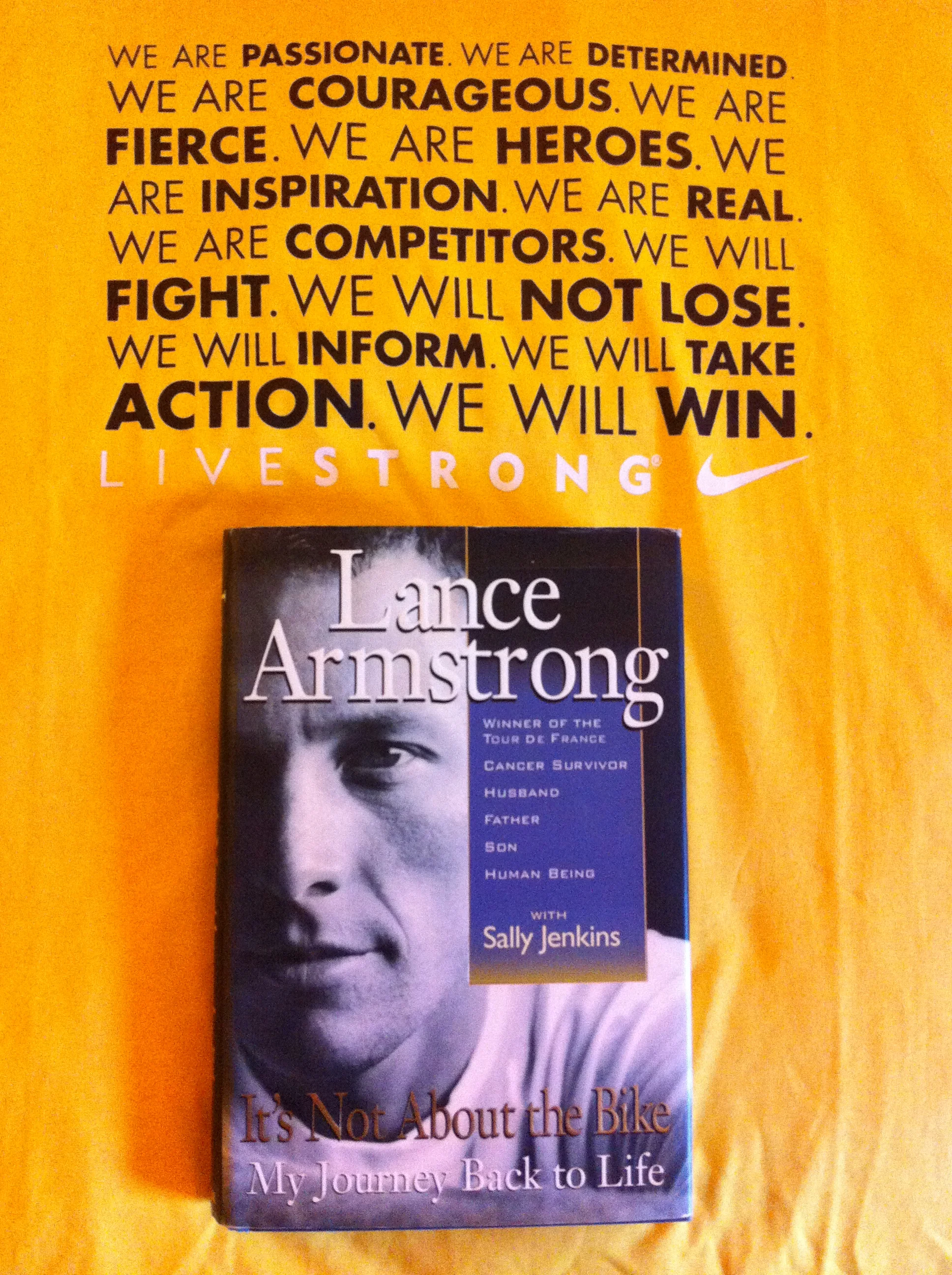
Lance Armstrong
I've tried to avoid talking about it, but people know my story and what I've been through, and keep asking me what I think about Lance Armstrong.
I've tried to avoid talking about it, but people know my story and what I've been through, and keep asking me what I think about Lance Armstrong.
At the lowest point in my life, when I had just been laid off from my previous job and then realized a few months later that I had cancer, I had the fear of losing everything. It was literally like being kicked when you're down. I experienced the horrible fear of leaving my two awesome children behind without their father, the fear of leaving my wife behind without her husband and soulmate, and the fear of leaving my parents without their son. I thought about making video messages for my kids, of things I might like to say to them at various ages in the future, because I seriously thought I was going to die and that my life was over. I never could do it. The mere thought of it brought me to my knees each and every time I tried to even think about it. It's extremely painful for me to remember these fears and experiences even today, and drags me to a very deep and dark place filled with a lot of insecurity and doubt that I prefer not to visit. I would not wish these fears and experiences upon even my worst enemy.
Enter Lance Armstrong.
Lance and his story is the one that gave me the hope and encouragement and inspiration that I so badly needed, to know that not only would I likely beat my cancer, but that I could thrive and kick ass in the aftermath. His story helped to give me so much confidence that I was going to kick cancer's ass that I went out for a job interview after my first round of chemotherapy, still a bit uneasy on my feet from the after effects and with clumps of hair falling out of my head, and got the job. Sharing his own personal battle with cancer in such vivid detail helped make my own fight so much easier by removing a lot of the unknowns and uncertainty. He's given this same hope and encouragement to many more and touched the lives of millions, helped raise hundreds of millions of dollars towards cancer research and support, and put every bit of his star power to a good and positive use. The world needs more Lance Armstrongs. Lots more.
Testicular cancer is usually a highly curable cancer, but Lance had Stage III with mostly choriocarcinoma and had ignored the symptoms for 6 months to a year which is, with very few exceptions, almost always a death sentence. People know the hell I've been through, but what Lance was up against made my own battle look like amateur night. He's seriously lucky to even be alive today. I know more than a few people that have died from this. I know some people who are alive right now whom I think about and pray for everyday, but whose cancers have been declared incurable by the same doctors who treated Lance Armstrong, and who will be lucky to live even a few more months. But Lance lived. Yes, Lance Armstrong is human, he's imperfect, and has had moral failings both on and off the bike, but I believe that his life was touched and spared by God in order to do the good that he's done in this world for the cancer community, and that all of that is far bigger than and vastly outweighs a sports doping scandal. Like many, I'm very sad and disappointed about what happened, and I know people and sponsors and donors and fans are very angry with him right now. I am too. But I think and hope that in the long term, people will forgive him.
I forgive him.
LIVESTRONG

StevePake.com